
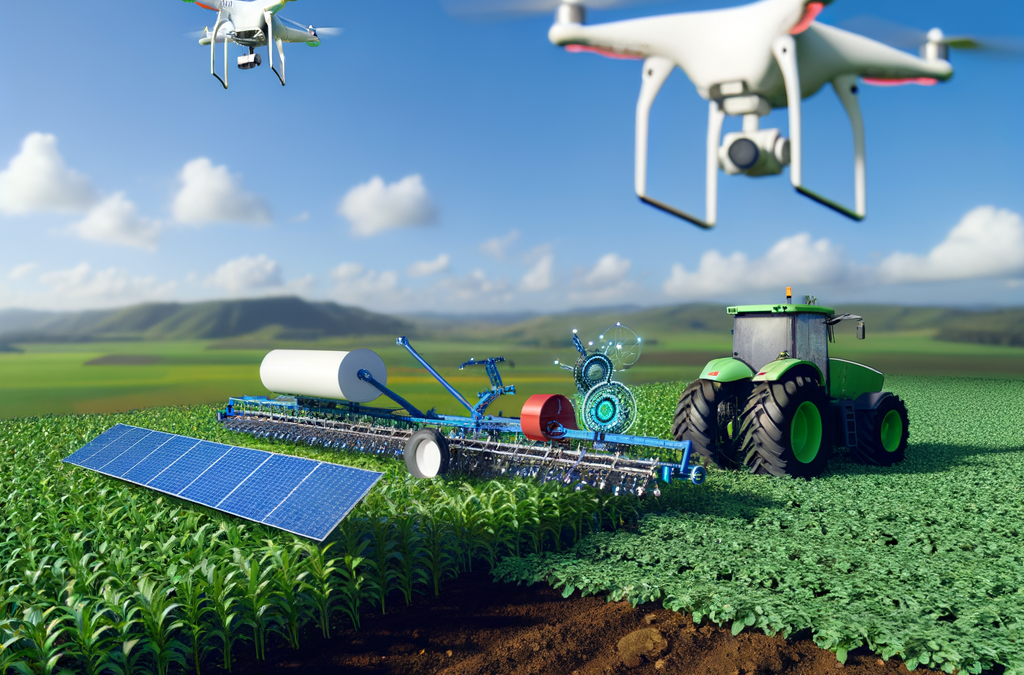
Artificial intelligence (AI) is transforming the agricultural sector, bringing about a true revolution in the way natural resources are cultivated and managed. Through advanced technologies, greater efficiency and sustainability in resource use are being achieved, optimizing agricultural production and enhancing crop yields with precise and tailored strategies.
The power of artificial intelligence in precision agriculture
Precision agriculture is an approach that aims to optimize the productivity and efficiency of agricultural operations, and artificial intelligence plays a crucial role in its implementation. Through crop monitoring and real-time data analysis, farmers can make more informed decisions, adapting their practices to the specific conditions of each field and crop.
One of the key aspects of AI in this field is its ability to make accurate predictions about crop yields. By utilizing large volumes of historical data, along with weather and soil information, AI algorithms can precisely forecast yields and potential threats to crops, which is crucial for resource planning and management.

Moreover, AI solutions enable more efficient resource management. For instance, intelligent AI-based irrigation systems can adjust water usage according to the precise needs of crops, reducing waste and promoting agricultural sustainability. Through these methods, farmers not only optimize resources but also contribute to a more responsible and sustainable use of the environment.
Innovations and Challenges in the 21st Century
The 21st century brings numerous challenges for agriculture, from climate change to the increasing global demand for food. Technological innovation is essential to tackle these difficulties, and emerging artificial intelligence offers revolutionary solutions for the agricultural sector.
However, the implementation of advanced technologies in agricultural operations is not without its challenges. One of the main obstacles is the integration of technology on a small scale, particularly in regions where access to technology is limited. It is essential for agronomists and technology developers to collaborate in order to create accessible and applicable solutions for all farmers.

Despite the challenges, the application of artificial intelligence in agriculture has the potential to radically transform agricultural production and management, ensuring a more sustainable and productive future. The key lies in developing platforms that are customizable and integrative, allowing any farmer, regardless of the size of their operation, to benefit from this technological revolution.
Artificial intelligence is revolutionizing the agricultural sector by enhancing efficiency and sustainability in production. Although there are challenges, the potential to optimize resources and improve crop yields is immense, promising a more sustainable and efficient future for global agriculture.
How This Works in Practice
Implementing AI in agriculture involves several critical steps that require careful planning and collaboration among various stakeholders. The first step is to assess the specific needs of the farm, which may include evaluating current practices, identifying areas for improvement, and determining the types of data that can be collected. This assessment often involves agronomists, farm managers, and technology experts working together to establish clear objectives.
Once the needs are identified, the next step is to invest in the required technology infrastructure. This may include sensors for soil moisture, drones for aerial imaging, or software platforms that can analyze data. Farmers must ensure that they have reliable internet connectivity to facilitate data transfer and real-time monitoring. Training is also essential; farmers and their staff need to understand how to utilize these technologies effectively.
Data collection is the backbone of precision agriculture. Farmers should implement a system for gathering data from various sources, such as weather forecasts, soil sensors, and satellite imagery. This data is then fed into AI algorithms that analyze it to provide insights on crop health, irrigation needs, and potential pest threats. Regular monitoring and feedback loops are crucial, allowing farmers to adjust their practices based on AI recommendations.
The final step involves evaluating the outcomes of these AI-driven strategies. Farmers should track metrics such as crop yields, resource usage, and economic returns to determine the effectiveness of the implemented technologies. Continuous improvement is vital; as new data becomes available and technologies evolve, farmers must be prepared to adapt their practices accordingly.
What to Watch Out For
While the integration of AI in agriculture offers numerous benefits, several limitations and trade-offs need to be considered. One significant challenge is the initial investment required for technology and training. Small-scale farmers may find it difficult to allocate sufficient resources, which can create a barrier to entry for adopting AI solutions.
Another common mistake is over-reliance on technology without understanding its limitations. AI algorithms are only as good as the data they are trained on, and poor data quality can lead to inaccurate predictions. Farmers must remain engaged in their operations and not solely depend on technology for decision-making.
Additionally, privacy concerns related to data collection must be addressed. Farmers should be aware of who has access to their data and how it is used. Establishing clear guidelines and agreements can help protect farmers’ interests.
It’s also important to recognize that not all agricultural practices may benefit from AI. Certain traditional methods may be more sustainable or effective in specific contexts. Thus, farmers should evaluate whether AI aligns with their operational goals and local conditions.
Frequently Asked Questions
Q: What types of AI technologies are most beneficial for farmers?
A: Various AI technologies can benefit farmers, including machine learning algorithms for predicting crop yields, drones for aerial imaging and monitoring, and sensor networks for real-time data collection on soil and crop health.
Q: How can small-scale farmers access AI technologies?
A: Small-scale farmers can access AI technologies through partnerships with agritech companies, cooperatives that pool resources, or government programs designed to support technology adoption in agriculture.
Q: What should farmers do if they encounter issues with AI technology?
A: Farmers should reach out to technology providers for support and troubleshooting. Additionally, joining farmer networks or forums can provide valuable insights and solutions from peers who have faced similar challenges.
Q: Is it necessary for farmers to have a background in technology to implement AI?
A: While a background in technology can be helpful, it is not strictly necessary. Many AI solutions come with user-friendly interfaces and support resources, and training programs are available to help farmers learn how to use these technologies effectively.