
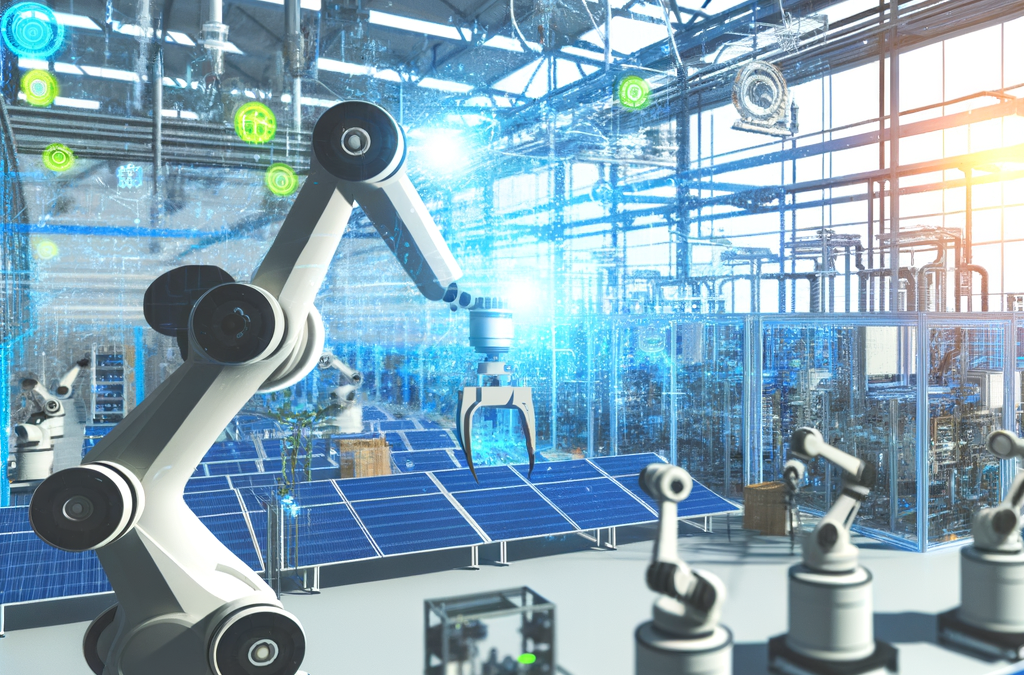
Artificial intelligence (AI) is redefining industrial processes, driving a transformation that significantly enhances operational efficiency and sustainability. As companies adopt these technologies, they experience a shift towards intensified business competitiveness, reduced energy consumption, and minimized carbon footprint. In this article, we will explore how AI impacts Industry 4.0, enabling mass customization and process optimization.
The Power of Artificial Intelligence in the Modern Industrial Revolution
Artificial intelligence has emerged as a central pillar in the industrial revolution known as Industry 4.0. This phenomenon drives the transformation of industrial processes through advanced technologies that integrate data analytics, automation, and digitalization. AI enables industries not only to collect and analyze large volumes of data but also to use it to optimize operations, making them more efficient and sustainable. This results in a significant increase in business competitiveness, as it allows companies to adapt swiftly to market demands and customer expectations.
Advanced digitalization fosters mass customization, where products and services can be tailored to individual consumer preferences with unprecedented precision. Furthermore, automation, powered by artificial intelligence, facilitates the reduction of errors and accelerates production, improving the quality of the final product. This interconnected digital environment provides the necessary tools for companies not only to survive but to thrive in an increasingly competitive global market.
Towards Intelligent and Sustainable Production
One of the most significant impacts of artificial intelligence on industrial processes is its ability to drive sustainability. Through predictive maintenance, machines can be monitored in real-time, reducing the likelihood of unexpected failures and extending their lifespan. This minimizes resource waste and optimizes maintenance schedules, which in turn lowers operational costs and energy consumption.
Energy optimization is another key aspect where AI plays a crucial role. AI-driven systems can automatically adjust energy consumption in real-time, based on current demand and conditions, thereby reducing the carbon footprint of industrial operations. Smart factories, equipped with sensors and advanced algorithms, become models of sustainable practices that not only benefit the environment but also enhance corporate reputation and attract more conscious consumers.
The ultimate goal is to achieve a perfect harmony between economic efficiency and environmental sustainability, enabling companies to be competitive today without compromising future resources. Artificial intelligence is not only transforming the way we produce but is also redefining the foundations of competitiveness and business sustainability in the modern era.
By applying artificial intelligence in industrial processes, companies can achieve greater operational efficiency and sustainability while remaining competitive in a global market. Digitalization and data analytics enable mass customization and significant reductions in energy consumption and carbon footprint. AI is laying the groundwork for a smarter and greener industrial future.
How This Works in Practice
Implementing artificial intelligence in industrial processes requires a structured approach that encompasses several steps and the collaboration of various stakeholders. Here’s a breakdown of how this transformation typically unfolds:
- Initial Assessment: Companies must first evaluate their existing processes to identify areas where AI can add value. This involves understanding current workflows, data availability, and potential pain points that AI can address.
- Data Infrastructure Setup: A robust data infrastructure is essential. Organizations need to invest in systems that can collect, store, and manage data effectively. This may involve upgrading existing hardware and software or adopting cloud-based solutions that facilitate data accessibility and scalability.
- Cross-Functional Team Formation: Successful AI implementation demands collaboration across departments. Forming a cross-functional team that includes data scientists, engineers, operations managers, and IT professionals ensures that diverse perspectives are considered throughout the process.
- Model Development: Once the team is in place and data infrastructure is established, the focus shifts to developing AI models. This involves selecting appropriate algorithms, training models on historical data, and validating their performance against real-world scenarios.
- Integration with Existing Systems: After developing the AI models, they must be integrated with existing operational systems. This requires careful planning to ensure that AI systems can communicate effectively with other technologies and processes without disrupting ongoing operations.
- Pilot Testing: Before full-scale deployment, conducting pilot tests in controlled environments allows companies to assess the AI system’s performance and make necessary adjustments. This step is crucial for identifying unforeseen challenges and refining the solution.
- Full-Scale Implementation: Upon successful pilot testing, organizations can proceed with full-scale implementation. Continuous monitoring and feedback mechanisms should be established to track the system’s performance and make iterative improvements.
- Training and Change Management: Ensuring that employees are trained to work alongside AI systems is vital. Change management strategies should be employed to help staff adapt to new technologies and workflows, fostering a culture of innovation and continuous learning.
Through these steps, companies can effectively harness the power of AI to enhance their industrial processes, leading to improved efficiency and sustainability.
What to Watch Out For
While the integration of AI into industrial processes presents numerous advantages, there are also several limitations and potential pitfalls to be mindful of:
- Data Quality and Availability: The effectiveness of AI models heavily relies on the quality and quantity of data. Incomplete or inaccurate data can lead to misleading insights and poor decision-making. Organizations must prioritize data governance to ensure high-quality data is available for analysis.
- Over-Reliance on Automation: While automation enhances efficiency, excessive reliance on AI systems can lead to skill degradation among employees. It is crucial to strike a balance between automation and human oversight, ensuring that skilled personnel are available to intervene when necessary.
- Cultural Resistance: Employees may resist the adoption of AI technologies due to fear of job displacement or skepticism about the technology’s reliability. Addressing these concerns through transparent communication and involving staff in the transition process can mitigate resistance.
- Scalability Challenges: Not all AI solutions are easily scalable. Organizations should consider how well their chosen AI technologies can adapt as operations grow or change. A solution that works for a small-scale pilot may not perform similarly in a larger context.
- Compliance and Ethical Considerations: As AI systems become more prevalent, compliance with regulations and ethical considerations regarding data privacy and usage will be paramount. Companies must remain informed about relevant laws and ethical standards to avoid potential legal issues.
By being aware of these limitations and challenges, organizations can better prepare for a successful integration of AI into their industrial processes.
Frequently Asked Questions
Q: How can we ensure our data is ready for AI implementation?
A: Ensuring data readiness involves conducting a thorough audit of existing data sources, cleaning and standardizing data formats, and implementing data governance practices to maintain quality and accuracy.
Q: What role does employee training play in AI integration?
A: Employee training is critical as it equips staff with the necessary skills to work effectively alongside AI technologies. Training fosters acceptance and encourages a culture of innovation, which is essential for successful integration.
Q: Can AI truly enhance sustainability in industrial processes?
A: Yes, AI can enhance sustainability by optimizing resource usage, improving energy efficiency, and enabling predictive maintenance, which reduces waste and prolongs equipment lifespan.
Q: What should we do if our AI pilot fails?
A: If a pilot fails, it’s important to conduct a thorough analysis to understand the reasons behind the failure. This may involve reviewing data quality, model assumptions, or integration challenges and making necessary adjustments before attempting a new implementation.