
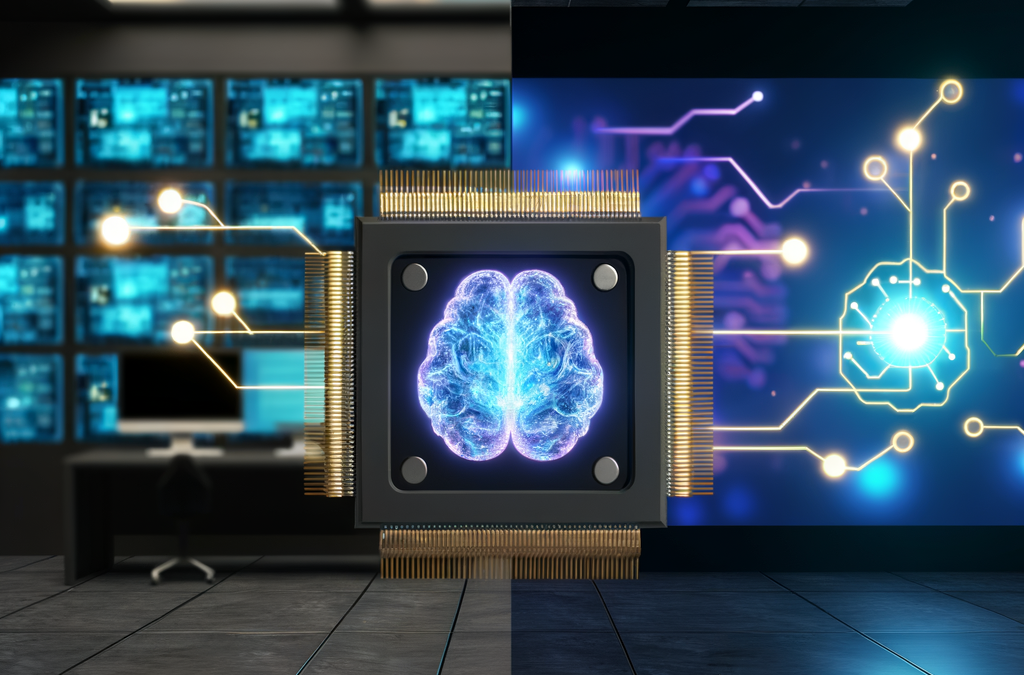
Artificial intelligence (AI) is transforming the field of cybersecurity by providing innovative solutions for the detection and response to cyberattacks. Companies like Microsoft are implementing AI to enhance data protection and analysis, automating crucial processes that strengthen information security in the cloud. We explore how AI is redefining cybersecurity strategies.
The artificial intelligence in detection and response to cyberattacks
In today’s digital world, cyberattacks are constantly threatening organizations and users, putting millions of sensitive data at risk. Artificial intelligence has become a key tool for enhancing the detection and response to these attacks, providing a proactive approach rather than merely a reactive one. Automating the identification and response to threats significantly reduces the reaction time in the event of a potential attack, which is crucial for mitigating potential damage.
AI uses advanced algorithms to analyze enormous volumes of data in real-time, identifying patterns and unusual behaviors that may indicate a cyberattack. These AI systems not only detect known threats but are also capable of identifying new threats through machine learning techniques. This predictive capability is vital for staying ahead of cybercriminals and protecting IT infrastructure.
A prominent example of this application is the use of AI systems to monitor network traffic and immediately identify suspicious activities. Microsoft, for instance, has integrated artificial intelligence into its cloud cybersecurity services, enabling continuous and automated data surveillance. This not only enhances threat detection but also allows for a quicker and more accurate response, minimizing the impact on the organization or affected users.
The role of AI in data protection and cloud security
The adoption of cloud services has increased the demand for robust data security solutions. Artificial intelligence helps protect information stored in the cloud through continuous assessment and real-time analysis of the security environment. This is achieved through more secure authentication techniques and the implementation of intelligent access controls.
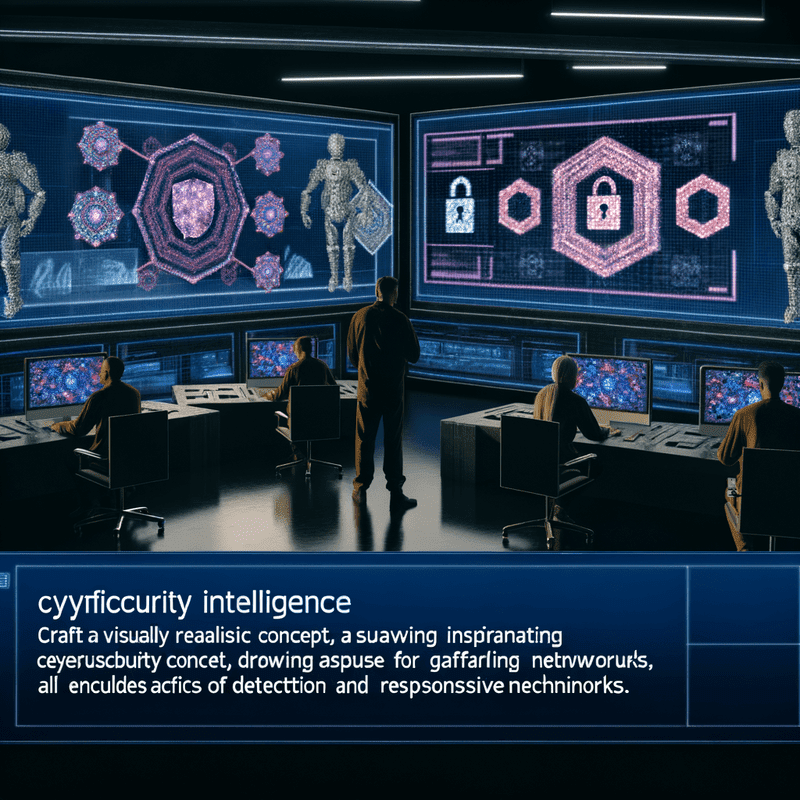
Automation in cybersecurity streamlines the management of cloud protection, as critical operations can be executed without human intervention, ensuring that security measures are always operational. Furthermore, AI can automatically adjust protection levels based on identified risks, thereby enhancing efficiency and effectiveness in threat prevention.
Microsoft has been at the forefront of implementing AI for cloud cybersecurity. Its security services conduct thorough threat analysis to identify vulnerabilities before they can be exploited. Microsoft Azure, for instance, leverages artificial intelligence to deliver integrated security solutions that protect both businesses and individual users from complex cyber threats.
The use of AI in cybersecurity not only strengthens the protection of data and systems but also enhances the user experience by enabling safer and smoother navigation. The ability of artificial intelligence to adapt and continuously improve its response to emerging threats is crucial in the digital age, where security is an absolute priority for organizations and individuals.
Innovations in artificial intelligence are revolutionizing cybersecurity by automating the detection and response to cyberattacks, thereby enhancing data protection in the cloud. Companies like Microsoft are leading this change by utilizing AI to secure information and anticipate cyber threats, thus ensuring a safer digital environment for all.
How This Works in Practice
Implementing AI in cybersecurity involves a structured approach that requires several key components and stakeholders. The first step is to establish a solid cybersecurity framework that includes existing security policies, risk management protocols, and compliance requirements. This foundational layer ensures that AI systems are integrated into a well-defined security strategy.
Next, organizations need to gather and prepare data. This involves collecting historical data on past cyber incidents, network traffic logs, and user behavior patterns. Data cleaning and normalization are crucial to ensure that the AI algorithms can operate effectively. Data scientists and cybersecurity experts collaborate at this stage to identify relevant datasets that will train the AI models.
Once the data is ready, AI models are selected and trained. Organizations might opt for supervised learning models, which require labeled data, or unsupervised learning models, which can identify patterns without predefined labels. Machine learning engineers play a critical role in this phase, fine-tuning algorithms to enhance their accuracy and performance.
After training, the models undergo rigorous testing in a controlled environment to assess their effectiveness in detecting threats. This phase often involves simulating cyberattacks to evaluate how well the AI responds. Following successful testing, the AI systems are deployed in real-time monitoring environments, where they continuously analyze incoming data to identify potential threats.
Throughout the deployment, cybersecurity teams must ensure that there is a feedback loop in place. This involves regularly updating the AI models with new data and threat intelligence to improve their predictive capabilities. Incident response teams work alongside AI systems to investigate alerts, providing human oversight that is essential for effective threat management.
In summary, successful implementation of AI in cybersecurity requires a collaborative effort among various stakeholders, including data scientists, cybersecurity experts, and IT professionals. A systematic approach, from data preparation to deployment and continuous improvement, is vital for maximizing the effectiveness of AI-driven security solutions.
What to Watch Out For
While AI offers significant advantages in cybersecurity, there are limitations and potential pitfalls that organizations should be aware of. One major concern is the reliance on quality data; AI systems are only as good as the data used to train them. Poor quality or biased data can lead to inaccurate threat detection, which may result in missed attacks or false positives.
Another limitation is the adaptability of cybercriminals. As AI systems evolve to detect new threats, attackers are also developing more sophisticated techniques to bypass these defenses. This ongoing cat-and-mouse game means that organizations must continuously update and refine their AI models to stay ahead of emerging threats.
Common mistakes include underestimating the importance of human oversight. While AI can automate many processes, human expertise is still critical in interpreting results, making nuanced decisions, and handling complex incidents. Over-reliance on AI without sufficient human intervention can lead to vulnerabilities.
Additionally, organizations may face challenges related to integration with existing security infrastructures. Implementing AI solutions often requires significant changes to current systems and processes, which can lead to operational disruptions if not managed carefully. Stakeholder buy-in and adequate training for staff are essential to facilitate smooth transitions.
Finally, organizations must also consider the ethical implications of using AI in cybersecurity. Issues related to privacy, data protection, and algorithmic bias must be addressed to ensure that AI applications do not inadvertently compromise user trust or violate regulations.
Frequently Asked Questions
Q: How does AI improve the speed of threat detection?
A: AI can analyze vast amounts of data in real-time, identifying patterns and anomalies much faster than human analysts. This rapid processing allows for quicker identification of potential threats, enabling timely responses that can mitigate damage.
Q: Can AI completely eliminate the need for human cybersecurity experts?
A: No, while AI enhances threat detection and response capabilities, human expertise is essential for interpreting AI findings, making complex decisions, and managing incidents that require nuanced understanding and judgment.
Q: What are the costs associated with implementing AI in cybersecurity?
A: Costs can vary widely depending on the scale of implementation, the complexity of AI models, and the need for infrastructure upgrades. Organizations should consider not only initial investment but also ongoing maintenance, training, and updates to ensure effectiveness.
Q: How can organizations ensure the quality of data used for AI training?
A: Organizations should establish robust data governance policies that include data collection standards, regular audits for data quality, and mechanisms to address bias. Collaboration between data scientists and cybersecurity experts is vital to identify relevant and high-quality datasets for training AI models.
Want to know where you are exposed? We run a free security assessment — you get a written report on your exposure whether or not you work with us afterwards.