
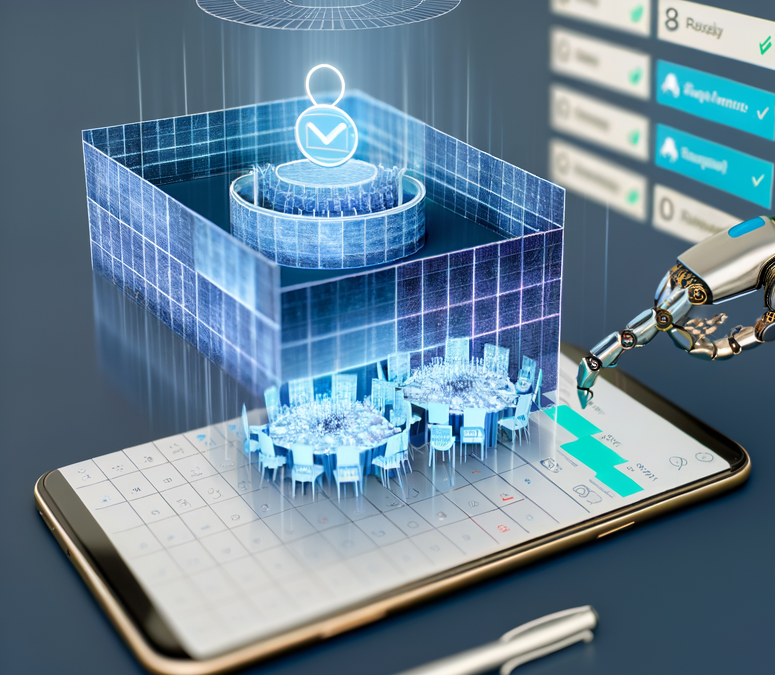
In the modern era, artificial intelligence (AI) is transforming the way we organize and manage events. From chatbots to virtual assistants, AI enables more efficient, personalized, and sustainable planning. This article explores how artificial intelligence is revolutionizing the events sector, enhancing the attendee experience and ensuring a significant return on investment (ROI).
The revolution of artificial intelligence in event planning
The adoption of artificial intelligence in event planning is radically transforming how event organizers approach this complex task. Traditionally, the event planning process has been labor-intensive and filled with logistical details, but with the implementation of AI, tasks can be automated, freeing up time and resources for greater creativity and innovative strategies.
One of the main applications of AI in this sector is personalization. Attendees today expect tailored experiences, and this is where AI can truly work wonders. By analyzing large volumes of data, AI-driven platforms can provide personalized content and services that perfectly align with the individual preferences of attendees, from food offerings to music selection.
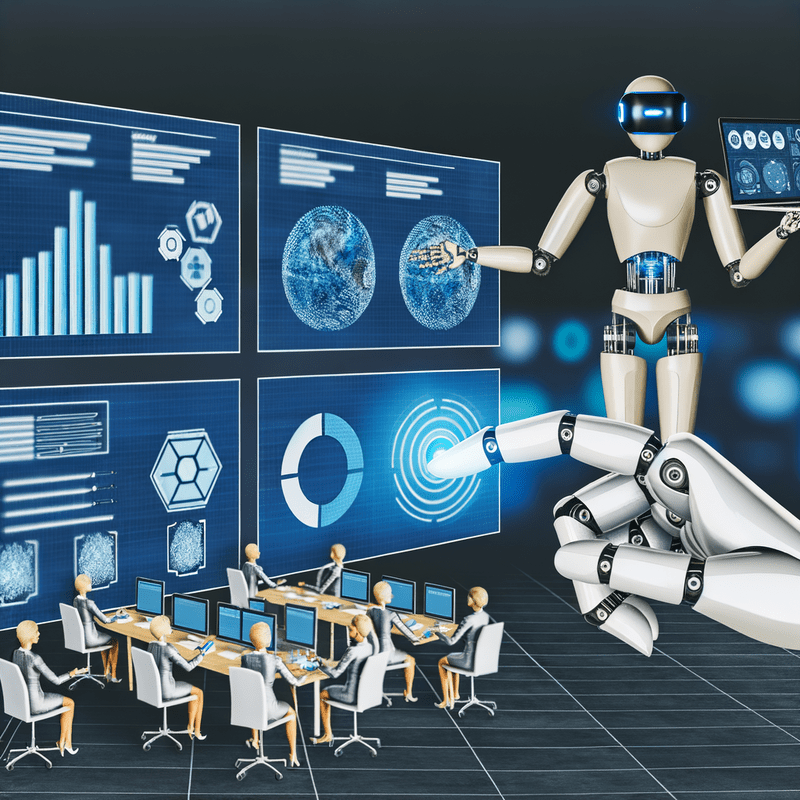
Moreover, virtual assistants and chatbots have proven to be invaluable tools for enhancing the attendee experience. These systems, available 24/7, can answer common questions, providing real-time information, which is crucial for keeping attendees informed and engaged. The ability to deliver instant responses not only improves participant satisfaction but also alleviates the burden on event organizers.
Innovation through data analysis and sustainability
The use of data analytics to enhance the design and execution of events marks another critical application of AI. Thanks to its ability to process data in real-time and utilize predictive analytics, event organizers can anticipate the needs and behaviors of attendees, thereby optimizing every aspect of the event to maximize ROI.
Another important benefit of AI in the events sector is its potential to foster sustainable growth. Intelligent systems can help calculate the exact resource needs, reducing waste and promoting more eco-friendly practices. Additionally, by creating hybrid events—which combine online and in-person elements—it is possible to reach broader audiences without increasing the environmental impact of the event.
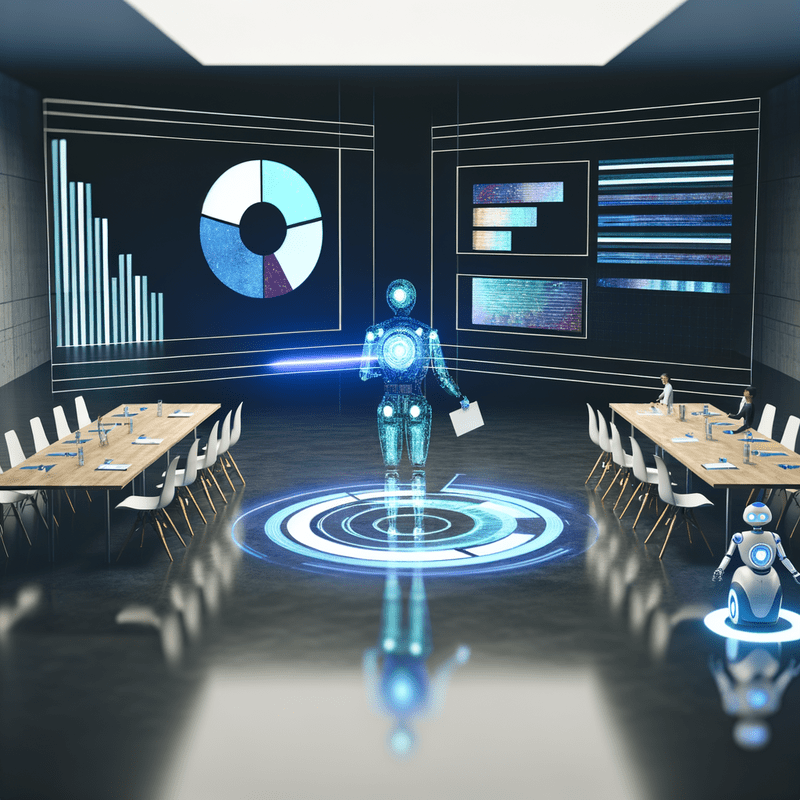
However, it is essential to address concerns regarding privacy, GDPR, and data protection when implementing artificial intelligence in event management. Organizers must ensure not only compliance with European GDPR regulations but also the development of robust data protection measures, avoiding security breaches that could compromise attendees’ personal information.
Artificial intelligence is also playing a key role in enhancing networking opportunities at events by recommending connections among attendees based on shared interests and comprehensive profiles generated by artificial intelligence. This ability to facilitate personalized interactions makes networking more efficient and effective.
In summary, artificial intelligence is emerging as a powerful force driving innovation in event organization, enhancing personalization, sustainability, and return on investment. By harnessing the potential of AI, event organizers are positioned not only to meet but to exceed attendees’ expectations, all while maintaining a crucial balance between operational efficiency and the protection of personal data.
Where AI Genuinely Helps in Event Planning
Attendance forecasting
The most valuable and least glamorous application. Registration numbers are not attendance numbers, and the gap varies by event type, format and time of year. Models built on your own historical data forecast that gap better than a rule of thumb, and the forecast drives catering, staffing and space.
Scheduling and room allocation
Multi-track programmes are a constraint problem: session popularity, room capacity, speaker availability and attendee interest all interact. Solving it by hand produces conflicts that only surface on the day.
Personalised agendas
Recommending sessions based on registration data and previous behaviour raises attendance in the sessions that matter and reduces half-empty rooms.
Logistics and supplier coordination
Predicting consumption, timing deliveries and flagging dependencies that slip. Unremarkable work that removes a real category of failure.
Post-event analysis
Processing open-ended feedback at volume, so the answer to “how did it go” is not based on the loudest six responses.
Real-World Impact: What the Data Shows
The gap between AI hype and actual use in event planning is well documented. A survey of business events professionals by PCMA and Gevme (fielded December 2024, published March 2025) found that 91% of respondents already use AI in some form — but only 18% apply it specifically to event planning and logistics tasks like the ones described above. Most current use concentrates on content creation (46%) and data analysis and reporting (35%), which confirms that forecasting and scheduling remain a minority use case even among organizations that have already adopted AI elsewhere.
That minority is growing, though. The Event AI Index (Highbar.ai, updated March 2026, drawing on Forrester’s 2025-2026 B2B events research together with the PCMA/Gevme data across more than 1,800 survey respondents) tracks data analysis adoption — the category attendance forecasting falls under — rising from 23% to 40% year over year. The direction is clear even if most planners have not made the jump yet: where organizers do have enough historical data to build a forecast, more of them are starting to use it.
Where It Does Not Help
- Anything requiring taste. Programme design, tone, the feel of a room. Models optimise for what happened before.
- Small events. Below a certain size there is not enough data to learn from and a spreadsheet is genuinely better.
- The relationship work. Sponsors, speakers and difficult attendees are handled by people.
- First-time formats. No history means no forecast.
Before You Buy Anything
Most event platforms now advertise AI features. Two questions separate the useful from the decorative: does it learn from your historical data or apply generic assumptions, and does the output change a decision you actually make? A prediction nobody acts on is a slide, not a tool.
If attendee data is involved, personalisation and any profiling carry data protection obligations — worth checking before the feature is switched on.
Event planning is one of more than a dozen sectors where AI is already changing day-to-day operations — see the full picture in our guide to AI use cases by industry, covering everything from agriculture to fleet management.
Frequently Asked Questions
Q: How many event planners actually use AI for forecasting and logistics, not just general tasks?
A: According to the PCMA/Gevme survey of business events professionals, 91% use AI in some capacity, but only 18% apply it specifically to event planning and logistics — most current use is content creation (46%) and data analysis and reporting (35%), not attendance forecasting or scheduling.
Q: Is AI attendance forecasting more accurate than estimating by experience?
A: It depends on how much historical data exists for events of the same type, format and season. With enough past data, a model built on it typically beats a rule-of-thumb estimate at predicting the gap between registrations and actual attendance; with no history — a first-time format — there is nothing for the model to learn from.
Q: Can a small event benefit from AI planning tools?
A: Usually not. Below a certain size there simply is not enough data to train a useful model, and a spreadsheet managed by an experienced planner gives a better result for less effort.
Q: Does using AI for event personalisation create data protection obligations?
A: Yes. Any profiling or personalisation built on attendee data falls under GDPR in the EU, and organizers need to confirm compliance and put data protection measures in place before switching on the feature, not after.
Q: Will AI replace event planners?
A: Not for the parts of the job that depend on taste, relationships and judgment — programme design, handling sponsors and speakers, and reading the room. AI adoption data confirms this is still early and partial: even among organizations already using AI, most deploy it for narrow, specific tasks rather than running the event.
Related Articles
- AI Use Cases by Industry: The Complete 2026 Guide
- AI Transforms Industries with Autonomous and Generative AI
- AI Transforms Manufacturing: Innovation and Sustainability
- AI transforms cybersecurity: intelligent and proactive protection
Get our new articles by email
One email per article. Unsubscribe anytime.