
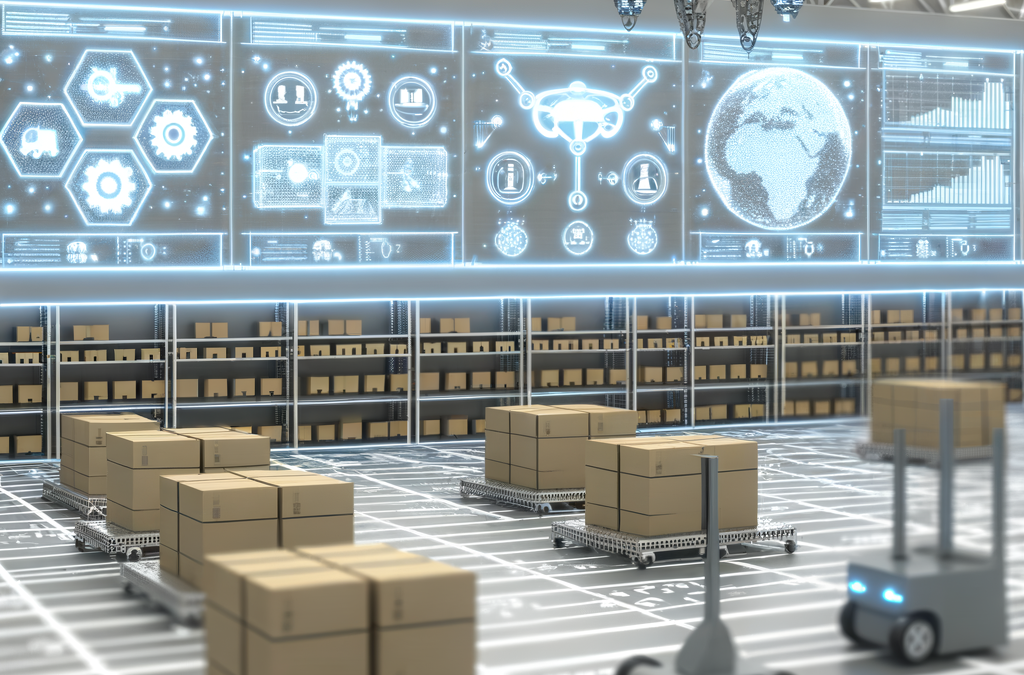
The integration of artificial intelligence (AI) in the supply chain is transforming the logistics landscape, enhancing efficiency and reducing costs. From route optimization and demand forecasting to inventory management and data security, AI provides innovative solutions for complex challenges in transportation and distribution.
Evolution of the Supply Chain Through AI
The supply chain is being reinvented thanks to artificial intelligence, becoming a more efficient and dynamic ecosystem. Route optimization is one of the first notable advancements, where AI algorithms process vast amounts of data to suggest the most efficient routes in real time, taking into account traffic, weather conditions, and other unforeseen factors. This capability not only reduces costs associated with fuel and driving time, but also enhances order fulfillment by ensuring timely deliveries.

On the other hand, the demand forecast has been significantly improved through the use of AI and machine learning. By analyzing historical patterns and current market data, AI can accurately predict future needs. This enables better resource planning and prevents both overstock and shortages, promoting a more agile and optimized management approach.
Automation and Innovations in Warehouses
Warehouse automation is another area being transformed by artificial intelligence. Automated systems enable more accurate inventory management, minimizing human errors and optimizing storage and product retrieval processes. AI monitors the location and movement of goods in real-time, enhancing overall visibility in logistics, which leads to a significant reduction in costs.
Additionally, the transport invoice audit is being modernized through AI software that automatically verifies expenses, detecting discrepancies and ensuring that companies only pay what is fair. This step not only enhances administrative efficiency but also strengthens the financial security of logistics operations by minimizing errors and potential fraud.

As technology continues to advance, AI also plays a crucial role in data security, a critical area for protecting sensitive information in logistics and distribution. AI tools can identify potential threats and respond proactively before they escalate into serious issues, ensuring that the ongoing exchange of data throughout the supply chain is secure and reliable.
The company Penske is demonstrating the revolutionary potential of these technologies by implementing AI at every stage of its logistics processes. From route optimization to advanced inventory management, Penske is at the forefront of innovation in logistics, ensuring its leadership in an increasingly competitive industry.
The implementation of artificial intelligence in the supply chain has led to substantial improvements in efficiency and cost reduction. From route optimization to warehouse automation, AI is redefining logistics management. With ongoing technological advancements, the potential of AI will continue to grow, ensuring a more efficient and secure future for the industry.
How This Works in Practice
Implementing AI in logistics involves several critical steps and considerations. The process typically begins with a thorough assessment of current operations and identifying specific areas where AI can provide the most value. This often requires collaboration between logistics managers, IT specialists, and data analysts to ensure a comprehensive understanding of both the technical and operational aspects of the supply chain.
Once the areas for improvement are identified, the next step is to establish the necessary infrastructure. This may include investing in hardware capable of processing large datasets, as well as software solutions that can integrate AI algorithms into existing systems. Companies often choose to partner with AI technology providers who can offer tailored solutions that fit their specific needs.
Following infrastructure setup, data collection and cleansing become paramount. Accurate, high-quality data is essential for AI algorithms to function effectively. Organizations must ensure that they have robust data management practices in place, including the ability to gather data from various sources, such as inventory systems, transportation management systems, and customer feedback.
With the data in place, organizations can begin to train their AI models. This involves using historical data to teach the algorithms how to recognize patterns and make predictions. It is crucial to have a diverse dataset to avoid biases that could lead to inaccurate forecasts or route suggestions.
After training, companies can deploy the AI solutions in a phased approach. Initially, it may be beneficial to run AI systems alongside existing processes, allowing for comparisons and adjustments based on real-time feedback. Continuous monitoring and evaluation are critical during this phase to ensure the technology is delivering the expected outcomes.
Finally, ongoing education and training for staff are essential to maximize the effectiveness of these AI tools. Employees must understand how to interpret AI outputs and integrate them into their daily operations, ensuring that the entire team is aligned with the new processes.
What to Watch Out For
While the integration of AI in logistics offers significant benefits, there are several limitations and trade-offs to consider. One common mistake is underestimating the importance of data quality. Poor-quality data can lead to flawed predictions and decisions, negating the advantages of AI. Organizations must invest time and resources into data cleaning and validation before deploying AI solutions.
Another concern is the potential for over-reliance on AI systems. While these technologies can enhance decision-making, they should not replace human judgment entirely. A balanced approach that combines AI insights with human expertise is essential for navigating complex logistics challenges.
Additionally, the initial cost of implementing AI can be substantial. Companies must weigh the long-term savings against the upfront investment in technology and training. In some cases, smaller organizations may find it challenging to justify such expenses, making it crucial to evaluate the return on investment carefully.
Moreover, as AI systems become more integrated into logistics, there is a risk of cybersecurity vulnerabilities. Organizations must prioritize data security measures to protect sensitive information from potential breaches, ensuring that the benefits of AI do not come at the cost of compromising data integrity.
Frequently Asked Questions
Q: What types of logistics operations can benefit from AI?
A: AI can enhance various logistics operations, including route optimization, demand forecasting, inventory management, and data security, among others.
Q: How long does it take to see results from AI implementation?
A: The timeline for seeing results can vary based on the complexity of the implementation and the quality of the data. Generally, organizations may start observing improvements within a few months, but significant transformations could take longer.
Q: Is AI suitable for small logistics companies?
A: While AI can be beneficial for small logistics companies, they must carefully assess their specific needs and resources to ensure that the investment is justified and manageable.
Q: What are the risks associated with relying on AI in logistics?
A: Risks include data quality issues, over-reliance on technology, high implementation costs, and potential cybersecurity vulnerabilities. A balanced approach that combines AI insights with human expertise is essential to mitigate these risks.