
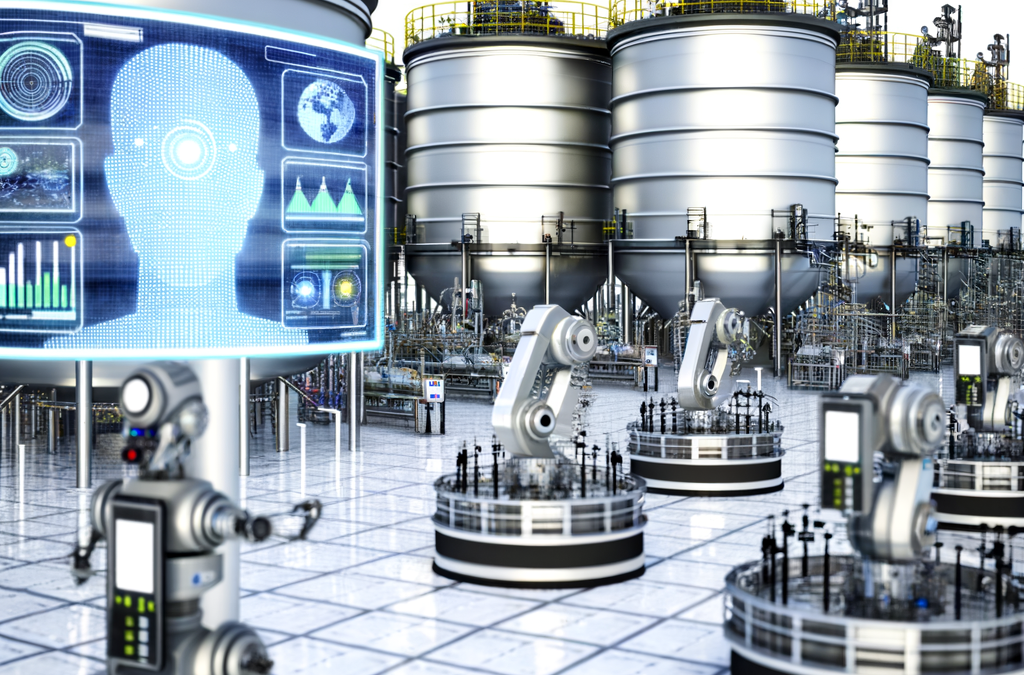
Artificial intelligence (AI) is revolutionizing the chemical industry by facilitating the optimization of processes and the discovery of new compounds. Through machine learning tools and data analysis, AI not only enhances efficiency and accuracy but also increases sustainability and safety in the sector, achieving significant cost savings for companies.
The impact of artificial intelligence on process optimization in the chemical industry
The impact of artificial intelligence in the chemical industry is undeniable, especially in process optimization. Companies in the sector have discovered the enormous potential of AI to enhance operational efficiency and the sustainability of their production processes. One of the key tools in this area is machine learning, which enables the analysis of large volumes of data to identify patterns and relationships that might go unnoticed by the human eye.
Through advanced algorithms, AI can accurately predict the outcomes of various process variables, allowing for real-time adjustments to maximize production and minimize resource waste. This approach not only ensures greater efficiency in production but also contributes to the sustainability of the sector by reducing energy consumption and waste generation.

Additionally, by integrating artificial intelligence with data analysis systems, companies can anticipate operational issues before they arise, significantly enhancing the safety of workers and facilities. The predictive capability of AI also enables effective planning of preventive maintenance, avoiding costly downtime and extending the lifespan of equipment.

Cost reduction is another critical benefit of process optimization driven by AI in the chemical industry. By increasing efficiency and minimizing production disruptions, companies can achieve significant savings, resulting in a competitive advantage in an increasingly demanding market.
Discovery of new compounds and innovative materials thanks to artificial intelligence
Another area where artificial intelligence is making a significant impact in the chemical industry is in the discovery of new compounds and innovative materials. Traditionally, identifying new chemical compounds was a lengthy and expensive process that involved a great deal of trial and error. However, with the implementation of AI, this process has been radically transformed.
Machine learning algorithms can analyze vast chemical databases to identify the most promising combinations and predict their physical and chemical properties with high accuracy. This predictive capability not only accelerates the discovery process but also reduces the risks associated with the development of new materials.
Thanks to these advancements, professionals in the chemical sector are developing more efficient, safe, and sustainable materials, meeting the increasing demands of society for more environmentally responsible products. AI also enables the optimization of the properties of existing compounds, enhancing their performance and reducing their environmental impact.
The innovation driven by artificial intelligence in the discovery of new compounds not only benefits companies with cost savings in research and development, but also positions the chemical industry as a key player in the transition towards a more sustainable economy. The interaction between AI and the chemical sector promises to continue generating revolutionary solutions that meet the demands of both the present and the future.
Artificial intelligence is transforming the chemical industry by optimizing processes, discovering new compounds, and enhancing efficiency, safety, and sustainability. Through the use of machine learning and data analytics, companies are able to reduce costs and develop innovative materials, positioning the sector at the forefront of technology and reinforcing its commitment to more sustainable development.
How This Works in Practice
Implementing AI in the chemical industry involves several concrete steps, starting with a clear understanding of the specific goals a company aims to achieve. This often begins with a thorough assessment of existing processes to identify areas where AI can have the most significant impact, such as reducing waste or enhancing production efficiency.
Once objectives are defined, the next step is to gather and prepare data. This may involve integrating data from various sources, such as laboratory results, production logs, and equipment performance metrics. Data quality is crucial; therefore, companies must ensure that the data is accurate, complete, and formatted correctly for analysis.
With the data in hand, organizations can then select appropriate machine learning algorithms tailored to their specific needs. This could involve consulting with data scientists or AI specialists who can help design models that analyze the data effectively and deliver actionable insights.
The implementation phase typically requires collaboration across various departments, including R&D, production, IT, and safety teams, to ensure that everyone understands how AI tools will be used and what changes they may need to accommodate. Training sessions are essential for staff to gain familiarity with new AI-driven tools and processes.
After deployment, continuous monitoring and evaluation of the AI systems are necessary to assess their performance and make adjustments as needed. This iterative process helps refine the algorithms and improve accuracy over time, ensuring that the AI remains aligned with the company’s changing objectives and operational realities.
Ultimately, successful AI implementation is an ongoing journey that requires commitment, flexibility, and a willingness to adapt to new technologies and methodologies as they evolve.
What to Watch Out For
While the benefits of AI in the chemical industry are significant, there are important limitations and trade-offs to consider. One common mistake is underestimating the complexity of data integration. Organizations may struggle to consolidate data from disparate sources, leading to incomplete analyses and unreliable predictions.
Another potential pitfall is the reliance on historical data. If past data does not accurately represent current or future conditions, the AI models may produce misleading results. It’s crucial to continually update and validate the data used for training machine learning models.
Moreover, the implementation of AI can require significant investment in both technology and training. Companies must be prepared for the upfront costs associated with software, hardware, and personnel development, which may not yield immediate returns. This can lead to hesitation or resistance within the organization.
Finally, there are ethical considerations surrounding the use of AI, particularly related to job displacement. As AI systems take on more tasks traditionally performed by humans, organizations must navigate the balance between efficiency gains and workforce impacts, ensuring that employees are supported through transitions.
In summary, while the integration of AI presents transformative opportunities, companies must approach the process with caution, clarity, and a strategic mindset to navigate the challenges effectively.
Frequently Asked Questions
Q: How long does it take to implement AI in chemical processes?
A: The timeline for implementing AI can vary widely depending on the complexity of the processes involved, the quality of existing data, and the specific goals. Generally, it can take several months to a few years to fully integrate AI systems into existing operations.
Q: What skills are necessary for my team to effectively utilize AI tools?
A: Teams will benefit from a mix of skills, including data analysis, machine learning, and domain expertise in chemistry. Training in these areas is crucial to ensure staff can effectively interpret AI outputs and apply them to decision-making.
Q: Can AI completely replace human workers in the chemical industry?
A: While AI can automate many tasks, it is unlikely to completely replace human workers. Instead, AI is more effective when used to augment human capabilities, allowing employees to focus on more complex tasks that require judgment and creativity.
Q: What are the main challenges in adopting AI in the chemical industry?
A: Key challenges include data integration from multiple sources, ensuring data quality, managing the costs of implementation, and addressing workforce impacts. Companies must also navigate ethical considerations related to AI usage and its potential effects on jobs.