
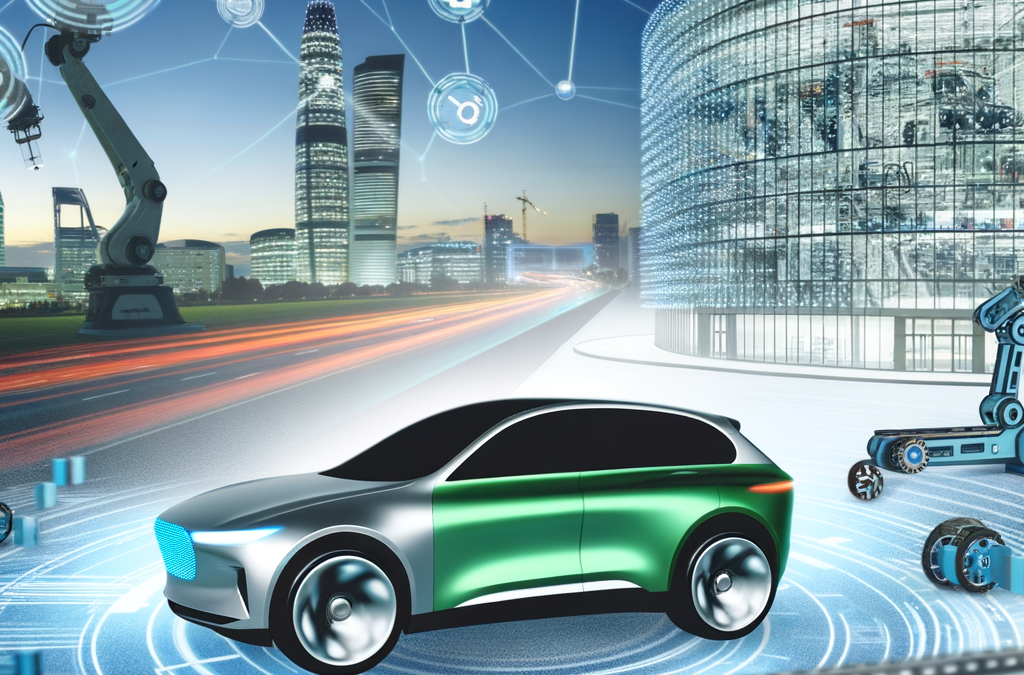
Artificial intelligence has revolutionized various industries, and the automotive sector is no exception. This article explores how AI is transforming every aspect, from vehicle design and manufacturing to enhancing the user experience. By focusing on technological innovation, safety, and sustainability, a promising outlook for the future of mobility is revealed.
Impact of Artificial Intelligence on Vehicle Design and Manufacturing
The emergence of artificial intelligence in the automotive industry has marked a turning point in the design and manufacturing of vehicles. Thanks to AI, manufacturers can analyze large volumes of data and conduct design simulations in virtual environments, allowing them to optimize aerodynamics and the efficiency of cars before building a physical prototype. This not only reduces costs and time but also represents a crucial step towards sustainable mobility.
The automation of production lines using intelligent robots has significantly improved the quality and precision in vehicle manufacturing. AI algorithms monitor every stage of the process, ensuring a high level of consistency and minimizing costly errors. Furthermore, AI is transforming the production of batteries for electric cars, enabling the development of more efficient and longer-lasting cells, which is essential for the future of electric vehicles.
Improvement of User Experience and Driver Assistance
The integration of artificial intelligence in cars is not only focused on manufacturing; it also profoundly transforms the user experience. AI-powered infotainment systems provide more intuitive and personalized interfaces, adapting to the driver’s preferences. From advanced voice commands to personalized route or music recommendations, customization is key to delivering a tailored driving experience.

Furthermore, AI-based driver assistance systems are enhancing safety on the roads. Technologies such as autonomous emergency braking, lane keeping, and blind spot detection systems are examples of how AI actively improves safety by reducing the risk of accidents. These advancements, along with the development of autonomous vehicles, are paving the way for a future where mobility is not only more efficient but also safer for everyone.

With AI, real-time monitoring of vehicle conditions is also facilitated, alerting the driver about the wear of critical parts or the need for maintenance, which ensures greater durability and reliability of the car. This efficiency in preventive maintenance directly impacts the sustainability of vehicles, extending their lifespan and reducing environmental impact.
How This Works in Practice
Implementing AI in the automotive industry involves several critical steps that must be meticulously planned and executed. Initially, stakeholders must identify the specific areas where AI can add value, such as design, manufacturing, or user experience. This requires a collaborative effort among engineers, designers, data scientists, and management teams to assess current processes and determine the potential for AI integration.
Once areas for improvement are identified, the next step is to gather and analyze data. This data can stem from various sources, including customer feedback, production metrics, and vehicle performance data. Ensuring that the right data is collected and stored in a usable format is crucial, as the effectiveness of AI algorithms heavily relies on the quality of the data.
Following data collection, AI models need to be developed and trained. This process often involves selecting appropriate algorithms and frameworks, with careful consideration given to the specific objectives, such as optimizing design or enhancing safety features. Engineers and data scientists collaborate to fine-tune these models, ensuring they perform accurately and efficiently under real-world conditions.
After the AI models are validated, they can be integrated into existing systems. For manufacturing, this may mean linking AI algorithms with robotic systems on the production line. In terms of user experience, AI could be embedded into infotainment systems and driver assistance technologies. This integration often requires significant changes to hardware and software, alongside rigorous testing to ensure seamless operation.
Finally, ongoing monitoring and evaluation are essential. Companies should establish metrics for assessing the performance of AI systems, allowing for continuous improvement and adaptation as new data becomes available or as technology evolves. This iterative process ensures that AI remains aligned with the company’s goals and continues to deliver value over time.
What to Watch Out For
While the integration of AI in the automotive industry offers numerous benefits, there are several limitations and trade-offs that decision-makers must consider. One significant challenge is the initial investment required for technology and infrastructure. Implementing AI solutions can be costly, and companies must weigh this against the potential long-term gains.
Another common pitfall is the reliance on data quality. AI systems are only as good as the data they are trained on, and poor-quality data can lead to inaccurate predictions or functionality. Companies must ensure robust data governance practices are in place, which can be a daunting task in itself.
Moreover, integrating AI into existing workflows can disrupt established processes. Employees may face challenges adapting to new systems and technologies, leading to resistance or decreased productivity during the transition period. Effective change management strategies, including training and support, are crucial to overcoming these hurdles.
Lastly, ethical considerations surrounding AI in the automotive industry cannot be overlooked. Issues such as data privacy, algorithmic bias, and accountability in autonomous systems pose significant challenges. Companies must navigate these concerns thoughtfully, as failure to do so could result in reputational damage and legal ramifications.
Frequently Asked Questions
Q: How can AI improve vehicle safety?
A: AI enhances vehicle safety through advanced driver assistance systems that utilize real-time data to prevent accidents, such as autonomous emergency braking and lane-keeping assist.
Q: What are the costs associated with implementing AI in automotive production?
A: The costs can vary significantly based on the scale of implementation, including expenses for technology acquisition, infrastructure upgrades, and employee training.
Q: How does AI affect vehicle maintenance?
A: AI enables predictive maintenance by analyzing vehicle data to alert drivers about necessary repairs or replacements, thereby enhancing reliability and extending vehicle lifespan.
Q: What challenges do companies face when integrating AI into existing systems?
A: Common challenges include high initial investment costs, data quality issues, employee resistance to change, and ethical considerations surrounding data privacy and bias.