
25% Increase in Ransomware: How to Protect Your Business in 2025?
In today’s digital world, cybersecurity is not just an option; it is a necessity. The recent news about the 25% increase in ransomware attacks during October should serve as a wake-up call for all businesses. Are you prepared to confront this growing threat?
The Problem: An Alarming Increase in Ransomware Attacks
According to Comparitech’s October 2025 ransomware roundup, the number of publicly logged ransomware incidents increased from 546 to 684 in just one month. This represents a growth of 25%, which cannot be overlooked. The most affected sectors include manufacturing, healthcare, and transportation, which are particularly vulnerable due to the critical nature of their operations.
This increase not only jeopardizes companies’ data but also their reputation and, ultimately, their survival. Ransomware attacks can disrupt operations, cause significant financial losses, and undermine customer trust.
The Solution: Effective Defense Strategies
To protect your company, it is crucial to implement robust and up-to-date defense tactics. Here are some key strategies:
- Regular Backup: Ensure that you have backups of all your critical data. This not only allows you to recover information in the event of an attack but can also deter attackers.
- Network Segmentation: Divide your network into smaller segments to limit the scope of a potential attack. This makes it more difficult for attackers to move laterally within your network.
- Early Detection: Implement threat detection tools that alert you to suspicious activities in real time. Early detection is key to mitigating damage.

The Real Cost of Ransomware: What Happened to Jaguar Land Rover
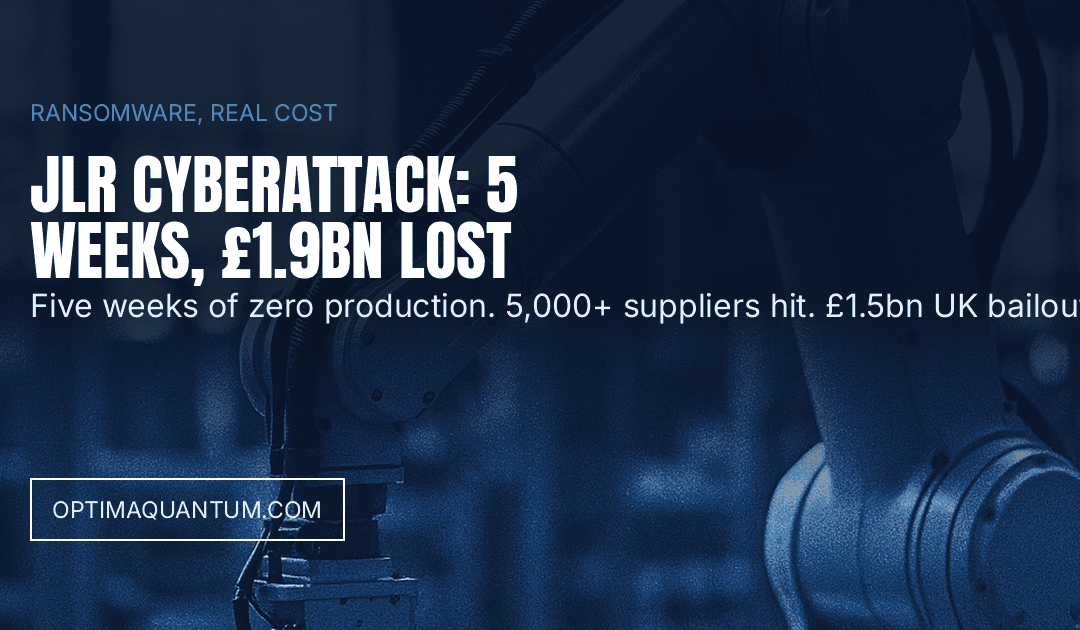
Generic “success stories” about recovering in 24 hours are survivorship bias. The incident that actually shows what a ransomware attack costs when it is not contained quickly is the Jaguar Land Rover (JLR) cyberattack of autumn 2025 — the most economically damaging cyber event in UK history.
Hackers were detected inside JLR’s IT systems on 31 August 2025. Production stopped the next day and stayed stopped for roughly five weeks across the carmaker’s main UK plants, with a phased restart only beginning on 8 October. No stolen customer database made headlines here; a single IT shutdown at one manufacturer was enough to freeze an entire industry.
The two sides of the bill show why “we have backups” is not the same as being contained:
- What JLR itself reported: in its own results for the quarter to 30 September 2025, JLR booked a direct cost of £196 million ($220 million) from the attack.
- What the UK’s independent Cyber Monitoring Centre found: in its October 2025 statement, it classified the incident as a Category 3 “systemic” event — the first ever to originate from a single company — and modelled the total economic loss at £1.9 billion (range £1.6bn–£2.1bn), with more than 5,000 organisations across JLR’s supply chain and dealer network affected.
The gap between those two numbers is the point: a company’s own P&L only captures a fraction of what a contained-badly incident actually costs its suppliers, dealers and customers. The disruption was severe enough that on 29 September 2025 the UK government confirmed it would guarantee a £1.5 billion commercial loan for JLR, to keep its supply chain solvent — reportedly the first time a company has received financial assistance from the UK government following a cyberattack.
For a CTO, the lesson isn’t “did JLR have backups.” It’s that one company’s blast radius reached 5,000+ other organisations because containment and business continuity planning didn’t limit it in time — the same containment gap we cover in our look at AI agent containment rates, and the same reporting discipline detailed in our guide to reporting cybersecurity incidents.
Implementation: Where to Start?
Implementing these strategies is not as complicated as it seems. Here is a step-by-step plan:
- Risk Assessment: Conduct a comprehensive analysis of the risks to which your company is exposed.
- Staff Training: Educate your employees on best practices for cybersecurity and how to identify ransomware attacks.
- Establishment of Protocols: Define clear protocols for the management of security incidents.
- Investment in Technology: Consider solutions such as Optima Quantum to enhance your security infrastructure.
Common Mistakes in Ransomware Defense
Despite their best intentions, many companies make mistakes that can be costly. Here are some of the most common ones:
- No Actualizar Software: Ignorar las actualizaciones puede dejar tus sistemas vulnerables a ataques.
- Underestimating the Training: Failing to adequately train staff is a critical mistake that can lead to security gaps.
- Lack of Response Plan: Not having a clear plan to manage an attack can result in chaos and significant losses.

Additional Resources to Protect Your Business
In addition to the aforementioned strategies, there are resources that can assist you in the fight against ransomware:
- Cybersecurity Guides: Consult online cybersecurity guides for updated information and practical advice.
- Security Tools: Research security tools that meet your company’s needs, such as Optima Quantum.
- Consultancies: Consider hiring cybersecurity experts who can conduct audits and provide tailored solutions.
Preguntas Frecuentes (FAQ)
- What is ransomware? Ransomware is a type of malware that encrypts a user’s files and demands a ransom to unlock them.
- How can I tell if I am being attacked? Signs such as inaccessible files, ransom messages, or slow system performance may indicate an attack.
- Is it enough to make backups? While backups are crucial, it is also necessary to implement additional security measures for comprehensive protection.
- What to do if I am a victim of an attack? It is advisable not to pay the ransom and to contact the authorities and cybersecurity experts to minimize the damage.
- How much did the Jaguar Land Rover cyberattack really cost? JLR itself booked a direct cost of £196 million ($220 million) for the quarter, but the UK’s Cyber Monitoring Centre modelled the total economic loss — across JLR and more than 5,000 affected organisations in its supply chain — at £1.9 billion, making it the most economically damaging cyber event in UK history.
The alarming reality of a 25% increase in ransomware attacks should not be underestimated. Preparation and proactive action are the best defenses your company can have. Do not wait until it is too late. Implement these strategies today and protect your business from the threat of ransomware.
Related Articles
- AI and Cybersecurity: Detection and Prevention of Threats
- AI and Microsoft Revolutionize Cloud Cybersecurity
Related Articles
- How to Protect Your Business: Key Cybersecurity Strategies for 2026
- Common Types of Cybersecurity in Today’s Business Environment
- Exploring Cybersecurity Solutions: Which One Suits Your Business?
- Zero Trust: Why 96% Adopt It and Still Get Breached
Get our new articles by email
One email per article. Unsubscribe anytime.