
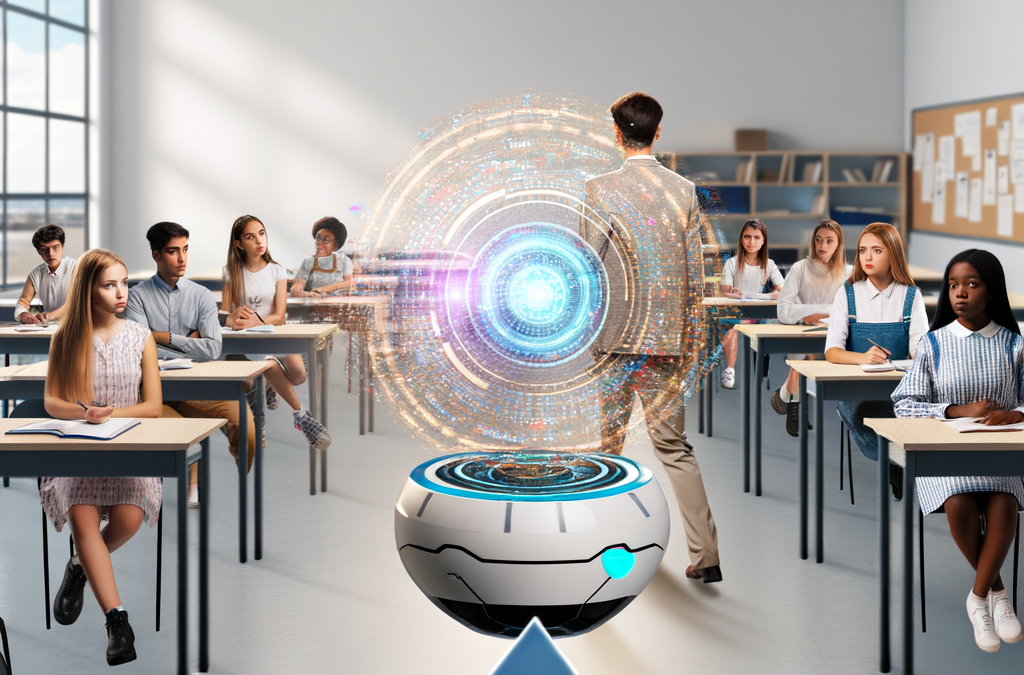
Generative artificial intelligence is transforming education, offering new opportunities and challenges. This article explores how technology is reshaping learning through advanced tools, analyzing the benefits and risks involved. Essential topics are addressed, such as the personalization of educational content, the ethical challenges associated with it, and the crucial role of UNESCO in the regulation of artificial intelligence in education.
The Educational Revolution with Generative AI
Generative AI is leading a revolution in education, providing us with tools that enable the rapid and adaptable development of educational content. The ability to generate materials that cater to the individual needs of students is one of the greatest advancements. This level of personalization fosters an inclusive learning environment, adaptable to different learning styles and paces.
Educators find in these tools an invaluable support that alleviates repetitive tasks and allows them to focus more on personalized educational guidance. With the assistance of artificial intelligence, it is possible to design curricula that take into account cultural diversity and promote equity and inclusion, aspects that UNESCO highlights as essential in educational policies worldwide.

However, this educational revolution is not without its challenges. Among the main risks is the possibility of biases in AI algorithms that may reinforce stereotypes rather than eliminate them. Additionally, misinformation is a significant concern, as generative models could propagate incorrect or unverified content if not managed properly.

Ethics and Regulation in the Age of Artificial Intelligence
In the face of the educational transformation driven by artificial intelligence, ethics plays a crucial role. The way these technologies are developed and used could impact students’ privacy, jeopardizing data protection. This calls for strict regulation to ensure the security of personal information, an area where UNESCO has emerged as a key player, promoting policies that prioritize protection and privacy.
Regulation must also address the ethical challenges related to copyright. The ability of AI to generate new content raises questions about intellectual property and how access to and use of these materials, whose authorship may be ambiguous, should be managed.
Finally, the security in the use of these systems becomes a critical issue for educational institutions, which must implement measures to prevent misuse that could endanger both teachers and students. The creation of clear policies and the training of specialized committees on ethics and regulation are necessary actions to ensure a responsible and beneficial application of artificial intelligence in education.
Generative artificial intelligence has the potential to significantly transform education by personalizing learning and supporting educators. However, its implementation must be carefully regulated to mitigate risks such as bias and misinformation. With UNESCO leading the way, a safer and more equitable environment for global learning is anticipated.
How This Works in Practice
Implementing generative AI in educational settings involves a series of structured steps to ensure effectiveness and alignment with pedagogical goals. Initially, institutions must establish a clear framework detailing the objectives of integrating AI tools into their curriculum. This includes identifying specific needs, such as enhancing student engagement or improving assessment methods.
Next, a collaborative effort between educators, IT specialists, and AI developers is essential. This team is responsible for selecting appropriate AI tools that align with the established educational goals. Training sessions for educators are crucial at this stage, ensuring they understand how to effectively utilize these tools in their teaching practices.
Once the tools are selected and educators are trained, pilot programs can be launched. These pilots should focus on specific subjects or grade levels, allowing for manageable implementation and feedback collection. During this phase, it is vital to monitor the outcomes, assessing both student performance and engagement levels. Feedback from educators and students should guide any necessary adjustments to the AI applications.
After successful pilot testing, the next step is to scale the implementation across the institution. This involves integrating AI tools into various curricula and ensuring ongoing support for educators as they adapt to the new technologies. Continuous professional development and a feedback loop are important for refining the use of generative AI in the learning environment.
Finally, institutions should establish a governance framework to oversee the ethical and responsible use of AI. This includes creating policies for data management, addressing potential biases in AI outputs, and ensuring compliance with legal and ethical standards. Regular audits and reviews can help maintain accountability and transparency in the use of generative AI in education.
What to Watch Out For
While generative AI presents numerous opportunities, there are also significant limitations and potential pitfalls that educators and institutions should be aware of. One major concern is the reliance on AI-generated content, which may not always align with curricular standards or pedagogical best practices. Educators must remain vigilant and critically assess the quality and appropriateness of AI-generated materials.
Another limitation is the risk of over-personalization. While tailoring content to individual learning styles can enhance engagement, excessive customization may lead to fragmented learning experiences. Students might miss out on essential foundational knowledge if they are only exposed to materials that align with their preferences.
Common mistakes include inadequate training for educators or insufficient integration of AI tools into existing curricula. Without proper support, teachers may struggle to incorporate these technologies effectively, leading to underutilization or frustration. Additionally, failure to engage with students about the use of AI can result in a lack of understanding and skepticism toward the technology.
Furthermore, institutions must be cautious of the ethical implications surrounding data privacy. Collecting and analyzing student data to enhance AI tools can pose significant risks if not handled correctly. Clear policies and transparent communication with students and parents are essential to build trust and ensure compliance with data protection regulations.
Frequently Asked Questions
Q: What are the first steps for implementing generative AI in education?
A: The initial steps include establishing clear objectives, forming a collaborative team of educators and IT specialists, selecting appropriate AI tools, and providing comprehensive training for educators.
Q: How can educators ensure the quality of AI-generated content?
A: Educators should critically assess AI-generated materials for alignment with curricular standards and pedagogical best practices. Regular feedback and adjustments based on student performance can help maintain quality.
Q: What are the risks of over-personalization in learning?
A: Over-personalization may lead to fragmented learning experiences, where students miss essential foundational knowledge by focusing solely on materials that align with their preferences.
Q: How can institutions protect student data when using AI?
A: Institutions should implement clear data management policies, ensure compliance with data protection regulations, and communicate transparently with students and parents about data usage and privacy measures.