
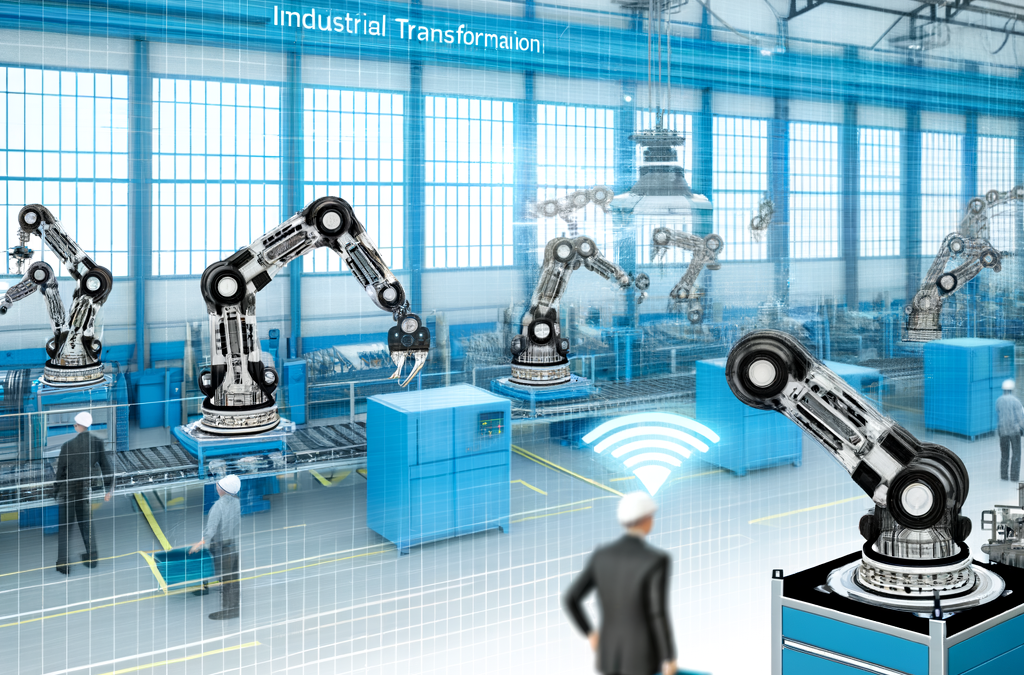
Artificial intelligence (AI) is transforming the industry and revolutionizing the way processes are managed. From task automation to advanced data analysis, AI offers a wide range of benefits such as enhanced security, cost reduction, and a competitive edge. In this article, we will explore its impact on the manufacturing industry.
Automation and Process Optimization
Process automation is one of the most significant applications of artificial intelligence in the industry. By utilizing advanced algorithms and neural networks, companies can achieve a level of process optimization that was unimaginable just a few years ago. This not only accelerates operations but also reduces human errors and enhances efficiency and productivity. For instance, factories that adopt artificial intelligence systems for production can schedule machinery to operate more efficiently, minimizing downtime and optimizing resource use.
Predictive maintenance is another area where automation demonstrates its benefits. Through real-time data analysis, AI systems can monitor the condition of equipment and identify potential failures before they occur. This not only extends the lifespan of machinery but also ensures that productive operations remain uninterrupted, contributing to improved efficiency and cost reduction.
Artificial Intelligence and the Supply Chain
Supply chain optimization is another area where artificial intelligence has a significant impact. By integrating data from multiple sources, AI solutions can forecast demand, manage inventories, and enhance logistics. Companies that implement WMS (Warehouse Management Systems) alongside AI technologies can better manage their assets and enable more accurate planning.

The capabilities of machine learning enable companies to dynamically adjust their operations to adapt to changes in the market or customer needs. This level of flexibility provides a competitive advantage, allowing businesses to respond quickly to changing conditions. Furthermore, AI enhances quality control by detecting inconsistencies and ensuring that products meet established standards.

The implementation of AI not only benefits internal operations but also influences decision-making. With access to accurate, real-time data analytics, business leaders can make informed decisions that benefit both the company and its customers. This ability for customization allows for the adaptation of products and services to the specific needs of the customer, thereby strengthening customer loyalty and increasing revenue opportunities.
Artificial intelligence is reshaping the industrial landscape. By enabling advanced automation and deep integration into the supply chain, AI not only enhances efficiency but also improves the quality and customization of products. Companies that embrace these modern technologies not only reduce costs but also secure a leadership position in today’s competitive industrial environment.
How This Works in Practice
Implementing AI in the manufacturing industry requires a structured approach to ensure successful integration and realization of benefits. The following steps illustrate how this process typically unfolds:
- Assessment of Needs: The first step involves a thorough assessment of the existing processes and identifying areas where AI can add value. This assessment should involve stakeholders from various departments, including production, quality control, and supply chain management.
- Data Infrastructure: Before deploying AI solutions, companies must have a robust data infrastructure in place. This includes collecting relevant data from machinery, production lines, and supply chain operations. Data should be clean, organized, and accessible for analysis.
- Selection of AI Tools: Companies must evaluate and select appropriate AI tools and technologies that align with their objectives. This can include machine learning algorithms for predictive maintenance or AI-driven analytics for supply chain optimization.
- Pilot Programs: Before full-scale implementation, organizations should conduct pilot programs to test AI solutions in a controlled environment. This allows for adjustments and optimizations based on real-world feedback.
- Training and Upskilling: Employees must be trained to work alongside AI systems effectively. Upskilling the workforce ensures that team members can leverage AI insights and operate new technologies proficiently.
- Full Implementation: Following successful pilot testing and training, companies can proceed with full-scale deployment of AI solutions across relevant operations. Continuous monitoring during this phase is essential to identify any issues promptly.
- Feedback Loop: Establishing a feedback loop is critical for ongoing improvement. Regular evaluations of AI performance and its impact on operations should be conducted to refine processes and enhance outcomes.
Involving cross-functional teams throughout this process fosters collaboration and ensures that AI applications address the specific needs of the organization.
What to Watch Out For
While the integration of AI in manufacturing presents numerous advantages, it is essential to be aware of potential limitations and pitfalls:
- Data Quality: The effectiveness of AI systems heavily relies on the quality of data. Poor or incomplete data can lead to inaccurate predictions and suboptimal decisions. It is crucial to establish data governance practices to ensure integrity.
- Change Management: Implementing AI solutions can meet resistance from employees who may fear job displacement or changes in their roles. Effective change management strategies, including clear communication and involvement, are necessary to address these concerns.
- Over-Reliance on Technology: While AI can provide significant insights, it should not replace human judgment entirely. Decision-makers must balance AI recommendations with their expertise and contextual understanding of the business.
- Cost Considerations: Although AI can drive cost reductions in the long term, the initial investment in technology, training, and infrastructure can be substantial. Companies should carefully evaluate the return on investment (ROI) before proceeding.
- Integration Challenges: Integrating AI solutions with existing systems can be complex. Companies need to ensure compatibility and address any technical challenges that may arise during implementation.
Being aware of these challenges enables companies to plan effectively and mitigate risks associated with AI adoption.
Frequently Asked Questions
Q: How long does it take to implement AI in manufacturing?
A: The timeline for implementing AI varies widely depending on the complexity of the solutions, the readiness of the existing infrastructure, and the specific goals of the company. It can range from a few months for pilot programs to several years for full-scale integration.
Q: What types of AI technologies are most beneficial for manufacturing?
A: Beneficial AI technologies for manufacturing include machine learning for predictive maintenance, computer vision for quality control, and natural language processing for supply chain management. The choice of technology depends on the specific challenges faced by the organization.
Q: Will AI eliminate jobs in the manufacturing sector?
A: While AI may automate certain tasks, it is more likely to transform jobs rather than eliminate them. Employees will need to adapt and develop new skills to work alongside AI systems, focusing on more strategic and complex responsibilities.
Q: How can companies measure the success of their AI initiatives?
A: Companies can measure the success of AI initiatives by tracking key performance indicators (KPIs) such as efficiency improvements, cost savings, product quality, and customer satisfaction. Regular assessments and adjustments based on these metrics are essential for ongoing success.