
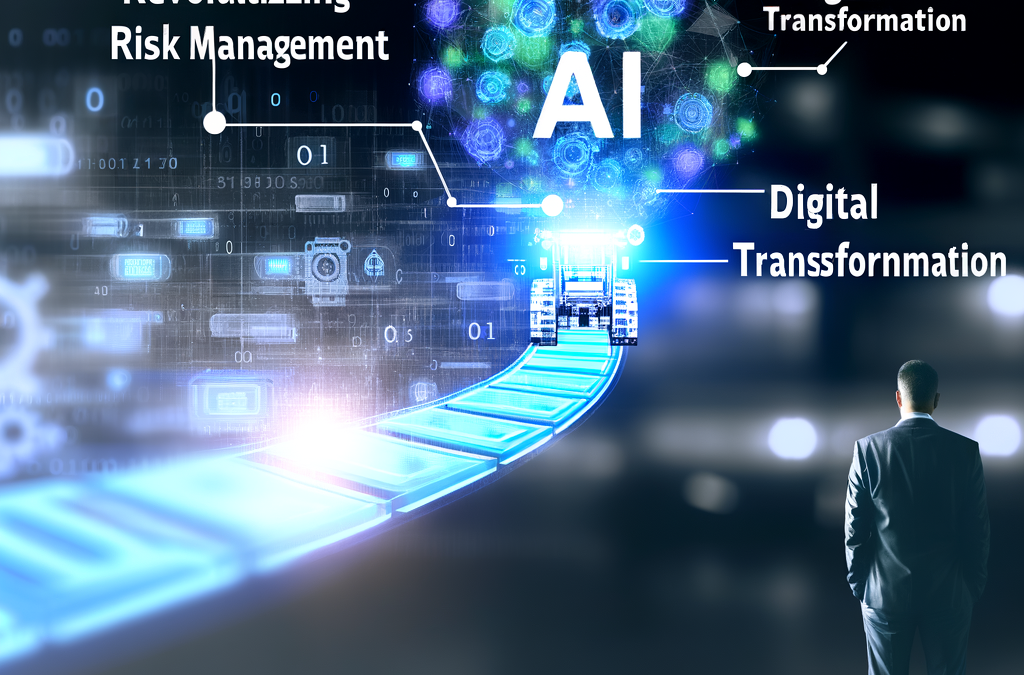
Artificial intelligence (AI) is increasingly being integrated into various sectors, transforming the business landscape through automation and predictive analytics. This article explores how AI-driven solutions are revolutionizing **risk management** and **digital transformation**, focusing on applications in areas such as fraud detection, cybersecurity, and market risk analysis.
Predictive Analytics and Risk Management
In today’s world, where data drives business decisions, **predictive analytics** has become an invaluable tool for **risk management**. Companies, with the help of **advanced AI technologies**, can anticipate and mitigate potential risks before they occur. In sectors such as **insurance** and credit, this approach is essential for **credit scoring**, identified with the implementation of automated systems that assess the customer’s creditworthiness in a matter of seconds.
Furthermore, **market risk analysis** greatly benefits from artificial intelligence, enabling portfolio managers to optimize their investments and adapt to changing economic conditions. **AI-powered systems** not only identify patterns and anomalies in vast datasets but also provide proactive recommendations to reduce exposures. The integration of AI in challenges such as **anti-money laundering** (AML) and **fraud detection** represents a qualitative leap, enhancing accuracy and significantly reducing response times.
It is important to note that AI also plays a crucial role in **cybersecurity**, where the risk of attacks is increasing due to the interconnectivity generated by the **IoT** and **blockchain**. These systems, when integrated with **machine learning** strategies, continuously learn from new threats, adapting and evolving to strengthen defenses. In terms of **supplier risk assessment**, AI analyzes the entire supply chain, identifying critical vulnerabilities and ensuring a continuous and secure flow of goods and services.

Emerging Applications and the Future of AI
As **digital transformation** progresses, new AI applications are emerging across various industries. In the automotive sector, **AI in vehicle diagnostics** is redefining maintenance, enabling **predictive maintenance** by identifying potential issues before they become costly failures. In healthcare, AI systems continuously analyze medication safety, helping to prevent adverse situations and improving regulatory processes.

On another front, AI is driving **natural disaster risk management**, anticipating severe weather events and enabling government agencies and businesses to develop more effective contingency plans. Meanwhile, in the financial sector, **portfolio optimization** has become smarter and more adaptable, managing various risk variables with the help of predictive analytics, ensuring investors face minimal uncertainty with maximum returns.
The integration of **Generative AI Technologies** in **application development** is revolutionizing software creation, automating repetitive tasks and opening up new possibilities for customization. Additionally, the use of AI in **customer churn prevention** involves analyzing behaviors and purchasing patterns to anticipate and intervene before the customer decides to leave. In this way, AI not only **automates processes** but also enhances the consumer experience.
AI is shaping the future of multiple sectors, providing sophisticated tools for risk management, **detection of employee misconduct**, and supplier evaluation. With its ability to learn and adapt, **AI will continue to transform industries**, offering safer and more efficient solutions. The Era of AI is here, and its impact is felt in every corner of the business world.
How This Works in Practice
Implementing AI-driven solutions for risk management and digital transformation involves a series of methodical steps that ensure a seamless integration into existing processes. The first step is defining the objectives and scope of the AI application. Stakeholders, including data scientists, IT professionals, and business leaders, must collaborate to identify specific areas where AI can add value, such as fraud detection or market risk analysis.
Once the objectives are clear, the next phase involves data collection and preparation. This requires gathering relevant datasets, which may include historical transaction records, customer interactions, or market trends. Data must then be cleaned and structured to ensure accuracy and completeness. This step is essential, as the quality of the input data directly influences the performance of AI models.
Following data preparation, the selection and training of AI models take place. Data scientists typically explore various algorithms, such as decision trees or neural networks, to determine which is most effective for the specific application. Models are trained using the prepared datasets, and their performance is evaluated through metrics like accuracy and precision. This iterative process may involve optimizing parameters to enhance the model’s predictive capabilities.
Once a satisfactory model is achieved, it enters the deployment phase. This step includes integrating the AI solution into existing systems, which may require collaboration with IT departments to ensure compatibility and security. User training is also crucial at this stage to familiarize employees with the new tool, enabling them to leverage its capabilities effectively.
Finally, continuous monitoring and maintenance are vital to ensure the AI system adapts to changing conditions and remains effective over time. This involves tracking performance metrics, updating models with new data, and refining algorithms based on feedback. A multidisciplinary team should oversee this process, ensuring that the AI solution evolves alongside the business environment.
What to Watch Out For
While AI offers significant advantages in risk management and digital transformation, there are several limitations and trade-offs to consider. One common pitfall is over-reliance on AI systems without proper human oversight. Automated systems can make errors, especially if they encounter scenarios outside their training data. It is crucial to maintain a human-in-the-loop approach to validate AI-generated insights and decisions.
Data privacy and security represent another critical concern. Implementing AI solutions often requires access to sensitive information, which can expose organizations to regulatory scrutiny and potential breaches. Companies must ensure compliance with data protection laws and establish robust security protocols to safeguard customer data.
Moreover, the complexity of AI models can lead to a lack of transparency, making it difficult for stakeholders to understand how decisions are made. This opacity can result in mistrust among users and hinder the adoption of AI solutions. Organizations should prioritize explainability in AI by selecting models that provide clear insights into their decision-making processes.
Additionally, integrating AI into existing workflows can be resource-intensive. Organizations may face challenges related to legacy systems, employee resistance to change, and the need for ongoing training. It is essential to manage change effectively by clearly communicating the benefits of AI and providing the necessary support to facilitate a smooth transition.
Finally, organizations should be cautious about the scalability of AI solutions. A model that works well on a small scale may not perform as effectively when applied to larger datasets or more complex environments. Rigorous testing and validation on varied scales are vital before widespread implementation.
Frequently Asked Questions
Q: How long does it take to implement an AI solution for risk management?
A: The implementation timeline can vary significantly based on the complexity of the project, data availability, and organizational readiness. Typically, a complete cycle from initial planning to deployment may take several months to over a year.
Q: What types of data are most valuable for AI-driven risk management?
A: Valuable data includes historical transaction records, customer behavior data, market trends, and external factors such as economic indicators. The more relevant and comprehensive the data, the better the AI model can perform.
Q: Can AI completely replace human decision-making in risk management?
A: While AI can enhance decision-making by providing valuable insights, it should not completely replace human judgment. A collaborative approach that combines AI capabilities with human expertise often yields the best results.
Q: What are the costs associated with implementing AI for risk management?
A: Costs can vary widely depending on factors such as the scale of implementation, technology infrastructure, and ongoing maintenance. Organizations should budget for initial setup costs, training, and potential upgrades to ensure long-term success.