
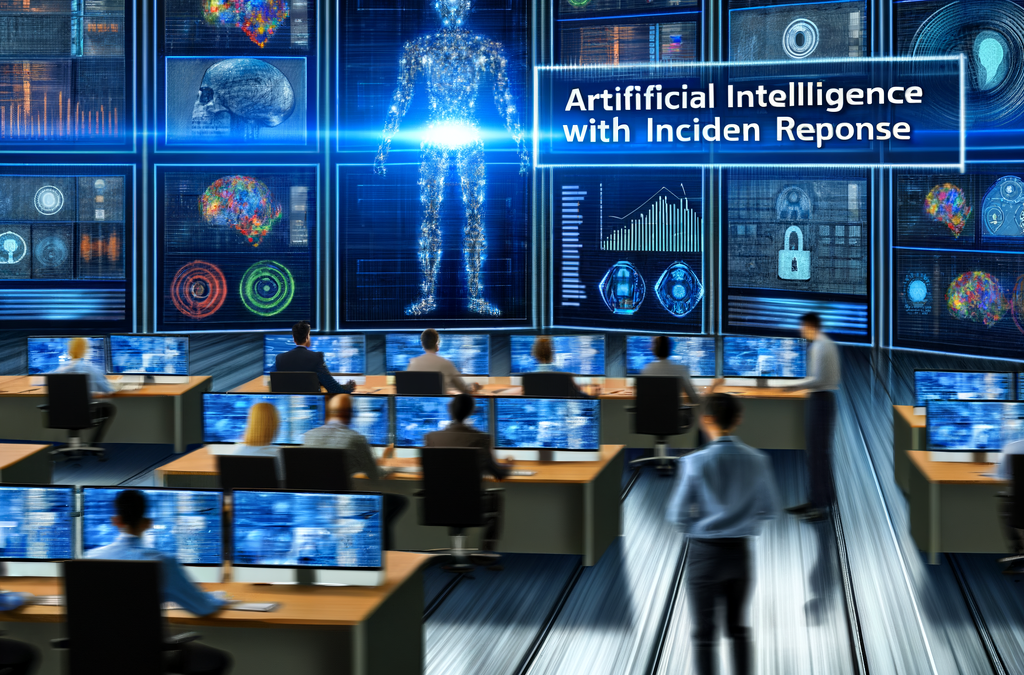
Artificial intelligence (AI) is revolutionizing incident response in cybersecurity, bringing automation and autonomy to unprecedented levels. In a world filled with digital threats, the ability to detect, triage, and mitigate threats in real-time is crucial. This article explores how AI and machine learning are changing the way security teams address challenges in cybersecurity.
The AI-Powered Revolution in Incident Response
Managing threats in today’s digital ecosystem requires an advanced and dynamic approach. This is where AI-Powered Incident Response becomes an invaluable resource. This model drives a significant shift by integrating artificial intelligence and machine learning into the threat detection process. Through sophisticated algorithms, organizations can decode large volumes of data in real time, enhancing threat detection more accurately and quickly than traditional methods.
The ability of AI to process vast amounts of network traffic and system logs enables the identification of unusual behavior patterns or anomalies that may indicate the presence of threats. This autonomous approach not only enhances visibility into the threat landscape but also significantly reduces the number of false positives, thereby alleviating the burden on security analysts. As a result, cybersecurity teams can focus their efforts on more effective incident triage and remediation, optimizing costs and response times.
Automation in Security Operations Centers (SOCs)
The integration of AI-driven automation and autonomy in SOCs represents a paradigm shift. With SOC Automation, security teams can effectively manage security data streams, enabling a faster and more efficient decision-making process. This approach not only optimizes alert management but also enhances incident response by allowing for quicker and more accurate identification and triage.

The impact of the AI SOC Analyst is tangible, enhancing the ability of security operations centers to manage the volume and complexity of modern cyber threats. By employing AI algorithms, SOCs can execute autonomous remediation, freeing analysts from repetitive tasks and allowing them to focus on more complex response strategies. This level of automation not only improves the organization’s security posture, but also provides a more cost-effective solution to growing challenges.

The use of threat intelligence in real-time, combined with the AI’s ability to interpret complex data flows, means that SOCs are better equipped to recognize and mitigate cyber threats before they can cause significant harm. This transformation not only benefits an organization’s incident management strategy but also redefines the role of the security analyst, enabling them to contribute greater value to the decision-making process.
With the adoption of AI-driven mechanisms, companies not only optimize their incident response strategies but also strengthen their security posture against the expanding universe of digital threats. AI-Powered Incident Response is undoubtedly an essential tool for modern cybersecurity, offering efficiency, precision, and a more strategic response to security challenges.
How This Works in Practice
Implementing AI-Powered Incident Response involves several key steps that organizations must follow to ensure a successful transition from traditional methods. The first step is to assess the existing cybersecurity infrastructure and identify areas where AI can provide the most significant improvement. This often includes evaluating current threat detection capabilities, incident response workflows, and the overall security posture.
Once the assessment is complete, organizations should invest in the necessary AI tools and platforms that align with their specific needs. This might involve selecting machine learning algorithms tailored for threat detection, natural language processing for analyzing security data, or automated response systems that can execute predefined actions during an incident.
Next, collaboration among various stakeholders is crucial. Security teams, IT departments, and management must work together to establish clear objectives and ensure everyone understands the role of AI in incident response. Training sessions should be organized to help security analysts familiarize themselves with the new tools and processes, enabling them to leverage AI effectively.
After training, organizations can begin the integration phase, where AI tools are deployed into the existing security operations center (SOC). This phase often requires careful monitoring and adjustment, as the AI systems learn from historical data and adapt to the unique threat landscape of the organization. Continuous feedback loops should be established to refine the algorithms, ensuring they remain effective over time.
Finally, regular evaluations and updates are essential to maintain the efficacy of the AI-Powered Incident Response system. By continuously analyzing performance metrics and incident outcomes, organizations can make informed decisions about future enhancements and adjustments, ensuring that their cybersecurity strategy remains robust against evolving threats.
What to Watch Out For
While AI-Powered Incident Response offers numerous advantages, there are several limitations and trade-offs to consider. One significant challenge is the potential for over-reliance on automation, which can lead to a decrease in human oversight and critical thinking. Security analysts must remain engaged and vigilant, as AI tools may not always interpret context or nuances effectively.
Another common pitfall is the quality of the data used to train AI systems. If the training data is biased, incomplete, or not representative of real-world scenarios, the AI may produce inaccurate results, leading to missed threats or unnecessary alerts. Organizations should prioritize data quality and ensure that the AI is trained on diverse and comprehensive datasets.
Moreover, integrating AI into existing workflows can be a complex process that requires significant time and resources. Organizations may face resistance from staff who are accustomed to traditional methods, leading to challenges in adoption. Clear communication about the benefits and training on new processes are vital to overcoming these hurdles.
Lastly, organizations must remain aware of the evolving nature of cyber threats. AI tools, while powerful, can become outdated if not regularly updated and maintained. Continuous investment in AI technology and the latest threat intelligence is essential to stay ahead of attackers.
Frequently Asked Questions
Q: How does AI improve the accuracy of threat detection?
A: AI enhances threat detection accuracy by analyzing vast amounts of data to identify patterns and anomalies that indicate potential threats. This allows for quicker and more precise identification compared to traditional methods, which may rely on predefined rules or signatures.
Q: What role do security analysts play in an AI-driven incident response system?
A: Security analysts play a critical role in overseeing AI systems, interpreting their findings, and making informed decisions based on the context of incidents. They are responsible for refining AI algorithms and ensuring that the technology aligns with the organization’s security strategy.
Q: Can AI completely replace human security analysts?
A: No, AI cannot completely replace human security analysts. While it can automate repetitive tasks and enhance decision-making, human expertise is essential for understanding complex threats, providing contextual analysis, and making strategic decisions.
Q: What should organizations consider before implementing AI in their cybersecurity strategy?
A: Organizations should assess their existing cybersecurity infrastructure, evaluate the quality of their data, ensure they have the necessary resources for implementation, and invest in training for their staff to maximize the benefits of AI technologies.