
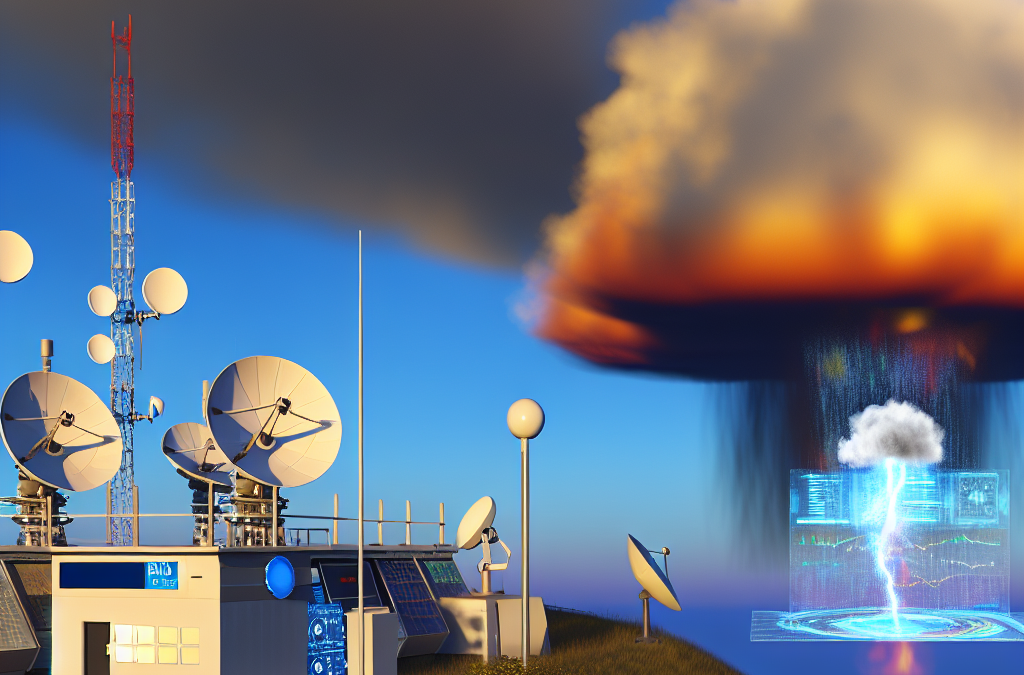
The artificial intelligence (AI) is becoming a key tool for sustainability and a green future to address one of the most pressing challenges of the 21st century: climate change. This article explores how AI is being utilized to predict extreme weather events, enhance early warning systems, and help mitigate severe climate impacts, such as droughts and heavy rainfall.
The Role of AI in Weather Forecasting
The accurate prediction of extreme weather events is essential for mitigating their impacts. **Artificial intelligence is revolutionizing weather forecasting**, providing faster and more accurate predictions. Traditional weather forecasting models, which often require enormous computational resources, are being replaced or supplemented by AI models that can process massive amounts of data in real time. This capability allows for the identification of complex weather patterns and the forecasting of extreme phenomena with greater lead time. With systems like Copernicus, which utilize advanced algorithms, AI offers an innovative approach to predicting heavy rainfall, storms, or droughts days or even weeks in advance.
The scientist Markus Reichstein has emphasized the importance of integrating biogeochemical data into AI models to enhance their accuracy. **This integration not only aids in predicting extreme events but also provides a better understanding of the underlying climate processes**. For instance, by considering factors such as soil carbon content and water evaporation, AI models can deliver more holistic and precise forecasts, which is crucial for developing long-term prevention strategies.
Early warning systems powered by artificial intelligence
Early warning systems are essential for minimizing damage caused by extreme weather events. AI is transforming these systems by enhancing their forecasting capabilities and response speed. **By utilizing AI, alert systems can analyze large volumes of data from multiple sources**, enabling more efficient detection of conditions that may lead to natural disasters. This analysis includes both historical and real-time data, helping to anticipate adverse conditions in advance.

**Vitus Benson, an expert in artificial intelligence applied to climate**, has noted that AI-powered automated systems can continuously adapt as new climate data is collected. This means they can not only issue more accurate warnings but also enhance their effectiveness over time. Furthermore, these systems can be configured to provide specific and contextual information for different geographic regions, thereby increasing the resilience of communities and assisting local authorities in planning more effectively.
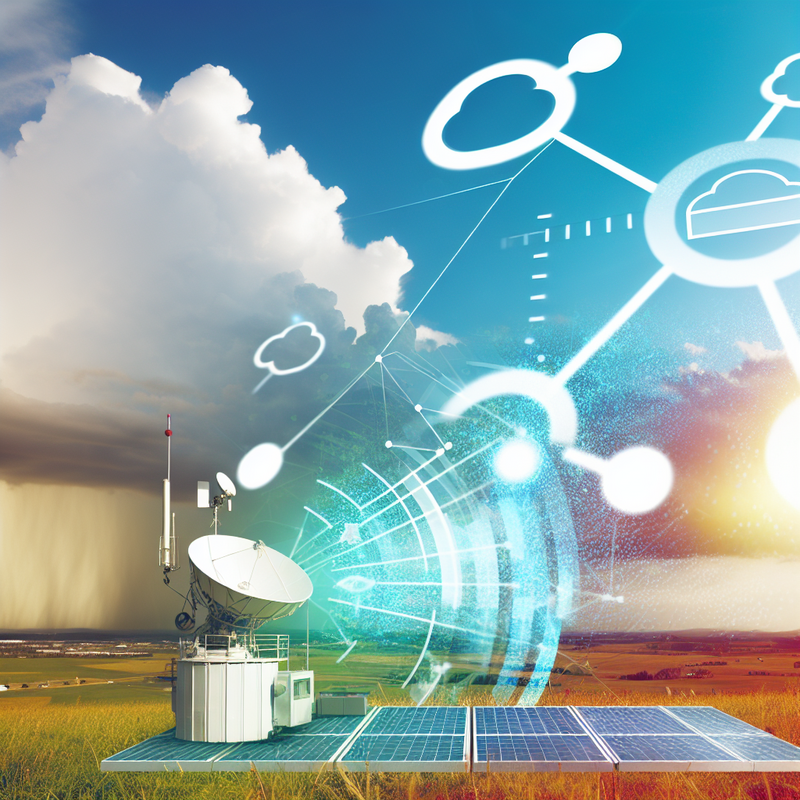
Another critical component of these systems is their ability to integrate AI models with advanced communication technologies. Delivering alerts through multiple channels, such as mobile apps or text messages, ensures that critical information reaches those who need it most in a timely manner. **The combined approach of AI and technological communication is saving lives by providing additional time for evacuations and preparations**.
Artificial intelligence stands as a powerful ally in the fight against climate change, particularly in the realm of extreme weather events. By enhancing forecasting and alert systems, AI not only improves the resilience of communities but also contributes to sustainability and the capacity to respond to climate emergencies.
How This Works in Practice
Implementing AI for climate event prediction and early warning systems involves a structured approach that requires collaboration across multiple sectors. The first step is to establish a comprehensive data infrastructure that can collect, store, and manage vast amounts of climate data from diverse sources, such as satellite imagery, weather stations, and historical climate records. This infrastructure should be robust enough to handle real-time data processing while ensuring data quality and integrity.
Once the data infrastructure is in place, the next step involves assembling a multidisciplinary team. This team typically includes climate scientists, data scientists, AI specialists, and software developers. Collaboration among these professionals is crucial for developing AI models that accurately reflect the complexities of climate systems.
The development process begins with defining the specific climate events that need to be predicted, such as floods, hurricanes, or droughts. This definition guides the selection of relevant datasets and the design of the AI algorithms. For instance, neural networks might be employed to analyze patterns in historical weather data, while machine learning techniques could be used to refine predictions based on real-time data inputs.
After the models are developed, they undergo rigorous testing and validation to ensure accuracy. This phase often includes back-testing the AI models against historical events to evaluate their predictive performance. Once validated, the models can be integrated into existing early warning systems, allowing for automated alerts to be generated based on real-time analysis.
Finally, continuous monitoring and updates are essential. As new data becomes available, AI models need to be retrained to adapt to changing climate conditions and improve their predictive capabilities. This iterative process helps maintain the effectiveness of the early warning systems, ensuring they remain reliable over time.
What to Watch Out For
While AI offers significant advantages in predicting climate events, there are notable limitations and trade-offs to consider. One primary concern is data quality. AI models are heavily reliant on the data fed into them; if the data is incomplete, outdated, or biased, the predictions can be inaccurate, leading to potentially disastrous consequences. Ensuring high-quality data collection and management practices is vital.
Another challenge lies in the complexity of climate systems. Climate models are inherently simplified representations of reality and may not capture all relevant interactions and feedback loops. Over-reliance on AI without a thorough understanding of the underlying climatic processes can lead to misleading results.
Common mistakes include neglecting the importance of human expertise in the interpretation of AI outputs. While AI can provide valuable insights, human oversight is essential to validate the predictions and make informed decisions based on the alerts generated. Additionally, there can be a tendency to focus on short-term predictions at the expense of long-term climate trends, which are equally important for strategic planning.
In certain contexts, such as regions with limited technological infrastructure, implementing AI-driven systems may not be feasible. In these situations, traditional forecasting methods may still be necessary. Understanding the local context, including technological capabilities and community needs, is crucial when deciding whether to adopt AI solutions.
Frequently Asked Questions
Q: What type of data is necessary for AI models to predict climate events?
A: AI models require a diverse range of data, including historical weather patterns, real-time meteorological data, satellite imagery, and biogeochemical data. The quality and comprehensiveness of this data are critical for accurate predictions.
Q: How can communities ensure they effectively utilize AI-generated alerts?
A: Communities should establish clear communication channels and protocols for disseminating AI-generated alerts. Training local authorities and emergency response teams on interpreting and acting on these alerts is also crucial for effective response.
Q: Are there specific regions or situations where AI is less effective?
A: AI may be less effective in regions with limited access to quality data or technological infrastructure. Additionally, in areas where traditional forecasting methods are already well-established and effective, the transition to AI may not yield significant benefits.
Q: What role do human experts play in the AI prediction process?
A: Human experts are essential for validating AI predictions, interpreting results, and making informed decisions based on the alerts generated. Their expertise ensures that the AI outputs are contextualized within the broader understanding of climate science.