
The integration of artificial intelligence in digital marketing has revolutionized the way companies interact with their customers. This advanced technology is transforming every aspect, from SEO and automation to the personalization of the customer experience. We explore how artificial intelligence optimizes marketing strategies to enhance return on investment and conversion rates.
Digital Marketing Optimization through Artificial Intelligence
Artificial intelligence has played a crucial role in elevating digital marketing to new heights. One of the most impactful areas is SEO. AI-driven algorithms analyze large volumes of data to identify the most effective keywords, thereby enhancing the visibility of content. This optimization not only boosts traffic in search engines but also ensures that the content reaches the right audience.
Automation is another crucial benefit of AI in marketing. It enables companies to efficiently manage numerous recurring tasks. From email marketing to advertising campaigns on social media, AI can automate processes that would otherwise consume valuable time. Additionally, automation systems facilitate data-driven decision making in real-time, optimizing ads to maximize conversions and improve return on investment.

In the realm of dynamic content, artificial intelligence adjusts the content based on user interaction in real-time, providing them with more accurate recommendations. This is particularly relevant in ecommerce, where personalized product recommendations can significantly influence the consumer’s purchasing decision. By considering the user’s preferences and previous behavior, companies can create personalized experiences that foster customer loyalty and repeat sales.
Predictive Analytics and Personalization to Enhance Customer Experience
Predictive analytics is a facet of artificial intelligence that allows for anticipating future consumer behavior. By utilizing historical data, AI can forecast trends, helping businesses proactively adjust their marketing strategies. This ability for trend prediction is particularly valuable in dynamic markets, where rapid adaptation can mean the difference between success and failure.

Personalization is another powerful tool that AI offers to enhance the customer experience. By collecting and analyzing data from users, companies can create highly targeted marketing campaigns. Audience segmentation allows marketing efforts to be more relevant and effective, resulting in increased engagement and conversions. This not only boosts return on investment but also enhances customer satisfaction.
Chatbots powered by artificial intelligence are becoming increasingly popular in customer service. These virtual assistants provide advice and immediate support, enhancing the customer experience while alleviating the burden on human staff. By delivering quick and personalized responses, chatbots significantly improve the efficiency of customer service.
In the digital age, artificial intelligence has transformed marketing by enabling precise optimization and effective personalization. From enhancing online visibility to automating campaigns and delivering personalized experiences, AI is redefining the business-client interaction, making marketing strategies smarter and more effective.
How This Works in Practice
Implementing AI in marketing involves several key steps that require careful planning and execution. Initially, organizations must establish a clear understanding of their marketing goals and objectives. This clarity helps in selecting the appropriate AI tools and platforms that align with their specific needs.
The next step involves data collection and integration. Companies need to gather relevant data from various sources, such as customer interactions, sales records, and market trends. This data should be cleaned and organized to ensure accuracy and reliability. In this phase, collaboration between IT departments, data analysts, and marketing teams is crucial to create a robust data infrastructure.
Once the data is ready, businesses can begin to deploy AI technologies. This often starts with using machine learning algorithms to analyze patterns and insights from the data. Marketing teams can work alongside data scientists to interpret these findings and develop strategies based on the insights gained. For instance, predictive analytics can help in identifying potential customer segments that are more likely to convert.
Following this, organizations can implement automation tools that facilitate real-time decision-making and streamline marketing processes. This includes setting up automated email campaigns, social media scheduling, and ad placements. Continuous monitoring of these automated systems is essential to ensure they are performing optimally.
Finally, feedback loops should be established to assess the effectiveness of AI-driven marketing strategies. Regular analysis of performance metrics enables companies to fine-tune their approaches, ensuring that they remain agile and responsive to changing market conditions. Involving cross-functional teams throughout this process enhances collaboration and drives innovation.
What to Watch Out For
While AI offers significant advantages in marketing, there are several limitations and trade-offs that organizations must consider. One common mistake is over-reliance on AI without human oversight. Automated systems can sometimes make decisions based on flawed data or misinterpretations, leading to incorrect marketing strategies. It’s essential to have human experts review AI-generated insights to ensure their validity.
Another challenge is data privacy and compliance. With increasing regulations regarding data protection, companies must be cautious about how they collect and use customer data. Failing to comply with legal standards can result in severe penalties and damage to the brand’s reputation.
Additionally, the implementation of AI can be resource-intensive. Organizations may face high upfront costs in terms of software, training, and infrastructure. Smaller companies might find it challenging to compete with larger organizations that have more substantial budgets for AI technologies.
Furthermore, the effectiveness of AI in marketing can vary based on industry and target audience. Some sectors may not benefit as significantly from AI-driven strategies, making it crucial for businesses to evaluate the potential return on investment before fully committing to AI integration.
What Nobody Tells You About AI in Marketing
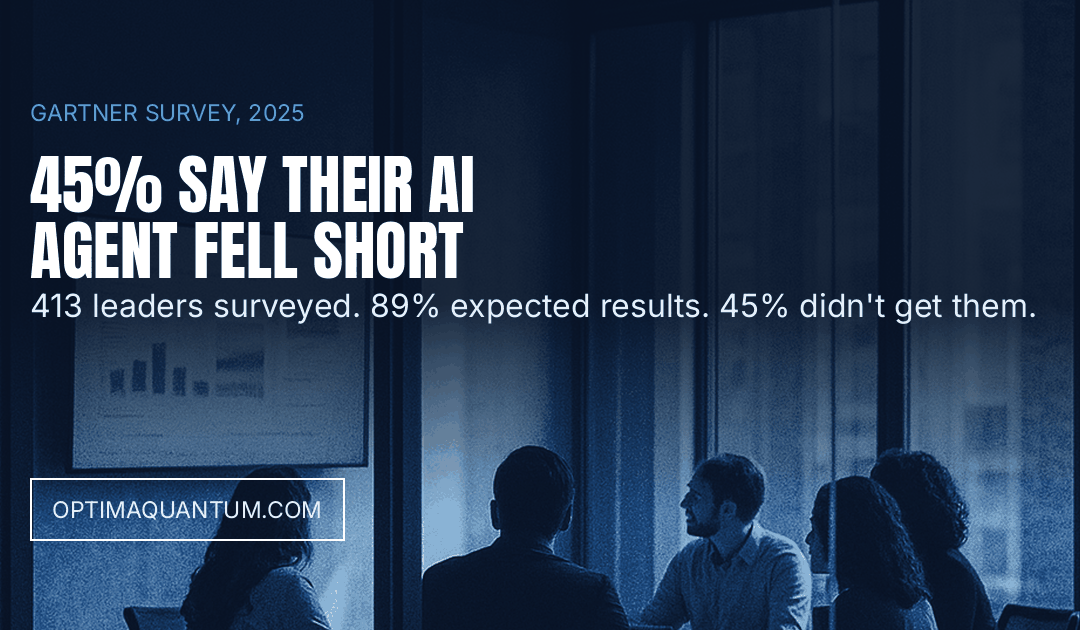
Every vendor pitch says the same thing: buy our AI, watch conversion go up. The part nobody puts on the slide is what happens after the contract is signed. A Gartner survey of 413 martech leaders (fielded June-August 2025) found that 89% expected their AI agent initiatives to deliver significant business benefits, and adoption followed fast: 81% were already piloting or fully running one. But when Gartner asked whether the agent actually delivered what the vendor promised, 45% said no (Gartner, October 2025).
Here’s the part that should change how you shop for these tools: the same survey found the gap is rarely the model’s fault. Half of the organizations surveyed lacked the data and governance stack to run an agent properly, and half were short on the technical talent to operate it. In other words, companies bought the AI before they built the floor it has to stand on. That’s not a reason to skip AI in marketing — it’s a reason to stop judging a tool by the demo and start judging it by whether your own team and data are ready for it. For a wider view of where AI is actually paying off by sector, see our AI use cases by industry.
“45% of marketing teams say their AI agent didn’t deliver what the vendor promised. The tool wasn’t the problem — the readiness was.”
Before you sign another AI marketing contract, run it through these five questions:
- Does it decide, or just follow rules you already wrote? Ask for a real example of a decision it made that wasn’t pre-scripted.
- Who owns the data it learns from — you or the vendor? If the answer is “it’s complicated,” that’s your answer.
- What happens to your campaigns if the vendor changes the model overnight? Get this in writing, not in a sales call.
- Can a human override it in one click, not three menus deep? If override takes a ticket to support, it isn’t oversight.
- What’s the one metric that proves the AI moved the needle — not the vendor’s case study, yours? If your team can’t name it today, the project isn’t ready to launch.
Frequently Asked Questions
Q: What types of AI tools are best suited for small businesses?
A: Small businesses can benefit from user-friendly AI tools that focus on automation and data analysis, such as email marketing platforms with AI capabilities, social media management tools, and basic chatbots that can enhance customer engagement.
Q: How can I ensure that my AI marketing strategies remain effective over time?
A: Regularly monitoring performance metrics, seeking feedback from customers, and staying updated on AI technology trends can help refine and adapt your marketing strategies as needed.
Q: Is there a risk of losing the personal touch in marketing with AI?
A: Yes, if overused, AI can lead to generic marketing approaches. Balancing AI automation with human oversight and personalization is key to maintaining meaningful customer relationships.
Q: How can I measure the success of AI-driven marketing efforts?
A: Success can be measured through various metrics, including conversion rates, customer engagement levels, and return on investment. Setting clear goals at the outset will help in evaluating the effectiveness of AI initiatives.
Q: Why do so many AI marketing tools disappoint companies that bought them?
A: Usually it is not the AI itself. Gartner found that 45% of martech leaders say their vendor’s AI agent did not deliver the promised business performance, mainly because half of organizations lacked the data/governance stack or the technical talent to run it well — the fix is readiness, not a different vendor.
Related Articles
Get our new articles by email
One email per article. Unsubscribe anytime.