
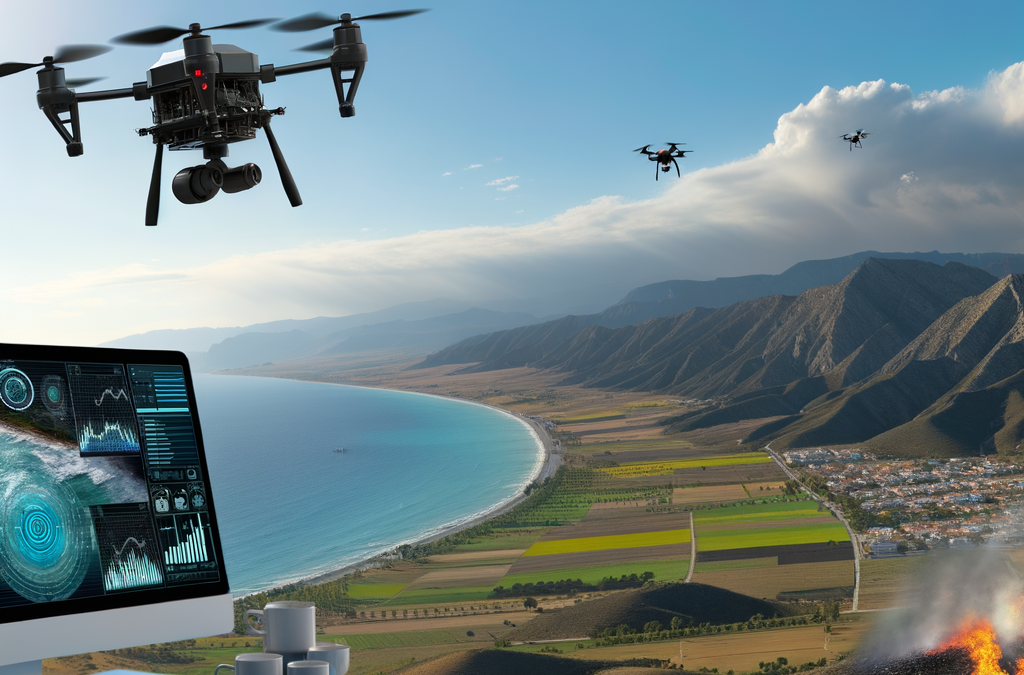
Artificial intelligence (AI) has become a crucial tool in the prevention and mitigation of natural disasters. This article explores how technology is being integrated to address phenomena such as wildfires and other environmental risks, enhancing our understanding through data analysis, simulations, and monitoring, with a particular emphasis on applied cases in Spain.
AI as a Critical Tool in the Detection and Prevention of Natural Disasters
The current climate emergency has heightened the need to develop new methods for the detection and prevention of natural disasters. This is where artificial intelligence (AI) emerges as an indispensable ally. Thanks to its ability to process large volumes of data in real-time, AI can detect patterns that alert us to wildfires, severe storms, and other extreme weather events. Predictive models, fueled by historical climate data, provide accurate warnings that allow for proactive action.
In Spain, a nation accustomed to facing recurring wildfires, the use of artificial intelligence has advanced in the field of prevention. Through monitoring systems that utilize satellites and ground sensors, vital information about temperature, humidity, and wind speed is collected. This data is analyzed in real time by advanced algorithms that can predict the risk of fire in specific areas, assisting authorities in deploying resources effectively before larger disasters unfold.
Simulations and risk analysis: towards greater resilience and recovery
In addition to proactive detection, AI plays a crucial role in risk analysis and mitigation. Through complex simulations that model various climate scenarios, artificial intelligence systems enable scientists and planners to assess the potential impacts of natural disasters. These tools generate simulations of wildfires, floods, and droughts, facilitating the identification of particularly vulnerable areas and the prioritization of protection measures.

An innovative aspect is the use of social media as a complementary data source in monitoring crisis situations. By analyzing posts and updates, AI algorithms can detect emerging trends and provide communities with up-to-date information and specific instructions during and after an event. This approach not only aids in immediate response but also contributes to long-term resilience by informing effective recovery strategies.
AI not only facilitates disaster response but also supports post-disaster recovery efforts in Spain. After an incident, data analysis and AI-based damage assessments provide valuable insights to direct resources and rebuild infrastructure more efficiently and sustainably. This approach enables affected communities to recover more quickly, strengthening their resilience against future challenges.
Artificial intelligence emerges as a promising solution to tackle the challenges posed by natural disasters. Its integration into prevention, mitigation, and recovery not only enhances Spain’s preparedness for wildfires and other risks but also strengthens the resilience of communities against climate change.
How This Works in Practice
Implementing AI in disaster prevention involves several critical steps that require careful planning and collaboration among various stakeholders. The first step is establishing a robust data infrastructure. This includes deploying sensors, satellites, and other monitoring tools to gather real-time environmental data, such as temperature, humidity, wind patterns, and historical climate records.
Once the data infrastructure is in place, the next step is to develop predictive models. Data scientists and AI specialists collaborate to create algorithms capable of analyzing the collected data. These models are trained using historical data to recognize patterns indicative of potential natural disasters.
Following model development, a testing phase is crucial. This phase involves running simulations to validate the predictive capabilities of the AI systems. Feedback from this testing allows for refinements, ensuring the models can accurately forecast risks under various scenarios.
Collaboration with local authorities and emergency services is vital during this process. Stakeholders need to be trained on how to interpret AI outputs and integrate them into their operational procedures. Regular drills and training sessions can foster a culture of preparedness, ensuring that responders are ready to act based on AI predictions.
Finally, continuous monitoring and updating of the AI systems are essential. As climate patterns evolve, the algorithms must be refined with new data to maintain accuracy. This iterative process ensures that AI remains a reliable tool for disaster prevention and response.
What to Watch Out For
While the integration of AI into disaster prevention presents numerous advantages, there are limitations and trade-offs that decision-makers should consider. One significant concern is the quality and completeness of the data being used. Inaccurate or insufficient data can lead to erroneous predictions, potentially resulting in misguided resource allocation or inadequate responses.
Another limitation is the reliance on technology, which can be problematic in areas with poor internet connectivity or limited access to technological resources. In such scenarios, the effectiveness of AI systems may be compromised, highlighting the need for complementary, traditional methods of disaster monitoring.
Common mistakes include underestimating the importance of collaboration among stakeholders. A lack of communication between data scientists, emergency responders, and policymakers can lead to a disconnect in how AI insights are utilized. Additionally, overconfidence in AI predictions can also be dangerous; it is essential to maintain a human element in decision-making processes.
Lastly, there is a risk of data privacy concerns arising from the use of social media and other publicly available data sources. Ensuring that ethical considerations are addressed is crucial to maintaining public trust in AI systems.
Frequently Asked Questions
Q: How does AI improve the accuracy of disaster predictions?
A: AI improves accuracy by analyzing vast amounts of real-time data and recognizing patterns that may not be immediately visible to human analysts. This allows for more timely and precise predictions of potential disasters.
Q: What role do local authorities play in the implementation of AI for disaster prevention?
A: Local authorities are crucial for integrating AI insights into their operational procedures. They help ensure that the data collected is relevant and actionable, and they also play a key role in training personnel to respond effectively to AI-generated alerts.
Q: What are the potential downsides of relying on AI in disaster management?
A: Potential downsides include the risk of data inaccuracies, over-reliance on technology, and the need for robust data infrastructure. Additionally, ethical considerations regarding data privacy must be addressed.
Q: Can AI be used for recovery efforts after a disaster?
A: Yes, AI can analyze damage and assess recovery needs, helping to direct resources efficiently and inform rebuilding strategies. This application can significantly enhance the speed and effectiveness of recovery efforts.