
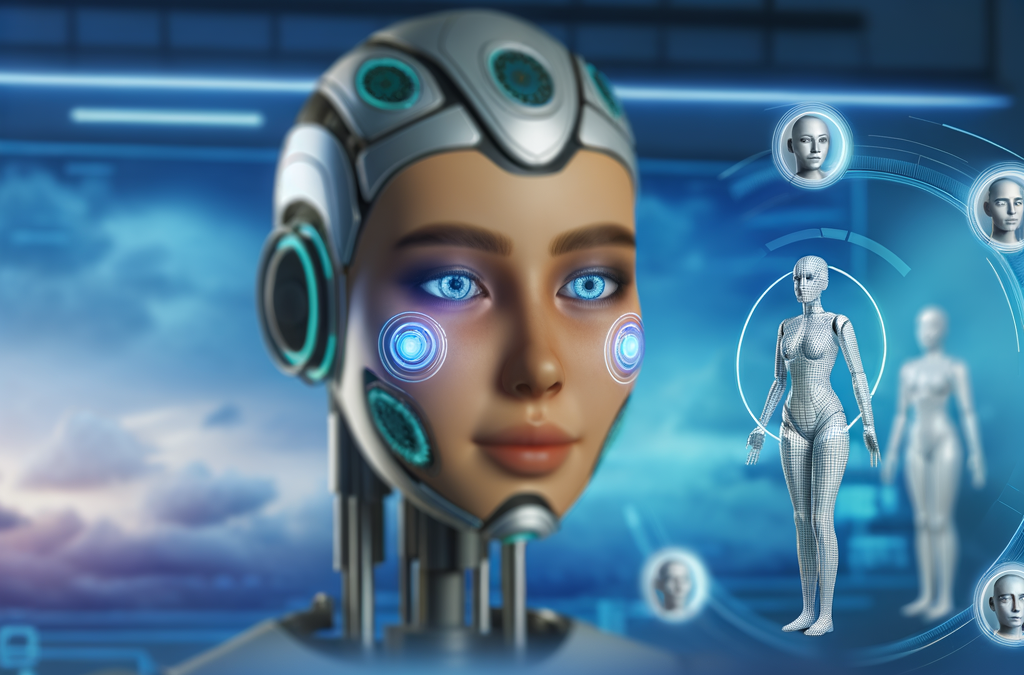
The intersection between artificial intelligence and video games has revolutionized the way we experience virtual worlds. This article explores how AI is transforming the gaming experience, from the creation of non-playable characters (NPCs) to the generation of entire levels and worlds. Through case studies such as The Sims 4 and Minecraft, we analyze the impact of these technological advancements on the gaming industry.
The Transformation of Non-Playable Characters (NPCs) and Generative AI
Non-playable characters (NPCs) are essential for interaction and immersion within video games. Traditionally, these characters followed predefined patterns, limiting the naturalness of interactions. However, with the introduction of artificial intelligence and more specifically, generative AI, this dynamic has changed drastically. In games like The Sims 4, NPCs are now capable of performing more complex tasks and providing more human-like responses, thanks to the use of advanced neural networks. This not only enhances the player’s immersion but also enriches the game’s narrative, making each experience unique.
Nvidia, with its technologies such as Nvidia Ace, is driving this evolution by providing tools for the development of smarter and more adaptable NPCs. This allows developers to focus on other aspects of design, knowing that AI can handle delivering a personalized gaming experience. This level of customization is becoming increasingly common and essential in titles that aim to offer more interactive and realistic game worlds.
Procedural Generation and the Creation of Dynamic Worlds
Procedural generation is another area where artificial intelligence is making a significant impact. Games like Minecraft and No Man’s Sky are clear examples of how this technique enables the creation of infinite and varied worlds with just a click. The algorithm autonomously generates maps and levels, providing a different experience each time the player enters the game. This advancement not only enhances replayability but also challenges the player to adapt to new situations, organically increasing the difficulty of the game.
In the realm of virtual sports, titles like EA Sports FC 24 are utilizing AI technologies to analyze gameplay patterns and adjust the difficulty in real-time, providing a constant challenge to players of all levels. This dynamic adaptation prevents the game from becoming monotonous, keeping the player’s interest for longer periods.
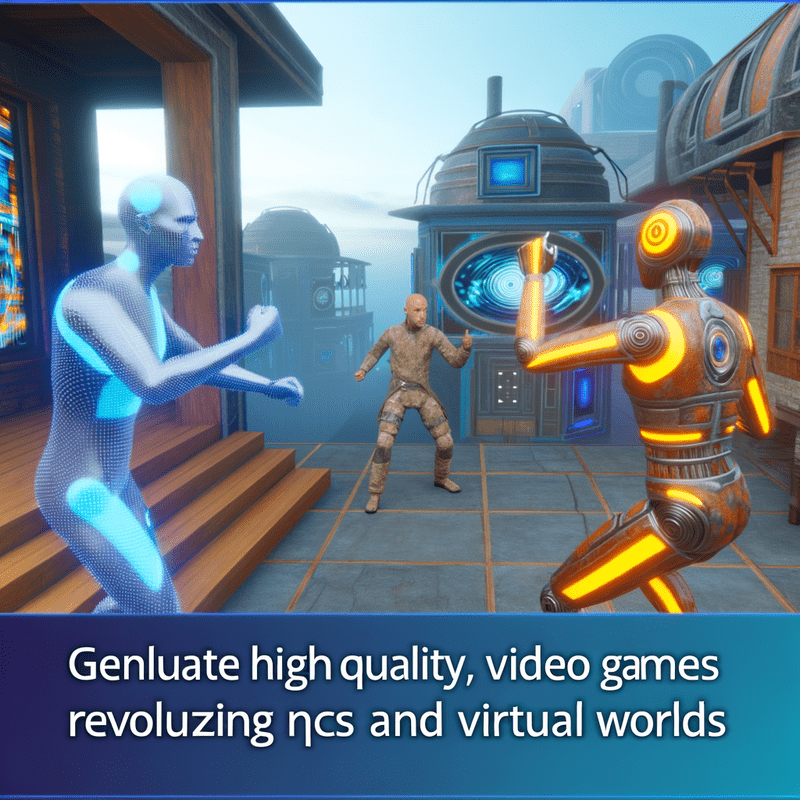
Nvidia has also contributed to the design of virtual worlds with Instant Nerf, a technology that simplifies the representation of complex environments in real time, enhancing visual quality and game performance. These innovations not only enrich the aesthetic experience but also enable developers to create more detailed and vibrant maps, where every corner tells a story.
As artificial intelligence continues to evolve, so does its impact on video games. AI is reimagining interactions with NPCs, the creation of procedurally generated worlds, and in-game difficulty dynamics. These advancements are expanding the boundaries of what is possible in the gaming experience, allowing players to explore worlds never before conceived with unprecedented levels of customization and immersion.
How This Works in Practice
Implementing AI and generative technologies in video games involves several critical steps, each requiring careful consideration and collaboration among various stakeholders. The process typically begins with defining the scope and objectives of the game, which includes identifying the specific roles that NPCs will play and how procedural generation will enhance gameplay.
Once objectives are established, developers must ensure that the necessary infrastructure is in place. This includes selecting appropriate AI frameworks and tools, such as those provided by Nvidia or other AI platforms. Developers should also assess the hardware capabilities to ensure that the game can support advanced AI functions without compromising performance.
Next, a collaborative team of game designers, AI specialists, and narrative writers comes together to create the AI models and algorithms. For NPCs, this may involve training neural networks on vast datasets to ensure they can generate human-like interactions and responses. For procedural generation, developers will craft algorithms that can create diverse environments, incorporating elements like terrain, weather, and even AI-driven events.
After developing the AI models, rigorous testing and iteration are crucial. This phase involves playtesting to identify how NPCs behave in various scenarios and ensuring the procedural generation algorithms produce engaging and coherent game worlds. Feedback from testers is essential for refining AI behavior and enhancing player experience.
Finally, once the game is polished, it is launched to the public. Post-launch, developers often continue to monitor AI performance and player feedback, making adjustments through updates to maintain engagement and improve the overall gaming experience. This iterative process ensures that AI technologies remain relevant and effective in enhancing gameplay over time.
What to Watch Out For
While the integration of AI in video games offers numerous advantages, there are also limitations and potential pitfalls that developers should be aware of. One significant concern is the complexity of AI behavior, which can lead to unpredictable NPC actions. If NPCs behave in unexpected ways, it can frustrate players and detract from the intended experience.
Another challenge is the balance between procedural generation and player agency. While generating diverse worlds can enhance replayability, it may also result in environments that lack meaningful context or coherence. Developers must ensure that procedural elements contribute to the narrative and gameplay rather than simply serving as random variations.
Common mistakes include over-reliance on AI for critical gameplay elements. Developers may be tempted to automate too many aspects, leading to a lack of human touch in storytelling and game design. Striking the right balance between AI and traditional game design is essential for maintaining player engagement.
Moreover, technical limitations can pose challenges. Not all gaming platforms may support the advanced AI technologies required for optimal performance, which can lead to disparities in player experiences across different systems. Developers need to consider hardware constraints and optimize their games accordingly.
Lastly, ethical considerations regarding AI use, such as data privacy and bias in AI algorithms, must not be overlooked. Developers should be vigilant about how data is collected and used, ensuring that their AI systems are fair and transparent.
Frequently Asked Questions
Q: How do AI-generated NPCs differ from traditional NPCs?
A: AI-generated NPCs use advanced algorithms and neural networks to provide more dynamic and realistic interactions, allowing them to respond in a more human-like manner compared to the predictable behavior of traditional NPCs.
Q: What are the main benefits of procedural generation in games?
A: Procedural generation allows for the creation of vast, varied environments that enhance replayability and player engagement by offering unique experiences each time a game is played.
Q: Are there any risks associated with using AI in video games?
A: Yes, potential risks include unpredictable NPC behavior, a lack of coherence in procedurally generated worlds, and ethical concerns regarding data privacy and algorithmic bias.
Q: How can developers ensure that AI enhances rather than detracts from gameplay?
A: Developers should carefully balance AI automation with traditional design elements, conduct thorough playtesting, and remain responsive to player feedback to ensure that AI contributes positively to the overall experience.