
Artificial intelligence (AI) is significantly transforming the global landscape of various industries. Its ability to enhance productivity, drive innovation, and create new job opportunities is having a remarkable impact on the global economy. This article explores the implications of AI in key sectors and how executives are adopting strategies to integrate these technologies into their operations.
AI as a Driver of Transformation in Manufacturing and the Public Sector
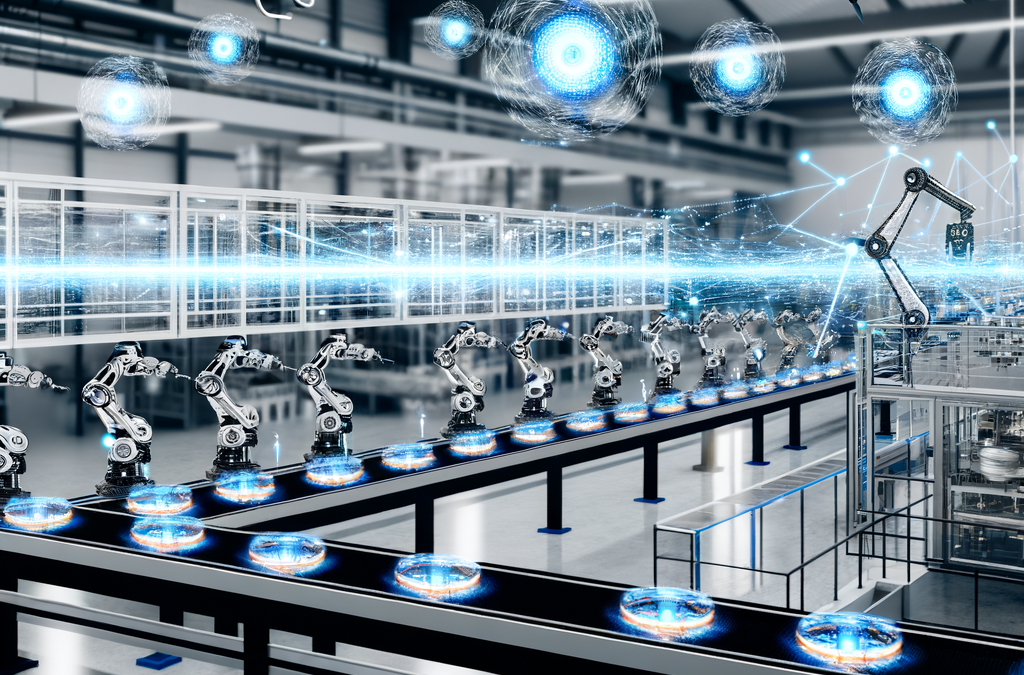
The manufacturing industry has been one of the most benefited by the incorporation of artificial intelligence. With the use of advanced algorithms and automation, this industry has been able to improve efficiency and reduce operational costs. Smart factories, equipped with robots and AI systems, can produce goods more quickly and with fewer errors, resulting in a significant increase in productivity. A recent study indicates that manufacturing companies that implement AI have experienced a 20% growth in their production.
In the public sector, artificial intelligence is transforming the way governments interact with citizens. From traffic management to public safety, AI is helping to create smart economies, where resources are utilized more efficiently. Public sector executives are adopting these technologies to enhance services and respond more effectively to the needs of citizens. The development of AI-based solutions has not only generated savings but has also opened up new employment opportunities for professionals skilled in technology.

Innovation and Job Creation in the Healthcare and Retail Sectors
The healthcare sector is also undergoing a revolution thanks to artificial intelligence. With the ability to analyze large volumes of data, AI is enabling more accurate diagnoses and personalized treatments, improving outcomes for patients. Health technology companies are developing innovations that can predict health trends on a global scale and tailor medical care, significantly contributing to the growth of this industry. Furthermore, AI is driving better management of medical resources, which in turn fosters the creation of jobs in research and development, as well as in the implementation of new technologies.

Retailers have not fallen behind in adopting artificial intelligence. By utilizing predictive analytics, stores can anticipate customer preferences, providing a more personalized and efficient shopping experience. Executives and CEOs in the retail sector are integrating AI technologies into their business strategies to optimize inventory, enhance customer experience, and boost sales. This approach not only increases profitability but also creates new job opportunities in areas such as data management and business analysis.
Artificial intelligence is redefining the global markets, accelerating growth, and fostering innovation across multiple sectors. As industries adopt these technologies, new strategies and capabilities emerge that enhance the competitiveness and efficiency of businesses. With proper implementation, AI promises not only to transform businesses but also to significantly improve the lives of people around the world.
How This Works in Practice
Implementing AI technologies within an organization involves several critical steps. Initially, it is essential to conduct a thorough assessment of the existing processes and identify specific areas where AI can bring value. This usually requires the involvement of cross-functional teams, including IT, operations, and business development, to ensure a comprehensive understanding of both technological capabilities and organizational needs.
Once the assessment is complete, organizations should establish clear objectives for AI implementation. These objectives should align with overall business goals, such as improving efficiency, enhancing customer experience, or driving innovation. Following this, organizations must invest in the necessary infrastructure, which may include cloud computing resources, data management systems, and specialized AI tools.
Data plays a crucial role in AI applications, so organizations need to ensure that they have access to high-quality, relevant data. This often involves cleaning and organizing existing data, as well as implementing systems for ongoing data collection and management. Collaboration with data scientists and AI specialists is vital at this stage to develop the algorithms and models that will drive the AI solutions.
After the technological framework is in place, pilot projects can be initiated to test the AI solutions in real-world scenarios. These pilot projects should be closely monitored to measure performance against the established objectives. Feedback from these tests can inform adjustments and improvements before a full-scale rollout.
Finally, change management practices should be implemented to ensure that employees are prepared for the transition. Training programs will be necessary to equip staff with the skills required to work alongside AI technologies. Continuous evaluation and iteration of the AI systems will also be essential to adapt to changing business needs and technological advancements.
What to Watch Out For
While the integration of AI offers numerous advantages, there are several limitations and trade-offs that organizations should be aware of. One common mistake is underestimating the importance of data quality. Poor-quality data can lead to inaccurate AI outputs, making it essential to establish robust data governance practices.
Additionally, AI systems require significant upfront investment, not only in terms of technology but also in talent acquisition and training. Organizations must evaluate their readiness for such investments, as well as the potential return on investment over time. In some cases, the benefits may take longer to materialize than initially anticipated.
Another potential pitfall is the risk of over-reliance on AI. While AI can enhance decision-making processes, it is crucial to maintain human oversight to avoid errors and ensure ethical considerations are taken into account. Organizations should foster a culture of collaboration between human intelligence and AI, rather than viewing AI as a replacement.
Finally, organizations should be mindful of the regulatory environment surrounding AI technologies. Compliance with data protection laws and ethical guidelines is critical to avoid legal repercussions and maintain public trust. Engaging with legal experts early in the process can help navigate these complexities.
Frequently Asked Questions
Q: What are the first steps to take when considering AI implementation?
A: The first steps include conducting a thorough assessment of existing processes, identifying areas for AI integration, and establishing clear objectives that align with business goals. Collaboration among cross-functional teams is essential during this phase.
Q: How can organizations ensure the quality of data used for AI?
A: Organizations should implement robust data governance practices, which include cleaning and organizing existing data, setting standards for data collection, and establishing systems for ongoing data management to ensure high-quality input for AI systems.
Q: What are some common mistakes companies make when adopting AI?
A: Common mistakes include underestimating the importance of data quality, over-reliance on AI without human oversight, and failing to adequately prepare the workforce for the transition. Organizations must also be cautious about the significant upfront investments required.
Q: How should organizations manage the ethical implications of AI?
A: Organizations should prioritize ethical considerations by maintaining human oversight of AI systems, engaging with legal experts to ensure compliance with regulations, and fostering a culture of collaboration between human intelligence and AI technologies.