
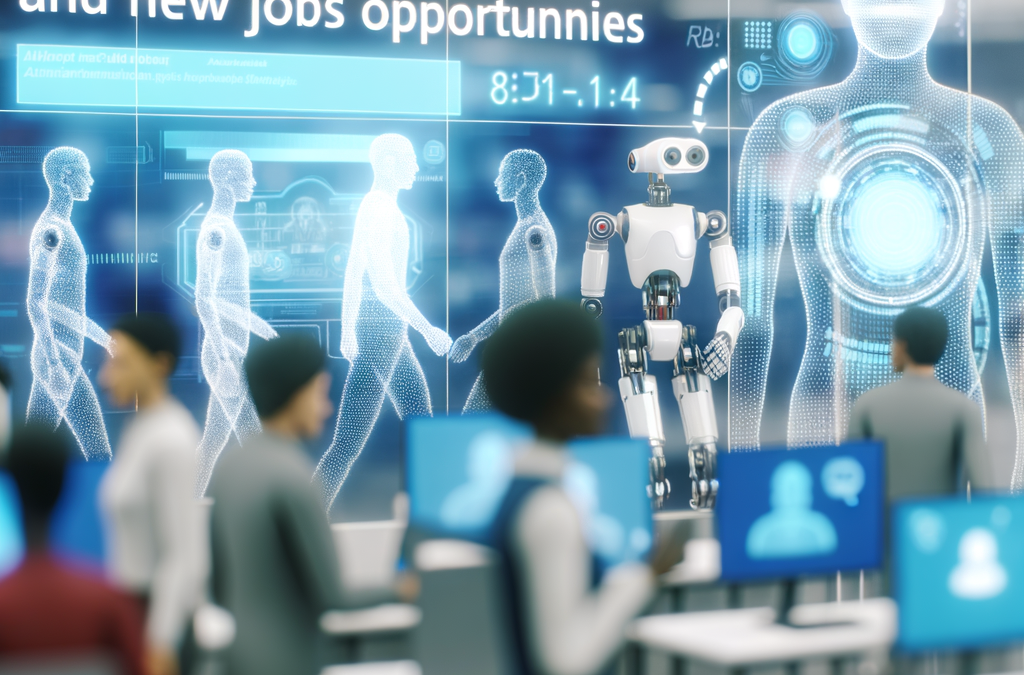
The artificial intelligence has become a driving force in the global economy, revolutionizing the way we work and create job opportunities. Its impact on the labor market is undeniable, generating both uncertainty and excitement. This article explores how automation and machine learning are reshaping the workforce, paving the way for new jobs and demands for skills.
Labor Market Transformation
The emergence of artificial intelligence in the workplace has led to a significant transformation. The automation of routine and repetitive tasks has allowed workers to focus on more creative and strategic activities, resulting in an increase in productivity. Although certain jobs may have been eliminated, artificial intelligence has also created new job opportunities that require specific skills.
The ability to analyze data and proficiency in the use of advanced technologies have become key requirements for modern workers. In an environment where technology drives growth, the need for skilled personnel is more evident than ever. Companies increasingly value skills related to machine learning and the management of large volumes of data, leading to a growing demand for specialists in these fields.
Impact on the economy and the future of employment
Artificial intelligence is not only impacting current employment, but it is also shaping the economy of the future. AI-driven innovation is achieving sustainable economic growth, creating a dynamic environment where new jobs continue to emerge in previously unimagined sectors. This evolution not only increases opportunities but also presents challenges in terms of training and adaptation.
Organizations and governments are increasingly investing in training programs to prepare the workforce for future demands. This preparation is essential for workers to seize the opportunities presented by technological advancements. Furthermore, the ongoing interaction between humans and machines optimizes processes and strengthens the competitiveness of the global economy.
In summary, artificial intelligence is redefining the labor and economic landscape, opening doors to new opportunities while challenging the workforce to adapt and acquire new skills. The combination of innovation and training is essential to capitalize on the potential of technology and ensure a prosperous and sustainable work future for everyone.
How This Works in Practice
Implementing AI in the workplace involves a series of structured steps that require careful planning and collaboration among various stakeholders. The process typically begins with an assessment of the existing workflows and identification of tasks that can be automated or enhanced through AI technologies.
The first step is to establish a clear understanding of the organization’s goals and the specific problems that AI can address. This requires input from leadership, IT departments, and frontline employees to ensure that the implementation aligns with the overall business strategy.
Once objectives are defined, organizations need to invest in the necessary infrastructure. This includes acquiring the right software and hardware, as well as establishing data management systems that can support AI applications. Data quality is crucial; organizations must ensure they have access to clean, relevant data to train AI models effectively.
After setting up the infrastructure, the next step involves selecting or developing AI models tailored to organizational needs. This may require collaboration with data scientists and AI specialists who can customize solutions based on the context of the business.
Training employees to work alongside AI systems is also essential. This may involve workshops, online courses, and hands-on training sessions aimed at enhancing digital literacy and specific technical skills. Engaging employees early in the process helps in addressing concerns and fostering a culture of innovation.
Finally, organizations should implement pilot programs to test AI solutions on a smaller scale before full deployment. This allows for adjustments based on feedback and performance metrics, ensuring that the AI systems integrate smoothly into existing workflows. Continuous monitoring and iteration are vital to adapt to changing needs and maximize the benefits of AI.
What to Watch Out For
While the integration of AI into the workplace offers numerous advantages, there are several limitations and trade-offs that organizations should be aware of. One common mistake is underestimating the importance of data quality and availability. AI systems rely heavily on accurate and comprehensive data; poor data can lead to ineffective or biased outcomes.
Another potential pitfall is neglecting employee training and change management. Resistance to new technologies can arise if employees feel unprepared or threatened by AI implementation. It is crucial to foster an environment where employees see AI as a tool for augmentation rather than a replacement.
Moreover, organizations should be cautious about over-reliance on AI for decision-making. While AI can provide valuable insights, human judgment remains essential, particularly in complex scenarios that require ethical considerations or nuanced understanding.
Additionally, privacy and security concerns must be addressed proactively. Implementing AI systems often involves handling sensitive data, and organizations must ensure compliance with regulations and best practices to protect this information.
Finally, organizations should be prepared for the potential for job displacement. While AI creates new opportunities, it may also lead to the redundancy of certain roles. A thoughtful approach to workforce transition and reskilling is necessary to minimize negative impacts on employees.
Frequently Asked Questions
Q: How can we ensure that our AI implementation aligns with our business goals?
A: It is essential to start with a comprehensive assessment of your organization’s objectives and challenges. Engage stakeholders from various levels, including leadership and frontline employees, to identify specific areas where AI can add value. Establish clear metrics for success to evaluate the impact of AI on your business goals.
Q: What types of training should we provide to our employees for successful AI integration?
A: Training should focus on enhancing digital literacy, understanding AI technologies, and developing specific technical skills relevant to the new systems. Workshops, online courses, and hands-on training sessions can help employees feel confident in working alongside AI tools.
Q: How do we address concerns about job displacement due to AI?
A: It is crucial to communicate transparently with employees about the role of AI in the organization. Implement reskilling and upskilling programs to prepare employees for new roles that may emerge as a result of AI integration. Emphasize that AI is a tool for augmentation rather than a means of replacement.
Q: What steps can we take to protect sensitive data when implementing AI?
A: Organizations should prioritize data security by adopting best practices for data management and compliance with relevant regulations. Implement strong access controls, encryption, and regular audits to safeguard sensitive information. Additionally, conduct training for employees on data privacy and security protocols.