
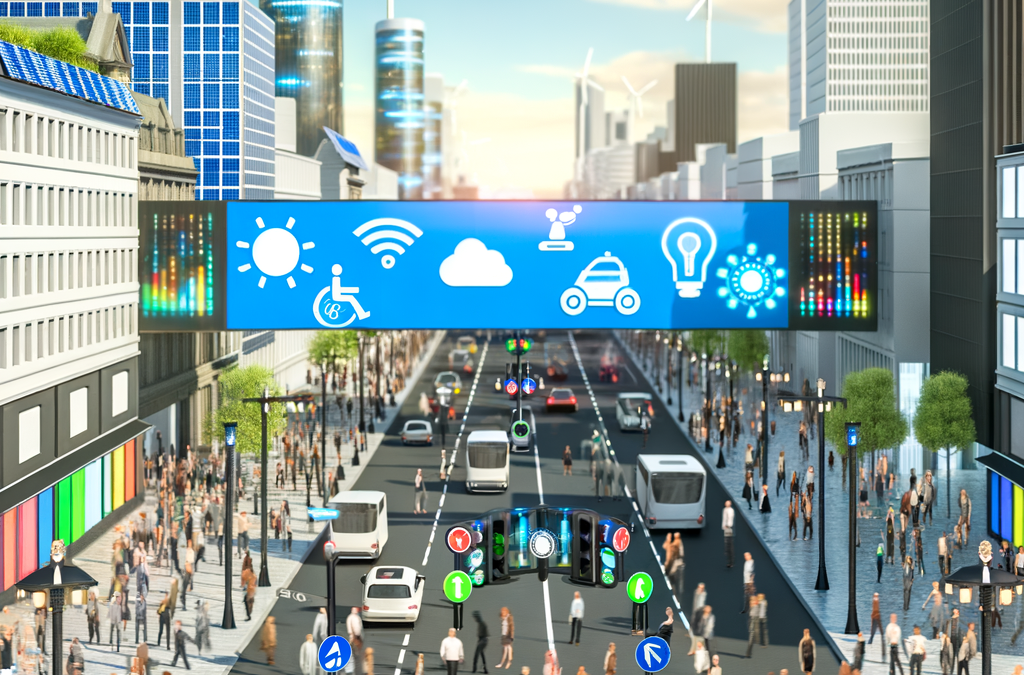
The transformation of cities into “Smart Cities” represents both a challenge and an opportunity in today’s world. Through the integration of technology, digitalization, and a focus on sustainable development, these cities aim to enhance the quality of life for their inhabitants. This article will explore how various factors such as mobility, energy, and governance are redefining contemporary urban areas.
The Evolution towards a Smart City: Innovation and Sustainability
Smart cities arise from the need to address current urban challenges through the efficient use of Information and Communication Technologies (ICT). In a world where connectivity and digitalization are key, these cities leverage data and advanced technologies to optimize resources and ensure sustainable urban development. The integration of renewable energies, such as solar and wind, promotes emission reduction, enhancing energy efficiency in urban environments. The use of Big Data has become an essential tool for urban planning, facilitating the understanding of mobility patterns, energy consumption, and cybersecurity, waste management, which in turn improves real-time decision-making.

Sustainable mobility is another fundamental pillar in the development of Smart Cities. Public transportation solutions, along with alternatives such as electric bikes and shared vehicles, not only contribute to a significant reduction in traffic and pollution but also enhance the quality of life. By utilizing mobile applications and intelligent traffic management systems, routes are optimized and travel time is reduced, increasing the city’s efficiency and competitiveness. All these systems rely on a robust technological infrastructure that ensures effective and transparent governance, promoting citizen participation.
Efficiency and Security in the 21st Century
One of the priorities in smart cities is the optimization of safety and efficiency through technological innovations. The implementation of intelligent surveillance systems and the adoption of cybersecurity measures are essential to protect both urban infrastructure and citizens’ information. By utilizing advanced technologies such as facial recognition and predictive analytics, it is possible to anticipate and prevent incidents, ensuring greater safety in public spaces.
On the other hand, effective waste management is essential for achieving environmental sustainability. By utilizing sensors and monitoring techniques, cities can optimize waste collection and recycling, thereby reducing environmental impact and promoting a circular economy. This approach not only minimizes negative effects on the environment but also enhances economic competitiveness by improving resource efficiency. Transparency in public service management, supported by digital platforms, allows citizens to actively participate in decision-making, increasing trust and administrative efficiency.

The adoption of technologies in Smart Cities presents a unique opportunity to redesign the urban environment towards a more sustainable and efficient future. With a focus on innovation, connectivity, and efficiency, smart cities not only promote a better quality of life but also strengthen the pillars of economic competitiveness and security.