
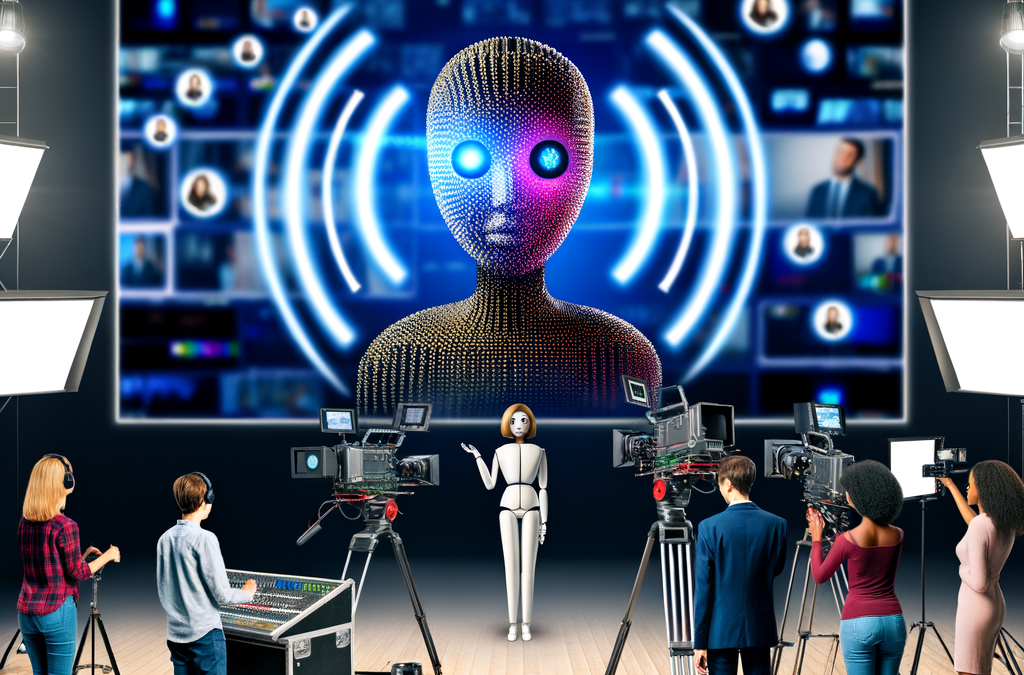
The artificial intelligence (AI) is significantly transforming the film industry. From production to distribution and consumption, AI is redefining how films are created and experienced. This article explores the impact of AI on cinema and examines how universities are preparing future professionals for this technological evolution.
Impact of Artificial Intelligence on Film Production and Distribution
Artificial intelligence is revolutionizing film production. Digital effects have advanced tremendously, largely due to the development of AI technologies and creative computing. Computer-generated imagery (CGI) is increasingly approaching photorealism, allowing filmmakers to create visual worlds that were once unimaginable. One of the most notable examples is the use of AI to recreate younger versions of actors or even bring back those who are no longer with us, while maintaining the narrative authenticity.
Another key aspect of the impact of AI is its ability to enhance machine learning in video editing. Algorithms can analyze vast amounts of visual data in record time, streamlining the editing process and allowing for more room for artistic intervention. Additionally, the pre-production process benefits from AI tools that can predict which scripts will perform best at the box office, or which actors have the ideal chemistry for a particular project.

In terms of distribution, digital platforms are changing the paradigm thanks to AI technology, personalizing suggestions and enhancing the user experience. The algorithms of platforms like Netflix and Amazon Prime analyze consumption patterns to provide content tailored to individual user preferences. This not only improves viewing but also optimizes the marketing and promotion of films. Additionally, AI allows for real-time evaluation of movie release performance, effectively adjusting marketing strategies.
Education and Disciplinary Openness in the Age of AI
With the rapid advancement of AI technology in the film industry, universities are responding with programs designed to prepare students for this new reality. There are master’s and doctoral degrees specializing in creative computing, visual effects, and film theories that incorporate AI as a fundamental part of the curriculum. Additionally, new specialties are emerging that combine art and science, fostering an unprecedented disciplinary openness.

These academic programs focus on developing skills in AI technology, but also on understanding and critical analysis, ensuring that students not only know how to operate the tools but can also comprehend their impact on society and cinematic storytelling. Research in artificial intelligence applied to film is a growing field that seeks new ways of artistic integration, promoting the creation of moving images that explore the boundaries of human creativity.
Furthermore, universities are collaborating with the industry to provide practical experiences, ensuring that students can apply their knowledge to real-world projects. This connection between academia and industry is crucial for training the next generation of filmmakers and technicians who will master AI tools to innovate in every aspect of cinema, from production to consumption.
The impact of artificial intelligence on the film industry is profound, transforming both production and distribution. Universities are playing a crucial role in preparing future professionals. By addressing these changes with specialized academic programs, education ensures a smooth transition to a new paradigm of creativity and technology in cinema.