
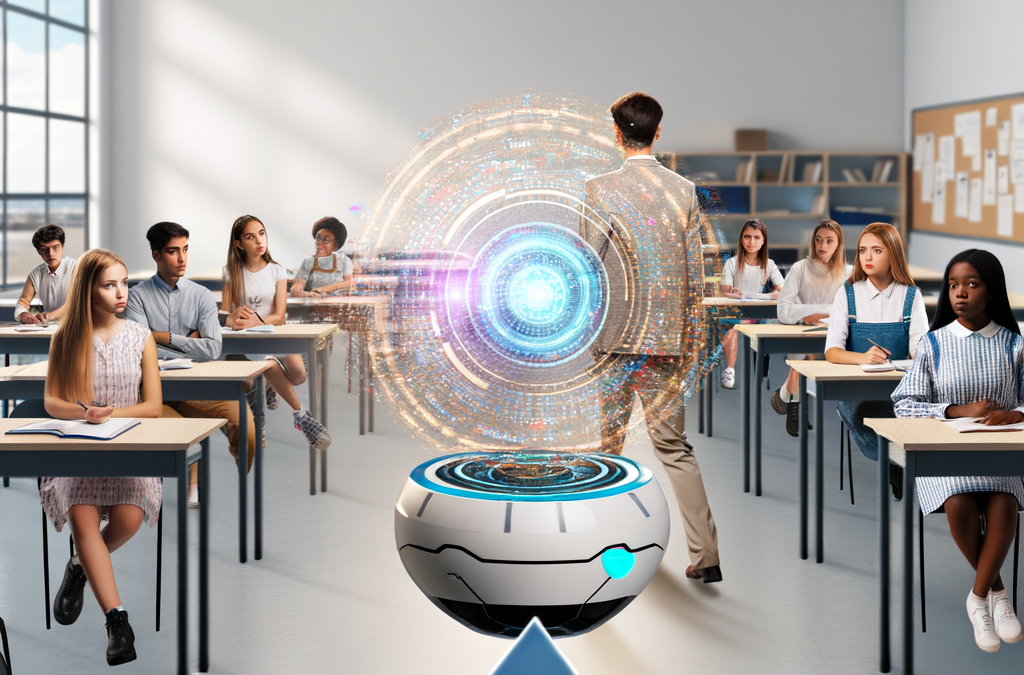
Generative artificial intelligence is transforming education, offering new opportunities and challenges. This article explores how technology is reshaping learning through advanced tools, analyzing the benefits and risks involved. Essential topics are addressed, such as the personalization of educational content, the ethical challenges associated with it, and the crucial role of UNESCO in the regulation of artificial intelligence in education.
The Educational Revolution with Generative AI
Generative AI is leading a revolution in education, providing us with tools that enable the rapid and adaptable development of educational content. The ability to generate materials that cater to the individual needs of students is one of the greatest advancements. This level of personalization fosters an inclusive learning environment, adaptable to different learning styles and paces.
Educators find in these tools an invaluable support that alleviates repetitive tasks and allows them to focus more on personalized educational guidance. With the assistance of artificial intelligence, it is possible to design curricula that take into account cultural diversity and promote equity and inclusion, aspects that UNESCO highlights as essential in educational policies worldwide.

However, this educational revolution is not without its challenges. Among the main risks is the possibility of biases in AI algorithms that may reinforce stereotypes rather than eliminate them. Additionally, misinformation is a significant concern, as generative models could propagate incorrect or unverified content if not managed properly.

Ethics and Regulation in the Age of Artificial Intelligence
In the face of the educational transformation driven by artificial intelligence, ethics plays a crucial role. The way these technologies are developed and used could impact students’ privacy, jeopardizing data protection. This calls for strict regulation to ensure the security of personal information, an area where UNESCO has emerged as a key player, promoting policies that prioritize protection and privacy.
Regulation must also address the ethical challenges related to copyright. The ability of AI to generate new content raises questions about intellectual property and how access to and use of these materials, whose authorship may be ambiguous, should be managed.
Finally, the security in the use of these systems becomes a critical issue for educational institutions, which must implement measures to prevent misuse that could endanger both teachers and students. The creation of clear policies and the training of specialized committees on ethics and regulation are necessary actions to ensure a responsible and beneficial application of artificial intelligence in education.
Generative artificial intelligence has the potential to significantly transform education by personalizing learning and supporting educators. However, its implementation must be carefully regulated to mitigate risks such as bias and misinformation. With UNESCO leading the way, a safer and more equitable environment for global learning is anticipated.