
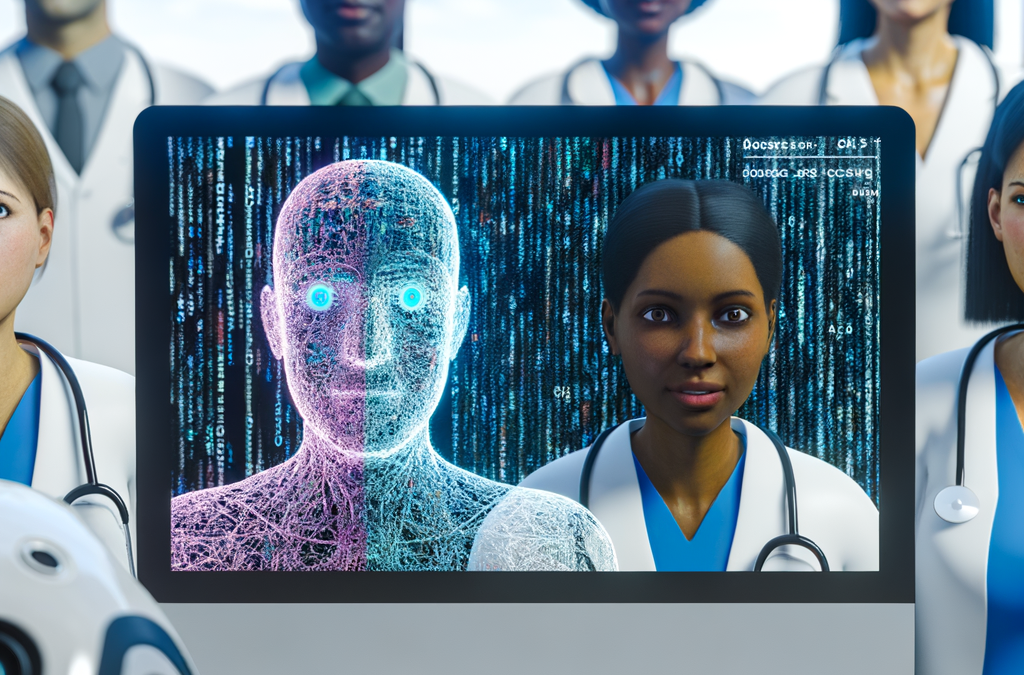
Artificial Intelligence (AI) is transforming modern medicine through the use of advanced technologies such as machine learning and predictive models. These advancements are enhancing patient care, optimizing healthcare costs, and increasing patient safety. We will explore how algorithms and digital technology are being utilized in the medical field to revolutionize healthcare delivery.
Revolutionizing Medicine with Artificial Intelligence
Artificial Intelligence is blurring the lines between science and medicine with remarkable applications across various areas. Algorithms and machine learning have proven invaluable in the analysis of medical images. These predictive models enable faster and more accurate disease diagnosis, ranging from tumors to heart diseases. Additionally, AI accelerates drug development by discovering new potential molecules, optimizing clinical trials, and reducing the time needed to bring a drug to market.
The use of chatbots like Watsonx Assistant offers an innovative way to enhance patient care and medical engagement. These virtual assistants not only provide basic information but also utilize natural language processing to understand patients’ concerns and offer personalized recommendations. This not only improves patient satisfaction but also allows healthcare professionals to focus on more complex cases.
Artificial Intelligence and Digital Health: A New Horizon
Digital health, driven by artificial intelligence, is redefining the healthcare landscape. Virtual medical assistance enables doctors to assess and treat patients remotely, resulting in lower healthcare costs and improved patient safety. Thanks to predictive models, AI systems can analyze data in real-time to predict potential complications, giving doctors the opportunity to intervene before serious issues arise.
Among the most notable benefits is the contextual relevance of AI, which personalizes patient care by adapting to individual needs. By integrating these systems into daily medical practice, professionals can offer a more holistic and efficient approach, thereby enhancing the overall well-being of patients.
The integration of Artificial Intelligence in medicine represents a revolutionary shift by improving diagnosis, treatment, and drug development. These technologies not only optimize healthcare delivery but also foster a deeper engagement between doctors and patients, enhancing health outcomes and reducing sensitivities in the global healthcare system.