
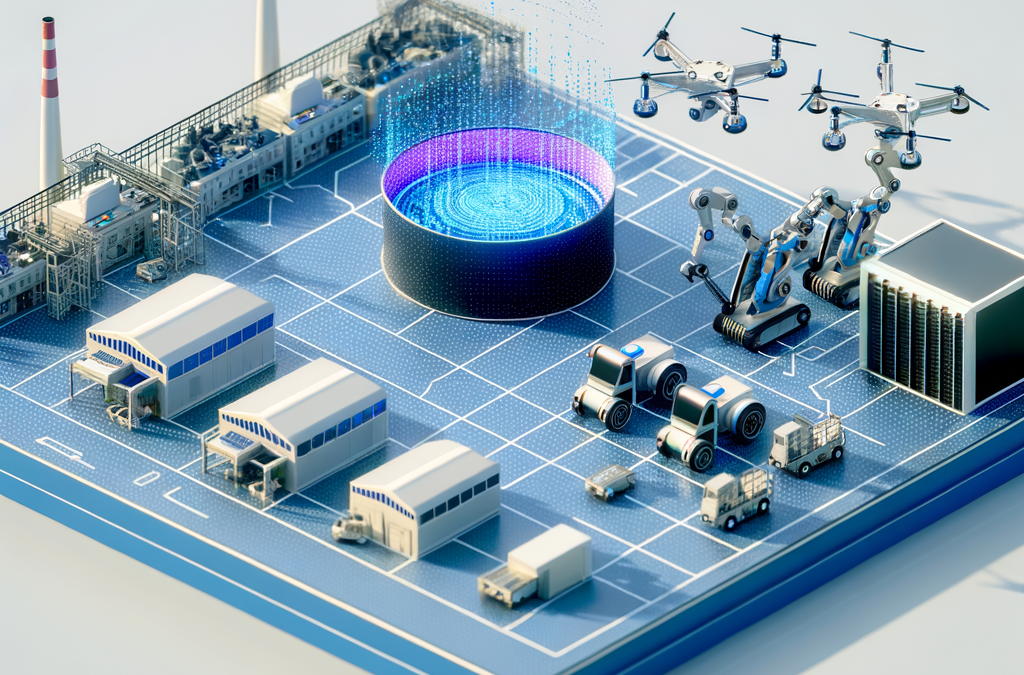
Artificial Intelligence (AI) is profoundly transforming multiple industries through the integration of advanced technologies such as Autonomous AI and Generative AI. This article explores the impact and possibilities of AI systems, particularly in areas such as healthcare, manufacturing, and financial services, highlighting their role in the autonomous revolution and how these technologies are reshaping the future.
The Autonomous Revolution: A New Paradigm in Efficiency
The autonomous revolution is redefining the concept of efficiency across various industries through the use of Autonomous AI. This type of artificial intelligence is capable of operating independently, allowing systems to make optimized decisions without direct human intervention. In sectors such as manufacturing, robots equipped with advanced sensors gather vast amounts of data, using this information to adjust operations in real time, which in turn increases productivity and minimizes human errors. These autonomous capabilities not only enhance operational performance but also reduce costs, as human operators traditionally involved in repetitive tasks can be reassigned to more strategic roles.
In the autonomous vehicle sector, AI plays a crucial role in ensuring safety and efficiency in transportation. Advanced algorithms and machine learning systems enable cars to dynamically assess and respond to their environment. These vehicles continuously collect data from their integrated sensor systems, such as cameras and radars, enhancing their ability to navigate safely on the roads. The result is a transportation system that is safer, more efficient, and less reliant on human factors. This brings the dream of a society with fully autonomous vehicles closer to becoming a tangible reality.
Generative Intelligence and Its Impact on Personalization
Another area where AI is making a significant impact is in personalization, through what is known as Generative AI. This type of intelligence, using deep learning algorithms, is capable of creating new content and providing optimized personalized recommendations to users. In the financial services sector, AI analyzes patterns in large datasets to offer personalized financial advice, adapting to the individual economic situation of each client.
In healthcare, the applications of generative intelligence are equally revolutionary. Through data analysis, AI systems can personalize treatments based on the specific characteristics of each patient, thereby improving clinical outcomes. With access to large databases and utilizing advanced algorithms, these systems can predict potential diseases before symptoms appear, allowing for more effective early interventions. It not only enhances diagnostic accuracy but also optimizes patient care., highlighting a significant advancement towards a future where personalized medicine is the norm.
Beyond personalizing experiences, these generative capabilities offer a new level of cybersecurity. In the security sector, AI analyzes complex patterns to identify potential threats before they occur. This not only protects systems from attacks but also preserves the integrity of sensitive data, which is crucial in sectors like finance, where the protection of personal data is paramount.
Artificial intelligence is transcending its initial boundaries, driven by the development of autonomous and generative technologies. This impact translates into significant improvements in the efficiency of industrial processes and offers unprecedented levels of customization, radically transforming sectors such as healthcare, financial services, and transportation. The autonomous revolution continues to shape the future, making it essential to closely monitor its evolution.