
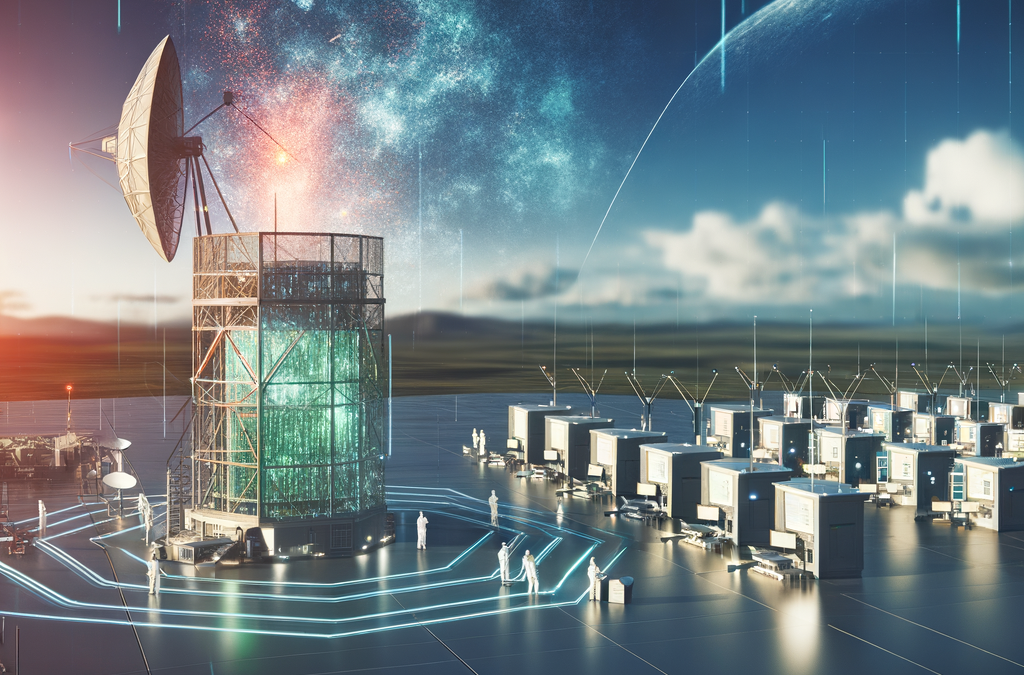
The application of artificial intelligence (AI) in disaster management is revolutionizing our ability to predict and mitigate the effects of natural disasters. Through the use of space technologies, real-time data, and predictive tools, early warning systems are being developed to reduce the risk of climate-related disasters, supporting the United Nations Sustainable Development Goals.
Impact of Artificial Intelligence on Early Warning Systems
The integration of artificial intelligence into early warning systems has radically transformed our ability to anticipate and manage natural disasters. Thanks to AI, it is possible to process vast amounts of data in real-time from diverse sources, including satellite observations, ground sensors, and climate modeling. This approach allows for the generation of accurate and customizable disaster risk models, such as those produced by Google and Microsoft through their climate technology platforms.
The importance of these early warning systems lies in their ability to provide quick and accurate information about events such as floods, hurricanes, and wildfires before they occur. Flood prediction, for instance, has greatly benefited from AI and satellite technology, which can foresee extreme weather events days or even weeks in advance. This not only minimizes human and economic impact but also directly supports global efforts to achieve the UN Sustainable Development Goals, particularly those related to poverty reduction and the development of sustainable communities.
The advancement in multi-hazard systems, which address multiple types of disasters simultaneously, is largely driven by these technologies. Through collaboration between the public and private sectors, particularly with the contribution of Big Tech, robust platforms are being established that enhance community resilience to disasters. In this way, disaster management becomes more proactive, enabling governments, international organizations, and local communities to be better prepared to respond to the environmental challenges of the future.

International Collaboration and Space Technology for Climate Management
International collaboration has become essential in the development and implementation of these advanced technologies. The UN has played a crucial role in facilitating this cooperation, promoting the integration of satellite technology and AI systems into disaster management strategies. By providing a global platform for cooperation, the UN supports the transfer of technology and knowledge between countries, ensuring that even developing nations can benefit from these advancements.

Space technology has proven to be a vital tool for monitoring and mitigating the effects of climate change. Satellites in orbit collect crucial data on climate patterns, changes in land use, and water levels in oceans and freshwater bodies. This information is essential for developing predictive models that form the foundation of current early warning systems. Additionally, access to real-time satellite data enables a more agile and effective response to extreme weather events.
The private sector has also begun to invest in innovative forms of climate technology. Companies like Google and Microsoft are developing advanced tools for weather forecasting and risk management. These tools help mitigate disaster risk while simultaneously creating new opportunities for sustainable economic growth. With the ongoing advancement of AI and real-time data collection, the potential to enhance disaster resilience is immense.
The technological revolution driven by AI and space technologies is transforming disaster management and preparing us to face the challenges of climate change. By integrating global efforts and innovations from the private sector, these advanced systems help protect communities and promote sustainability. Ongoing collaboration is key to maximizing the potential of these technologies worldwide.