
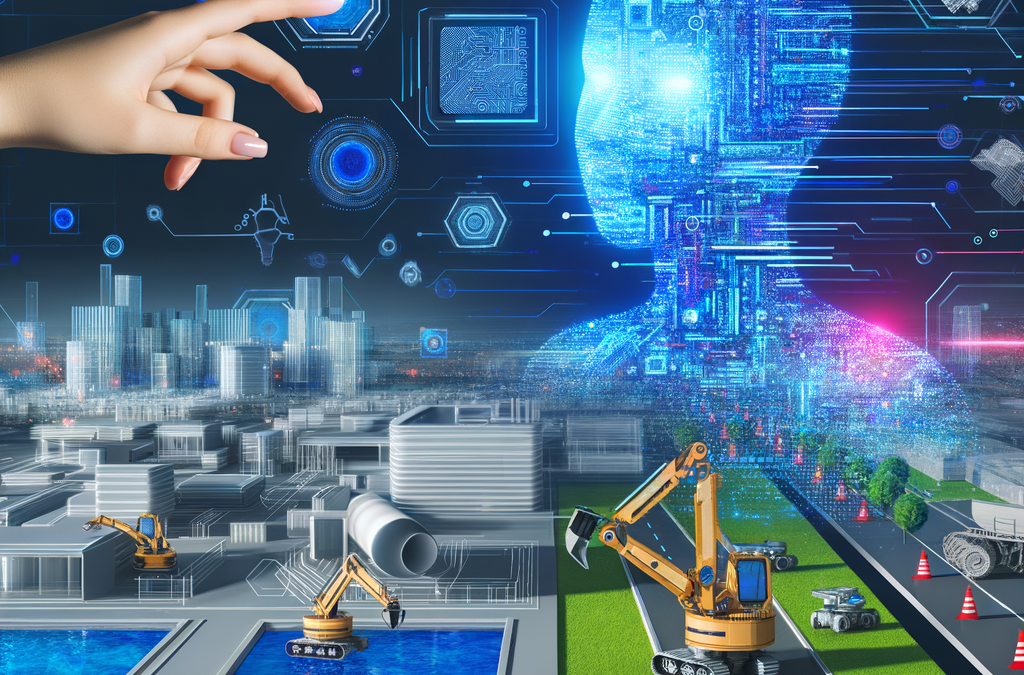
Artificial intelligence is revolutionizing multiple sectors, and the construction industry is no exception. This article explores how AI is transforming the planning, design, and operation of construction projects, highlighting its impacts on risk mitigation, productivity, and operating costs.
The AI Revolution in Building Design and Planning
The incorporation of artificial intelligence in building design is redefining the boundaries of what is possible. Generative design is one of the most promising manifestations of this technology. Through sophisticated algorithms, AI can generate multiple design alternatives based on specific parameters such as cost, materials, and the purpose of the building. This not only accelerates the design process but also produces more innovative and efficient results. Furthermore, AI enables much more precise project planning. By leveraging Big Data, construction companies can more accurately predict delivery times and necessary resources, resulting in a significant reduction in operational costs.
In addition to advancements in design, AI is enhancing risk mitigation in the construction industry. Through the analysis of historical data from projects and safety records, algorithms can predict potential risks and offer proactive solutions. This is crucial in construction safety, where preventing accidents can save time, costs, and, most importantly, human lives. The benefits of AI in this area are particularly evident in real-time monitoring tools that alert to unsafe working conditions, ensuring that workers are always protected.

Optimizing the operation of assets and maintenance
Once construction is complete, asset operation and preventive maintenance are essential for the longevity of a building. Here, AI offers impressive solutions that optimize these processes. Sensors integrated into the building can feed real-time data to AI algorithms, which analyze the building’s performance to detect failures before they occur. This type of preventive maintenance ensures that issues are addressed quickly and efficiently, minimizing downtime and associated costs.

Optimization also leads to a significant increase in productivity. By anticipating maintenance needs and operating efficiently, building owners and managers can focus their resources on more strategic tasks. Additionally, AI-based asset management tools can provide valuable insights into a building’s lifecycle, enabling organizations to add value to their properties while reducing non-essential expenses.
The artificial intelligence has begun to outline a new landscape in the construction industry. From the initial design to operational management, its benefits are extensive and profound, fostering safer, more efficient, and cost-effective operations. This advancement promotes a smarter, more agile, and reliable construction industry.