
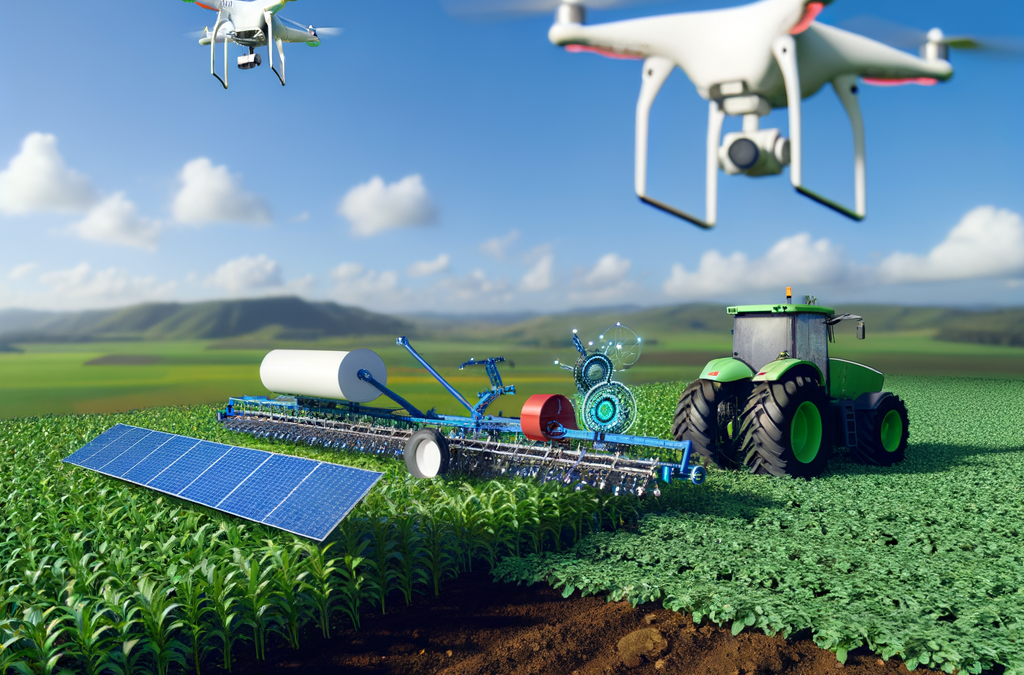
Artificial intelligence (AI) is transforming the agricultural sector, bringing about a true revolution in the way natural resources are cultivated and managed. Through advanced technologies, greater efficiency and sustainability in resource use are being achieved, optimizing agricultural production and enhancing crop yields with precise and tailored strategies.
The power of artificial intelligence in precision agriculture
Precision agriculture is an approach that aims to optimize the productivity and efficiency of agricultural operations, and artificial intelligence plays a crucial role in its implementation. Through crop monitoring and real-time data analysis, farmers can make more informed decisions, adapting their practices to the specific conditions of each field and crop.
One of the key aspects of AI in this field is its ability to make accurate predictions about crop yields. By utilizing large volumes of historical data, along with weather and soil information, AI algorithms can precisely forecast yields and potential threats to crops, which is crucial for resource planning and management.

Moreover, AI solutions enable more efficient resource management. For instance, intelligent AI-based irrigation systems can adjust water usage according to the precise needs of crops, reducing waste and promoting agricultural sustainability. Through these methods, farmers not only optimize resources but also contribute to a more responsible and sustainable use of the environment.
Innovations and Challenges in the 21st Century
The 21st century brings numerous challenges for agriculture, from climate change to the increasing global demand for food. Technological innovation is essential to tackle these difficulties, and emerging artificial intelligence offers revolutionary solutions for the agricultural sector.
However, the implementation of advanced technologies in agricultural operations is not without its challenges. One of the main obstacles is the integration of technology on a small scale, particularly in regions where access to technology is limited. It is essential for agronomists and technology developers to collaborate in order to create accessible and applicable solutions for all farmers.

Despite the challenges, the application of artificial intelligence in agriculture has the potential to radically transform agricultural production and management, ensuring a more sustainable and productive future. The key lies in developing platforms that are customizable and integrative, allowing any farmer, regardless of the size of their operation, to benefit from this technological revolution.
Artificial intelligence is revolutionizing the agricultural sector by enhancing efficiency and sustainability in production. Although there are challenges, the potential to optimize resources and improve crop yields is immense, promising a more sustainable and efficient future for global agriculture.