
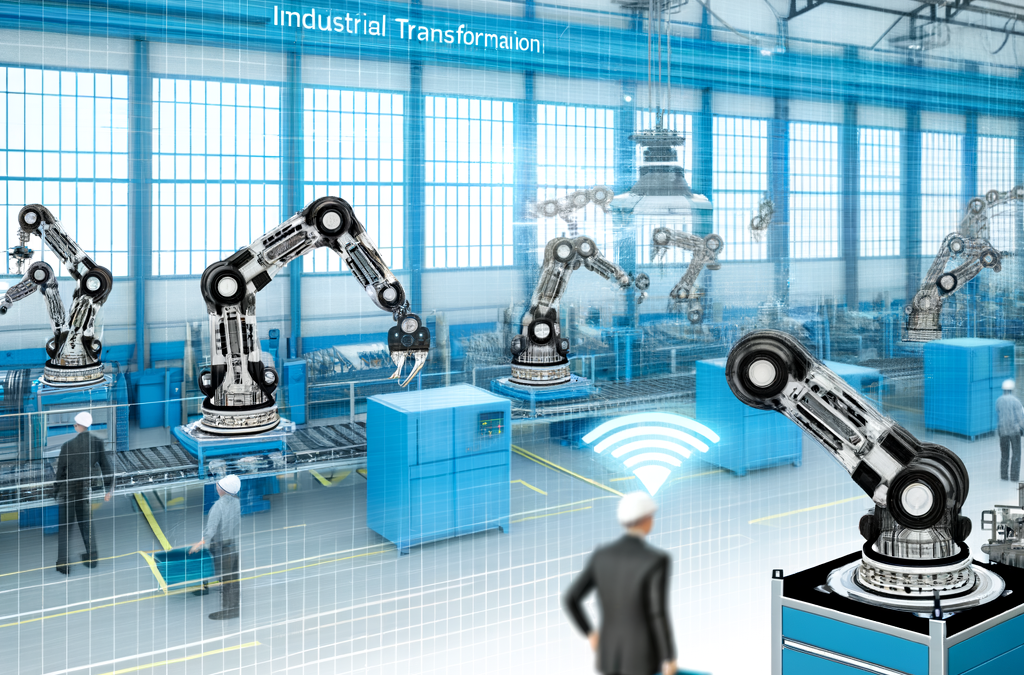
Artificial intelligence (AI) is transforming the industry and revolutionizing the way processes are managed. From task automation to advanced data analysis, AI offers a wide range of benefits such as enhanced security, cost reduction, and a competitive edge. In this article, we will explore its impact on the manufacturing industry.
Automation and Process Optimization
Process automation is one of the most significant applications of artificial intelligence in the industry. By utilizing advanced algorithms and neural networks, companies can achieve a level of process optimization that was unimaginable just a few years ago. This not only accelerates operations but also reduces human errors and enhances efficiency and productivity. For instance, factories that adopt artificial intelligence systems for production can schedule machinery to operate more efficiently, minimizing downtime and optimizing resource use.
Predictive maintenance is another area where automation demonstrates its benefits. Through real-time data analysis, AI systems can monitor the condition of equipment and identify potential failures before they occur. This not only extends the lifespan of machinery but also ensures that productive operations remain uninterrupted, contributing to improved efficiency and cost reduction.
Artificial Intelligence and the Supply Chain
Supply chain optimization is another area where artificial intelligence has a significant impact. By integrating data from multiple sources, AI solutions can forecast demand, manage inventories, and enhance logistics. Companies that implement WMS (Warehouse Management Systems) alongside AI technologies can better manage their assets and enable more accurate planning.

The capabilities of machine learning enable companies to dynamically adjust their operations to adapt to changes in the market or customer needs. This level of flexibility provides a competitive advantage, allowing businesses to respond quickly to changing conditions. Furthermore, AI enhances quality control by detecting inconsistencies and ensuring that products meet established standards.

The implementation of AI not only benefits internal operations but also influences decision-making. With access to accurate, real-time data analytics, business leaders can make informed decisions that benefit both the company and its customers. This ability for customization allows for the adaptation of products and services to the specific needs of the customer, thereby strengthening customer loyalty and increasing revenue opportunities.
Artificial intelligence is reshaping the industrial landscape. By enabling advanced automation and deep integration into the supply chain, AI not only enhances efficiency but also improves the quality and customization of products. Companies that embrace these modern technologies not only reduce costs but also secure a leadership position in today’s competitive industrial environment.