
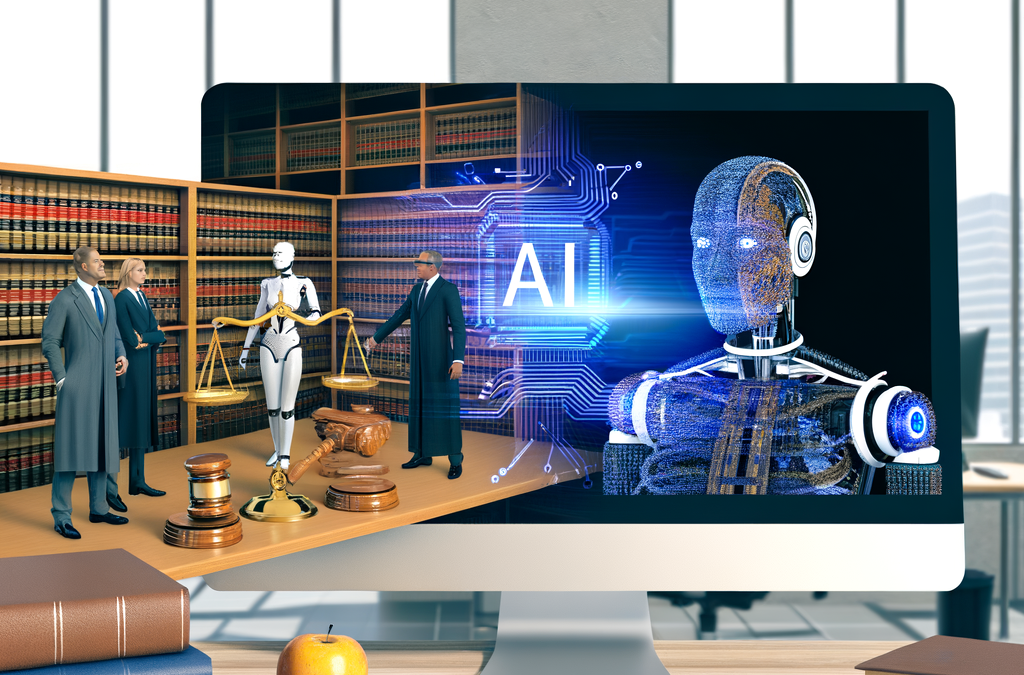
Artificial intelligence is revolutionizing multiple sectors, and the legal field is no exception. This article explores how AI is transforming legal services, focusing on automation, efficiency, and client experiences in law firms. We will examine the opportunities and challenges that AI presents in terms of productivity, data security, and potential ethical implications.
Automation and Efficiency in the Legal Sector
The incorporation of artificial intelligence in the legal field has significantly enhanced productivity in law firms and other legal entities. The automation of repetitive tasks, such as document review and data management, allows legal professionals to dedicate more time to higher-value activities. The increasing adoption of document management software facilitates this process, providing smart solutions for the secure storage and retrieval of information.

One of the most notable benefits is the contract review. What used to be a task that required hours of meticulous analysis can now be accomplished with remarkable speed and accuracy thanks to advanced AI algorithms. This not only saves time but also minimizes human errors, enhancing operational efficiency and reducing the risk of litigation.
Chatbots and virtual assistants have transformed customer service in the legal sector. These advancements enhance the client experience by providing immediate responses to frequently asked questions, allowing lawyers to focus on complex cases. Furthermore, the use of automated audio transcription streamlines the intelligent drafting of legal documents.
Impact of AI on Legal Professionals and Clients
Although AI has significantly improved efficiency and productivity, it also presents significant challenges. The concern over unemployment is particularly relevant, as automation can replace certain functions performed by legal assistants and other professionals. Furthermore, data security has become a critical priority, given the sensitive legal implications of the documents being handled.
The use of AI can also introduce biases that impact the neutrality of case evaluations, a topic that requires technical and regulatory attention to mitigate its effects. Additionally, there is the risk of technology addiction, which could affect the emotional well-being of professionals.
On the other hand, the customer experience has been enhanced. AI facilitates emotional support through technologies that can respond to and address concerns empathetically. Furthermore, it has become possible to significantly personalize legal services, tailoring them to the needs of the clients and elevating the level of satisfaction.

The recruitment for law firms has also been influenced by AI. By optimizing hiring processes through automated assessments and predictive analytics, firms can hire professionals who are better aligned with the demands of modern legal practice and client expectations.
The artificial intelligence offers vast opportunities to enhance the efficiency and personalization of legal services, although it also presents challenges such as unemployment and bias. As technology evolves, it will be essential to find a balance between automation and the human approach to ensure integrity and effectiveness in the legal sector.