
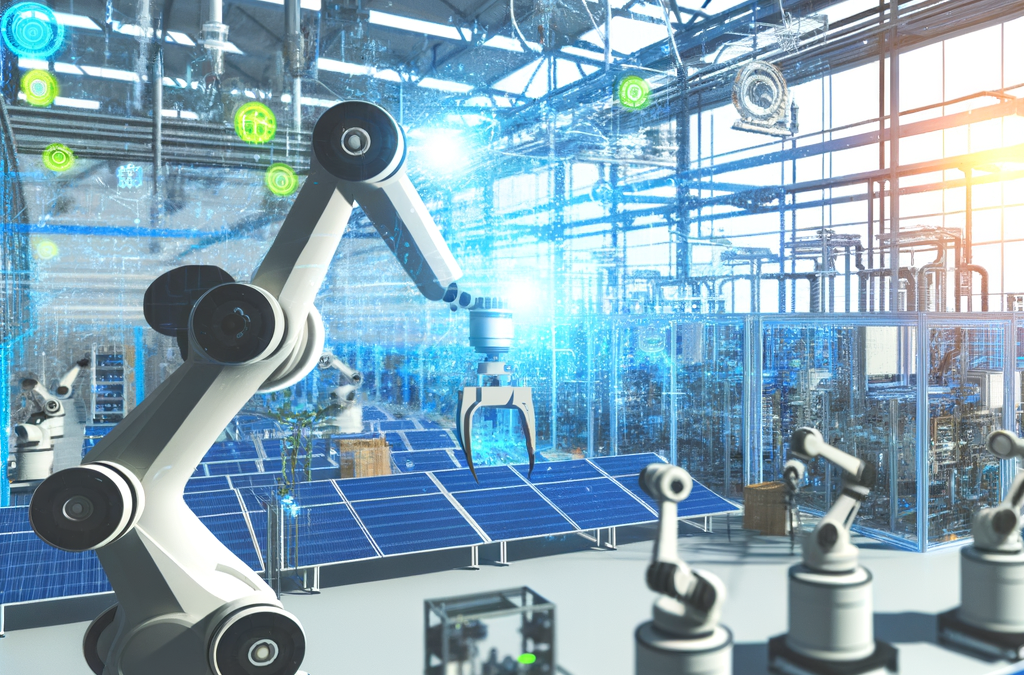
Artificial intelligence (AI) is redefining industrial processes, driving a transformation that significantly enhances operational efficiency and sustainability. As companies adopt these technologies, they experience a shift towards intensified business competitiveness, reduced energy consumption, and minimized carbon footprint. In this article, we will explore how AI impacts Industry 4.0, enabling mass customization and process optimization.
The Power of Artificial Intelligence in the Modern Industrial Revolution
Artificial intelligence has emerged as a central pillar in the industrial revolution known as Industry 4.0. This phenomenon drives the transformation of industrial processes through advanced technologies that integrate data analytics, automation, and digitalization. AI enables industries not only to collect and analyze large volumes of data but also to use it to optimize operations, making them more efficient and sustainable. This results in a significant increase in business competitiveness, as it allows companies to adapt swiftly to market demands and customer expectations.
Advanced digitalization fosters mass customization, where products and services can be tailored to individual consumer preferences with unprecedented precision. Furthermore, automation, powered by artificial intelligence, facilitates the reduction of errors and accelerates production, improving the quality of the final product. This interconnected digital environment provides the necessary tools for companies not only to survive but to thrive in an increasingly competitive global market.
Towards Intelligent and Sustainable Production
One of the most significant impacts of artificial intelligence on industrial processes is its ability to drive sustainability. Through predictive maintenance, machines can be monitored in real-time, reducing the likelihood of unexpected failures and extending their lifespan. This minimizes resource waste and optimizes maintenance schedules, which in turn lowers operational costs and energy consumption.
Energy optimization is another key aspect where AI plays a crucial role. AI-driven systems can automatically adjust energy consumption in real-time, based on current demand and conditions, thereby reducing the carbon footprint of industrial operations. Smart factories, equipped with sensors and advanced algorithms, become models of sustainable practices that not only benefit the environment but also enhance corporate reputation and attract more conscious consumers.
The ultimate goal is to achieve a perfect harmony between economic efficiency and environmental sustainability, enabling companies to be competitive today without compromising future resources. Artificial intelligence is not only transforming the way we produce but is also redefining the foundations of competitiveness and business sustainability in the modern era.
By applying artificial intelligence in industrial processes, companies can achieve greater operational efficiency and sustainability while remaining competitive in a global market. Digitalization and data analytics enable mass customization and significant reductions in energy consumption and carbon footprint. AI is laying the groundwork for a smarter and greener industrial future.