
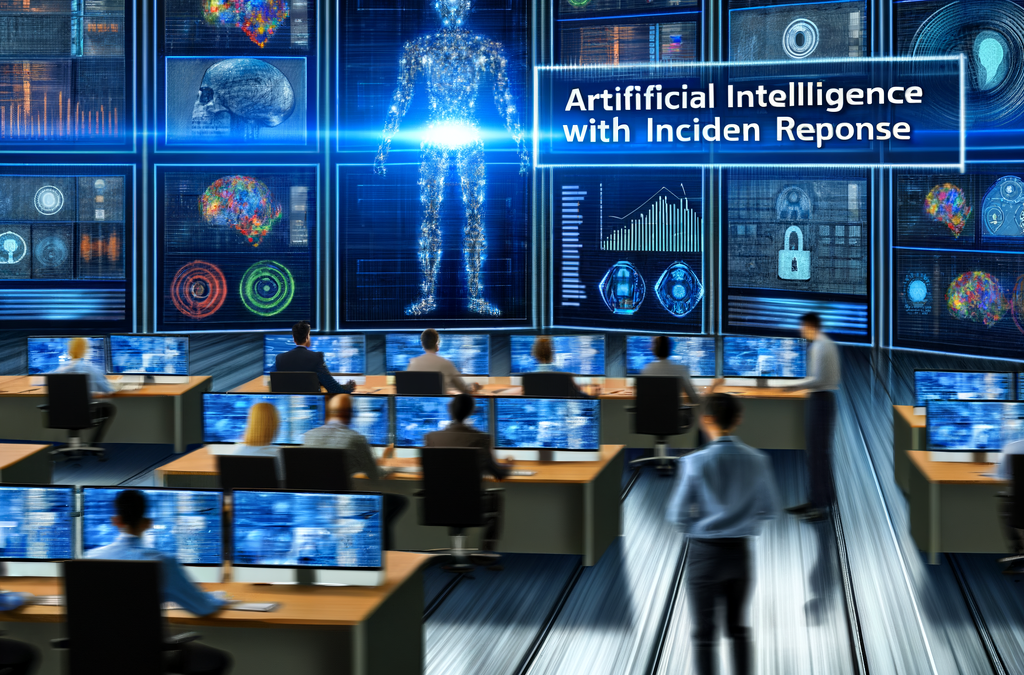
Artificial intelligence (AI) is revolutionizing incident response in cybersecurity, bringing automation and autonomy to unprecedented levels. In a world filled with digital threats, the ability to detect, triage, and mitigate threats in real-time is crucial. This article explores how AI and machine learning are changing the way security teams address challenges in cybersecurity.
The AI-Powered Revolution in Incident Response
Managing threats in today’s digital ecosystem requires an advanced and dynamic approach. This is where AI-Powered Incident Response becomes an invaluable resource. This model drives a significant shift by integrating artificial intelligence and machine learning into the threat detection process. Through sophisticated algorithms, organizations can decode large volumes of data in real time, enhancing threat detection more accurately and quickly than traditional methods.
The ability of AI to process vast amounts of network traffic and system logs enables the identification of unusual behavior patterns or anomalies that may indicate the presence of threats. This autonomous approach not only enhances visibility into the threat landscape but also significantly reduces the number of false positives, thereby alleviating the burden on security analysts. As a result, cybersecurity teams can focus their efforts on more effective incident triage and remediation, optimizing costs and response times.
Automation in Security Operations Centers (SOCs)
The integration of AI-driven automation and autonomy in SOCs represents a paradigm shift. With SOC Automation, security teams can effectively manage security data streams, enabling a faster and more efficient decision-making process. This approach not only optimizes alert management but also enhances incident response by allowing for quicker and more accurate identification and triage.

The impact of the AI SOC Analyst is tangible, enhancing the ability of security operations centers to manage the volume and complexity of modern cyber threats. By employing AI algorithms, SOCs can execute autonomous remediation, freeing analysts from repetitive tasks and allowing them to focus on more complex response strategies. This level of automation not only improves the organization’s security posture, but also provides a more cost-effective solution to growing challenges.

The use of threat intelligence in real-time, combined with the AI’s ability to interpret complex data flows, means that SOCs are better equipped to recognize and mitigate cyber threats before they can cause significant harm. This transformation not only benefits an organization’s incident management strategy but also redefines the role of the security analyst, enabling them to contribute greater value to the decision-making process.
With the adoption of AI-driven mechanisms, companies not only optimize their incident response strategies but also strengthen their security posture against the expanding universe of digital threats. AI-Powered Incident Response is undoubtedly an essential tool for modern cybersecurity, offering efficiency, precision, and a more strategic response to security challenges.