
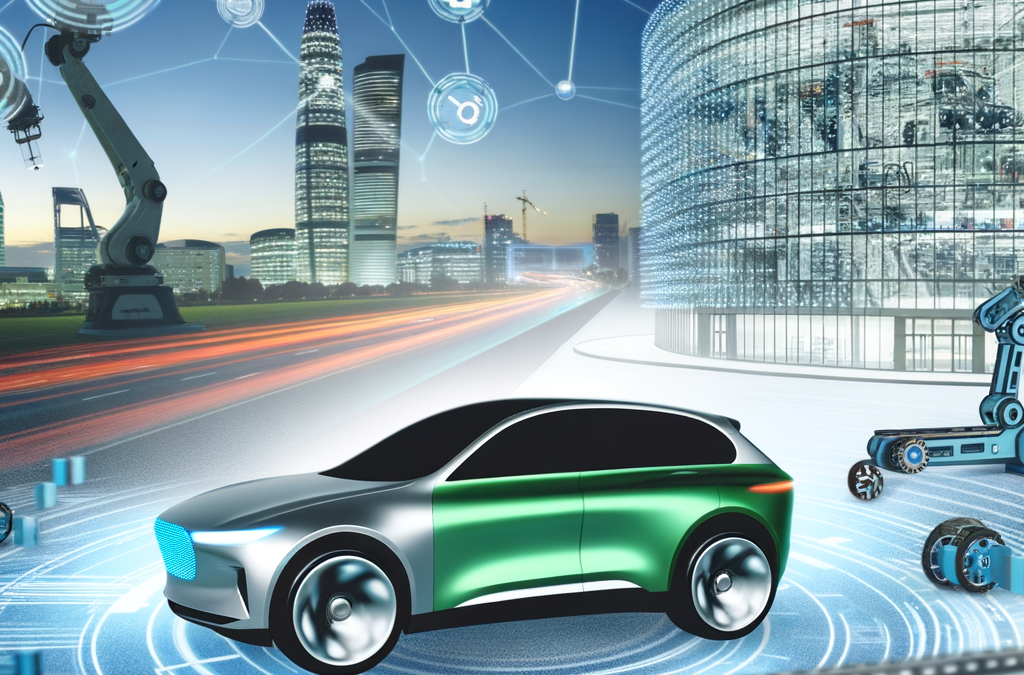
Artificial intelligence has revolutionized various industries, and the automotive sector is no exception. This article explores how AI is transforming every aspect, from vehicle design and manufacturing to enhancing the user experience. By focusing on technological innovation, safety, and sustainability, a promising outlook for the future of mobility is revealed.
Impact of Artificial Intelligence on Vehicle Design and Manufacturing
The emergence of artificial intelligence in the automotive industry has marked a turning point in the design and manufacturing of vehicles. Thanks to AI, manufacturers can analyze large volumes of data and conduct design simulations in virtual environments, allowing them to optimize aerodynamics and the efficiency of cars before building a physical prototype. This not only reduces costs and time but also represents a crucial step towards sustainable mobility.
The automation of production lines using intelligent robots has significantly improved the quality and precision in vehicle manufacturing. AI algorithms monitor every stage of the process, ensuring a high level of consistency and minimizing costly errors. Furthermore, AI is transforming the production of batteries for electric cars, enabling the development of more efficient and longer-lasting cells, which is essential for the future of electric vehicles.
Improvement of User Experience and Driver Assistance
The integration of artificial intelligence in cars is not only focused on manufacturing; it also profoundly transforms the user experience. AI-powered infotainment systems provide more intuitive and personalized interfaces, adapting to the driver’s preferences. From advanced voice commands to personalized route or music recommendations, customization is key to delivering a tailored driving experience.

Furthermore, AI-based driver assistance systems are enhancing safety on the roads. Technologies such as autonomous emergency braking, lane keeping, and blind spot detection systems are examples of how AI actively improves safety by reducing the risk of accidents. These advancements, along with the development of autonomous vehicles, are paving the way for a future where mobility is not only more efficient but also safer for everyone.

With AI, real-time monitoring of vehicle conditions is also facilitated, alerting the driver about the wear of critical parts or the need for maintenance, which ensures greater durability and reliability of the car. This efficiency in preventive maintenance directly impacts the sustainability of vehicles, extending their lifespan and reducing environmental impact.