
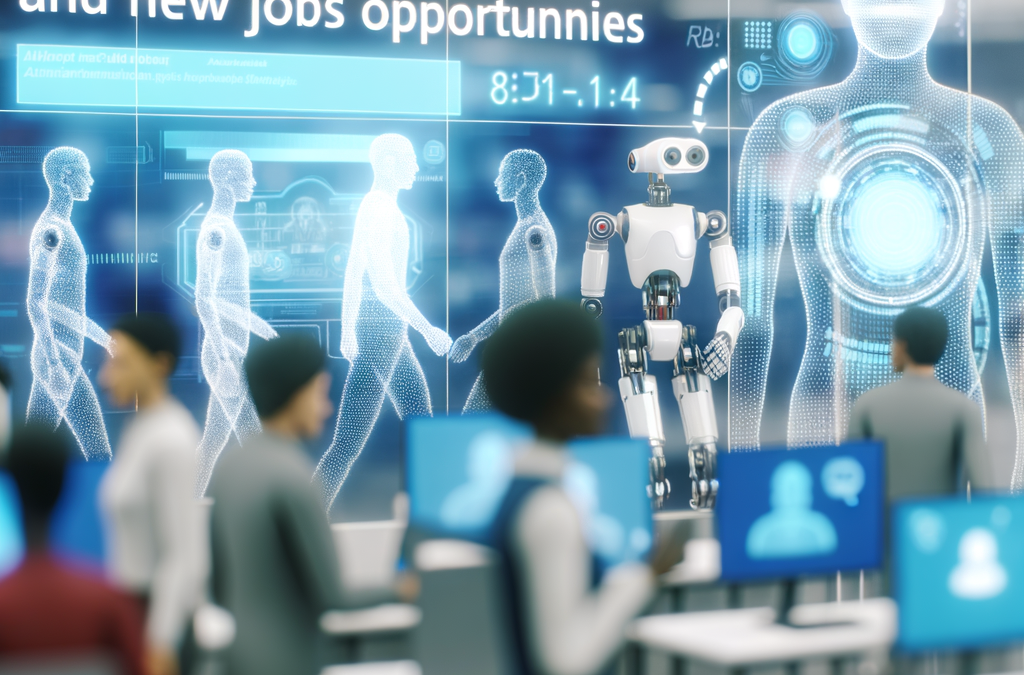
The artificial intelligence has become a driving force in the global economy, revolutionizing the way we work and create job opportunities. Its impact on the labor market is undeniable, generating both uncertainty and excitement. This article explores how automation and machine learning are reshaping the workforce, paving the way for new jobs and demands for skills.
Labor Market Transformation
The emergence of artificial intelligence in the workplace has led to a significant transformation. The automation of routine and repetitive tasks has allowed workers to focus on more creative and strategic activities, resulting in an increase in productivity. Although certain jobs may have been eliminated, artificial intelligence has also created new job opportunities that require specific skills.
The ability to analyze data and proficiency in the use of advanced technologies have become key requirements for modern workers. In an environment where technology drives growth, the need for skilled personnel is more evident than ever. Companies increasingly value skills related to machine learning and the management of large volumes of data, leading to a growing demand for specialists in these fields.
Impact on the economy and the future of employment
Artificial intelligence is not only impacting current employment, but it is also shaping the economy of the future. AI-driven innovation is achieving sustainable economic growth, creating a dynamic environment where new jobs continue to emerge in previously unimagined sectors. This evolution not only increases opportunities but also presents challenges in terms of training and adaptation.
Organizations and governments are increasingly investing in training programs to prepare the workforce for future demands. This preparation is essential for workers to seize the opportunities presented by technological advancements. Furthermore, the ongoing interaction between humans and machines optimizes processes and strengthens the competitiveness of the global economy.
In summary, artificial intelligence is redefining the labor and economic landscape, opening doors to new opportunities while challenging the workforce to adapt and acquire new skills. The combination of innovation and training is essential to capitalize on the potential of technology and ensure a prosperous and sustainable work future for everyone.