
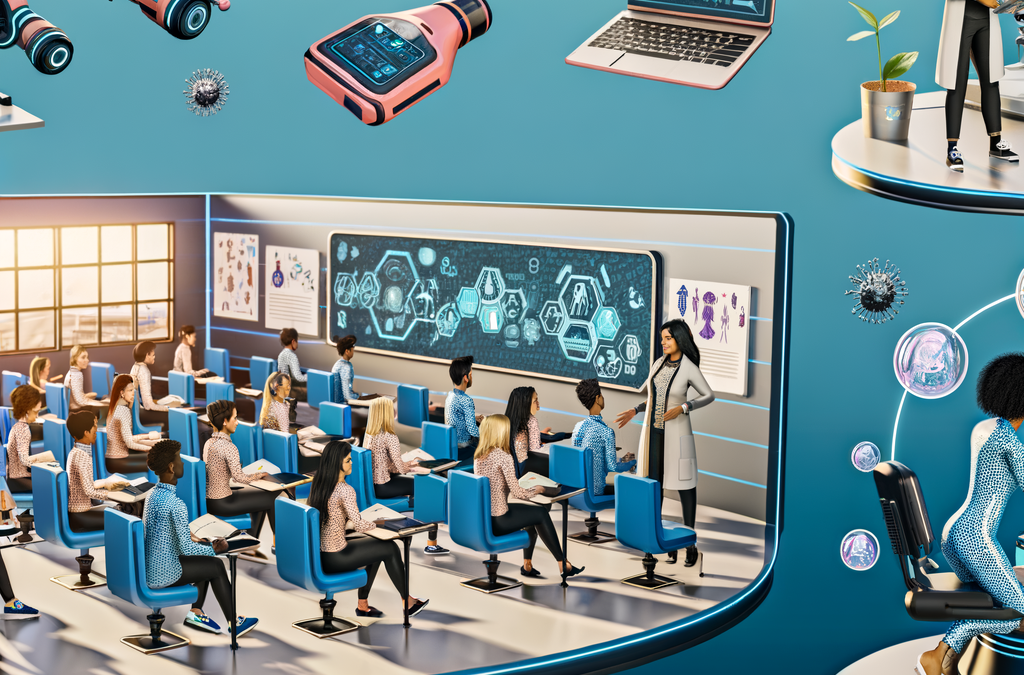
The artificial intelligence (AI) is revolutionizing scientific research and education, influencing pedagogical strategies and teaching methods. Tools based on technologies such as machine learning and natural language processing promise a more personalized teaching experience. In this article, we will explore how these technologies are transforming access to knowledge, fostering skills such as critical thinking and creativity.
Transformation of Education through Artificial Intelligence
Artificial intelligence has emerged as a key player in the transformation of modern education. As educators and institutions increasingly adopt advanced technologies, traditional teaching methods are undergoing a significant shift. Pedagogical strategies are being redesigned to integrate machine learning systems that enable educators to tailor educational content to the individual needs of students. This personalization not only makes learning more relevant but also promotes more equitable access to knowledge, aligning with UNESCO’s principles for inclusive education.
One of the most notable advancements is the application of neural networks and deep learning algorithms in the creation of adaptive learning environments. These systems are capable of analyzing large volumes of data using data mining techniques to identify patterns in student behavior and performance. This enables the implementation of personalized learning environments, offering resources and advice tailored to each individual, which enhances both efficiency and productivity in the educational process.
Impact on Scientific Production and Critical Thinking
Artificial intelligence is also significantly influencing scientific production and the development of critical skills. Natural language processing tools are facilitating the automatic written and review of scientific articles, enhancing spelling, grammar, and accuracy. This not only increases the quality of documents but also frees up valuable time for scientists to focus on innovation and creative thinking.

Furthermore, the use of fuzzy logic and data analysis enables the development of more precise and effective knowledge acquisition strategies. The scientific community is increasingly adopting AI to tackle interdisciplinary problem-solving, thereby enhancing collaboration. This interdisciplinarity is essential for addressing complex challenges that require a holistic approach. On the other hand, learning analytics provides valuable insights into how different learning modalities impact the development of critical thinking.

The growth of Big Data and its integration into educational systems fosters the development of more advanced predictive models that facilitate data-driven decision-making. Deep learning has played a crucial role in enhancing understanding and boosting creative processes. All of this contributes to an efficient advancement of research, supporting the creation of more robust and accessible knowledge.
Artificial intelligence technologies are revolutionizing education and scientific research, providing unprecedented opportunities to foster creativity and interdisciplinary collaboration. By empowering students and educators with adaptive and personalized tools, we are laying the groundwork for a more inclusive and efficient educational future.