
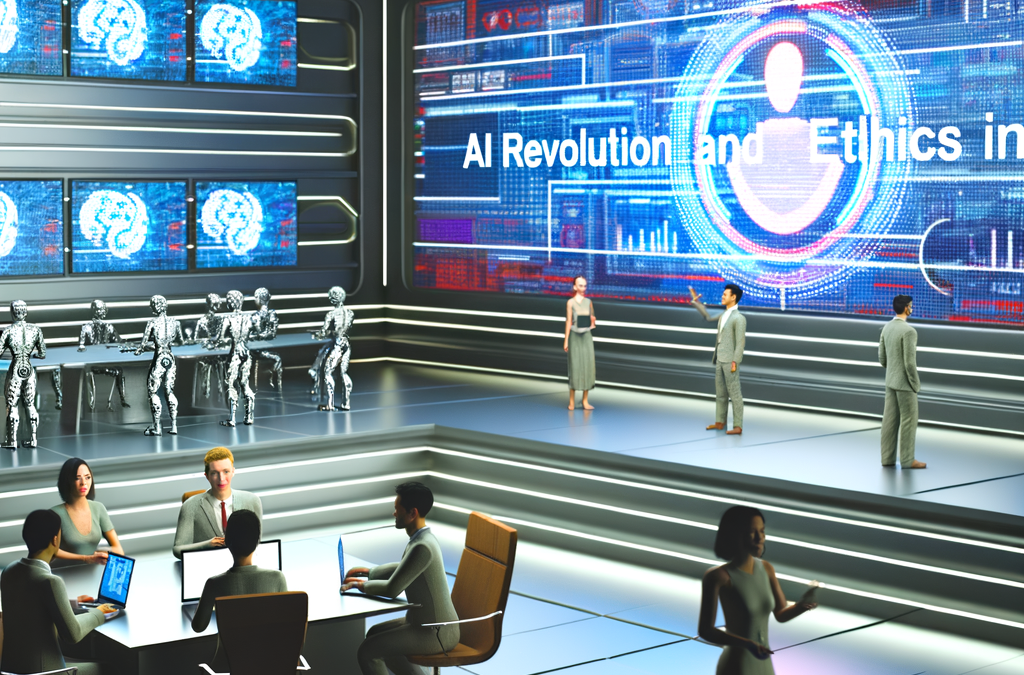
Artificial intelligence (AI) is revolutionizing the media industry, transforming the way audiovisual content is produced, distributed, and consumed. This article explores the impact of artificial intelligence in areas such as transcription, dubbing, content personalization, and the ethical challenges that arise with automation, fake news, and automated journalism.
The Revolution of Artificial Intelligence in the Media Sector
The artificial intelligence is driving an unprecedented transformation in the media industry, providing technological solutions that have redefined traditional processes. In a context where content consumption is increasingly demanding, powerful tools for captioning, transcription, and audio description are being integrated to ensure broad and accurate accessibility. These tools not only facilitate the creation of inclusive content but also optimize production time and resources. Companies like Verbit are leading the market with automated transcription solutions that meet high standards of accuracy, essential for both entertainment and critical sectors such as education and corporate.

In the field of translation and dubbing, AI is breaking down language barriers, allowing content to reach a global audience. Advanced dubbing technologies powered by machine learning not only translate audio but also adjust the tone and emotion of voices to provide a more authentic experience. This is crucial on streaming and digital broadcasting platforms, where content personalization for diverse audiences is key to success.
Smart Automation and Ethical Challenges in Media
Automation in media, driven by AI, brings with it a series of significant challenges, especially in the context of disinformation and automated journalism. The creation of fake news through automated algorithms raises concerns about the accuracy and truthfulness of the information distributed on social media. The fight against fake news has become a priority for organizations, utilizing technologies such as recommendation systems to filter verified content.
The government and other public entities are beginning to regulate the use of artificial intelligence in the media to protect consumers. Furthermore, extreme personalization can lead to the creation of information bubbles where the user only receives content that reinforces their own beliefs, limiting their exposure to a broader range of perspectives.

On the other hand, AI is enhancing efficiency in the legalization of transcripts through automatic legal transcription, streamlining bureaucratic processes and saving costs for businesses and public administrations. This automation enables a quicker and more accurate response in the handling and analysis of legal documentation.
Artificial intelligence is redefining media production and consumption, transcending language barriers and enhancing accessibility. However, it poses ethical challenges and misinformation issues that require careful management. The transformation is underway, and responsible implementation will be crucial to maximizing the benefits of this revolutionary technology.