
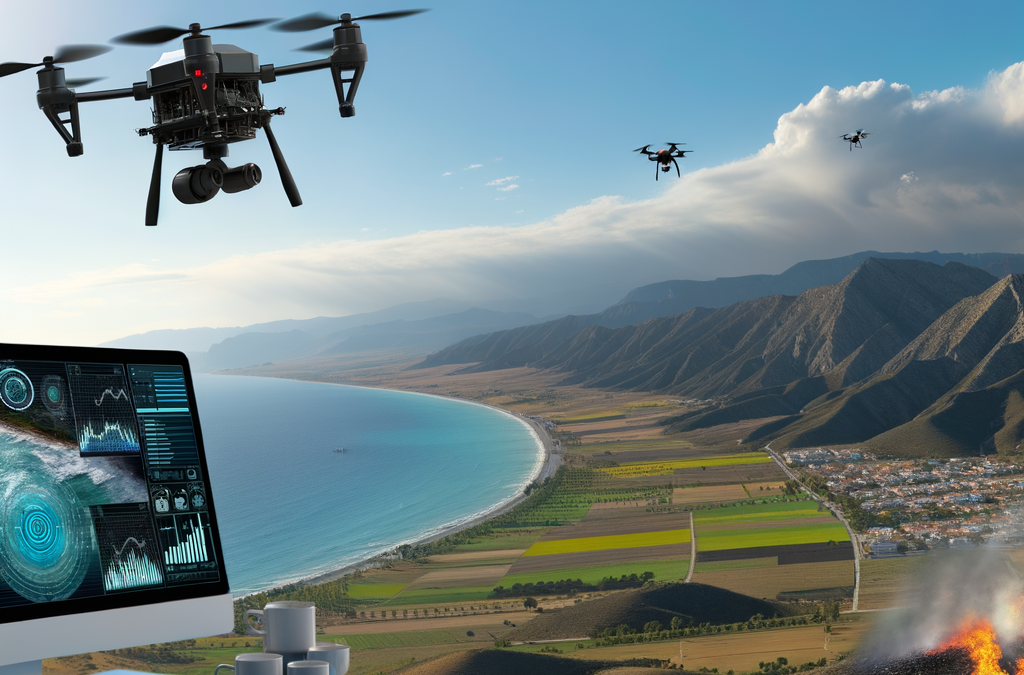
Artificial intelligence (AI) has become a crucial tool in the prevention and mitigation of natural disasters. This article explores how technology is being integrated to address phenomena such as wildfires and other environmental risks, enhancing our understanding through data analysis, simulations, and monitoring, with a particular emphasis on applied cases in Spain.
AI as a Critical Tool in the Detection and Prevention of Natural Disasters
The current climate emergency has heightened the need to develop new methods for the detection and prevention of natural disasters. This is where artificial intelligence (AI) emerges as an indispensable ally. Thanks to its ability to process large volumes of data in real-time, AI can detect patterns that alert us to wildfires, severe storms, and other extreme weather events. Predictive models, fueled by historical climate data, provide accurate warnings that allow for proactive action.
In Spain, a nation accustomed to facing recurring wildfires, the use of artificial intelligence has advanced in the field of prevention. Through monitoring systems that utilize satellites and ground sensors, vital information about temperature, humidity, and wind speed is collected. This data is analyzed in real time by advanced algorithms that can predict the risk of fire in specific areas, assisting authorities in deploying resources effectively before larger disasters unfold.
Simulations and risk analysis: towards greater resilience and recovery
In addition to proactive detection, AI plays a crucial role in risk analysis and mitigation. Through complex simulations that model various climate scenarios, artificial intelligence systems enable scientists and planners to assess the potential impacts of natural disasters. These tools generate simulations of wildfires, floods, and droughts, facilitating the identification of particularly vulnerable areas and the prioritization of protection measures.

An innovative aspect is the use of social media as a complementary data source in monitoring crisis situations. By analyzing posts and updates, AI algorithms can detect emerging trends and provide communities with up-to-date information and specific instructions during and after an event. This approach not only aids in immediate response but also contributes to long-term resilience by informing effective recovery strategies.
AI not only facilitates disaster response but also supports post-disaster recovery efforts in Spain. After an incident, data analysis and AI-based damage assessments provide valuable insights to direct resources and rebuild infrastructure more efficiently and sustainably. This approach enables affected communities to recover more quickly, strengthening their resilience against future challenges.
Artificial intelligence emerges as a promising solution to tackle the challenges posed by natural disasters. Its integration into prevention, mitigation, and recovery not only enhances Spain’s preparedness for wildfires and other risks but also strengthens the resilience of communities against climate change.