

In today’s digital landscape, artificial intelligence (AI) plays a crucial role in the protection of data and cybersecurity. This article explores how AI is transforming data security, from endpoint protection to privacy and regulatory compliance, highlighting the impact of technologies such as machine learning, generative AI, and endpoint protection platforms.
AI and Data Security: Protection Beyond Traditional Boundaries
Artificial intelligence has emerged as a fundamental tool in the defense against cyber threats and in ensuring data integrity. Endpoint Protection Platforms now integrate AI to identify anomalous patterns, enhancing threat detection. Through the use of machine learning, these platforms are able to continuously adapt to new threats, a crucial aspect in an ever-evolving digital landscape.
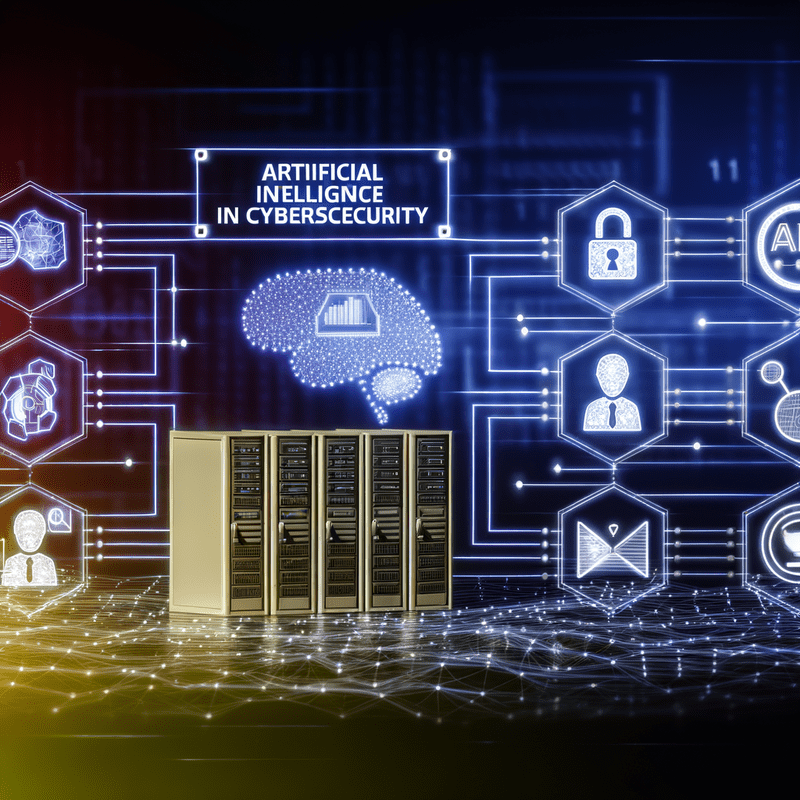
One of the biggest current challenges is the increasing number of cyber threats that organizations face. This is where AI provides a significant advantage: behavioral analytics allow for the detection of irregularities in system usage, which may indicate an intrusion or a potential attack. This, in turn, enhances threat detection and enables automated responses (Automated Response) to incidents before they escalate into data breaches.
Furthermore, the security of data in the cloud is profoundly influenced by AI, which provides robust monitoring and analysis. Advanced Security Information and Event Management (SIEM) and Security Orchestration, Automation, and Response (SOAR) tools integrate with AI capabilities to offer an additional layer of protection. These tools continuously monitor data integrity, ensuring that any attempt at unauthorized access is quickly detected and mitigated.
Anonymous Data and Synthetic Generation: Preserving Privacy and Compliance
With the increasing focus on data privacy and regulatory compliance, such as the General Data Protection Regulation (GDPR) of the EU, companies are leveraging AI to proactively address these concerns. Data must not only be secure but also managed ethically, respecting individual privacy.
Anonymization and synthetic data generation are two methods gaining prominence in the field of AI for data security. Anonymization transforms data in such a way that its original source cannot be identified, while synthetic data created by Generative AI allows organizations to work with datasets that preserve statistical patterns without compromising the privacy of real data. These techniques not only enhance data security but also facilitate compliance with privacy regulations.
Another critical dimension is AI’s ability to manage and secure IoT devices that, by their nature, have multiple vulnerabilities. AI analyzes these devices, ensuring their proper use and preventing potential compromises that could lead to adversarial attacks. With the growing trend towards IoT, this capability becomes essential for maintaining security and privacy in complex networks.

Finally, the use of AI-based encryption provides an additional layer of security by ensuring that data remains unintelligible to any unauthorized parties. AI optimizes encryption processes, enabling the rapid encoding and decoding of large volumes of data without compromising network efficiency. This approach ensures that any potential security breach can be minimized by effectively protecting critical data.
With the advancement of AI capabilities, its integration into cybersecurity and data protection is becoming not just a desirable standard but a necessary one. By addressing complex security threats through emerging technologies, organizations can not only protect their assets but also foster an environment of compliance and trust for their customers.