
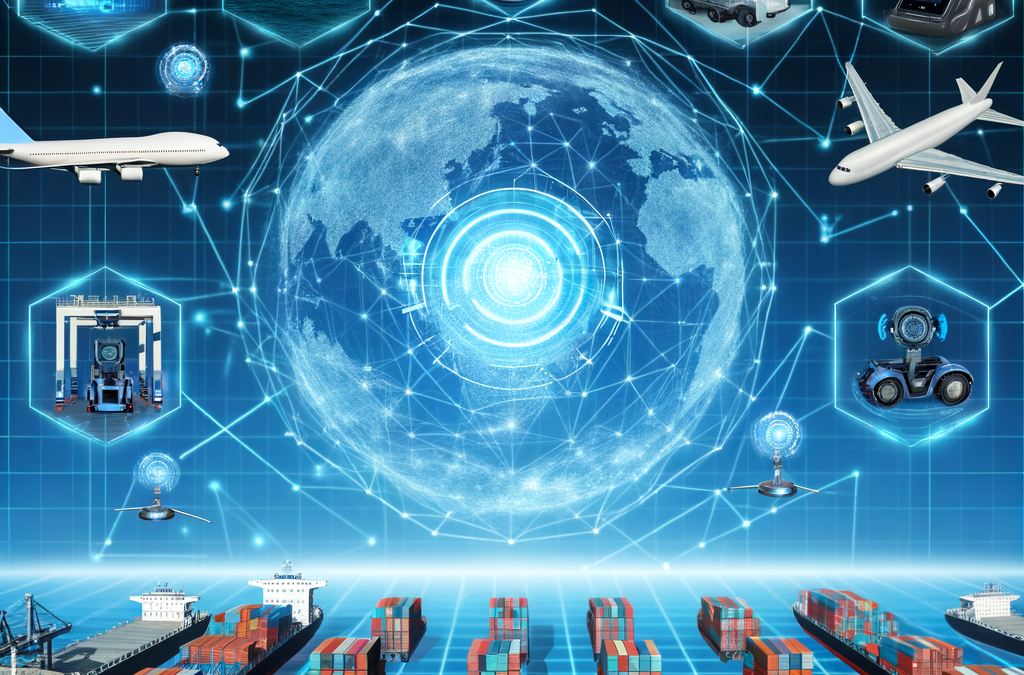
The artificial intelligence (AI) is revolutionizing supply chain management by enhancing efficiency and optimizing every stage of the process. From demand forecasting to warehouse automation, AI is enabling companies to make more informed and better decisions. We will explore how AI is transforming the supply chain into a more effective and resilient ecosystem.
Optimization of the Supply Chain Through Artificial Intelligence
In today’s competitive world, supply chain management is essential for maintaining a company’s competitiveness. The integration of artificial intelligence and machine learning in this field promises to revolutionize every aspect of the logistics process, enhancing efficiency and mitigating risks. These technologies enable not only faster and more accurate data processing but also increasingly sophisticated pattern recognition. Thanks to these capabilities, companies can tackle complex challenges through more precise projections and optimizations.
A critical aspect of the supply chain is route optimization. By utilizing advanced AI models, companies can identify the best possible routes for the delivery of goods, thereby reducing time and costs. This ability to optimize routes results in a significant improvement in resource utilization and a reduction in carbon emissions, thus enhancing both profitability and environmental impact.

Additionally, warehouse automation is another area where AI is making its mark. By automating processes such as product selection and inventory management, accuracy is improved and human errors are reduced. This not only speeds up the order fulfillment process but also provides real-time information on inventory levels, allowing companies to proactively adjust their strategies.
Innovations in Information Processing and Risk Mitigation
Another significant advancement is the ability to conduct freight invoice audits using AI. Automated freight invoice auditing can identify discrepancies and errors more quickly than any human, ensuring that payments are made accurately and on time. This approach not only enhances payment processes but also increases visibility throughout the supply chain.
Demand forecasting has become much more accurate with the help of AI. By analyzing large volumes of historical and real-time data, companies can predict demand trends more precisely, allowing them to adjust production and maintain optimal inventory levels. This is crucial for avoiding both excess and shortages of products, leading to higher customer satisfaction and reduced costs.

Finally, information sharing is an essential component for efficient supply chain management. AI enables the integration of sensors and IoT devices that provide real-time data on transportation conditions, consolidating this information into a single, comprehensible view to enhance decision-making. This approach also increases visibility throughout the entire supply chain, allowing companies to mitigate risks before they escalate into significant issues.
In summary, the introduction of artificial intelligence in the supply chain is driving a radical shift towards greater efficiency and resilience. From route optimization and warehouse automation to demand forecasting and real-time visibility, AI is redefining modern logistics, enabling companies to make quick and informed decisions with significant returns at every stage of their operations.