

In an increasingly technology-driven world, artificial intelligence (AI) plays a crucial role in transforming fleet management. By integrating AI with advanced tools such as Geotab and video telematics, companies can optimize routes, enhance driver safety, and ensure regulatory compliance, all while promoting sustainability and reducing operational costs.
Transformation of Fleet Management with AI and Telematics
Currently, fleet management is not just about moving vehicles from point A to point B. Telematics technology and artificial intelligence (AI) are redefining what is possible. By integrating GPS tracking systems and video telematics, fleet managers can obtain real-time reports on the location and behavior of vehicles and drivers, which transforms a company’s operational efficiency.
One of the main advantages of integrating AI and telematics is the ability to optimize routes. By employing machine learning algorithms, companies can predict traffic conditions and calculate the most efficient routes that not only save time but also fuel. This optimization has a direct impact on sustainability and operational costs, reducing carbon emissions and improving profit margins.
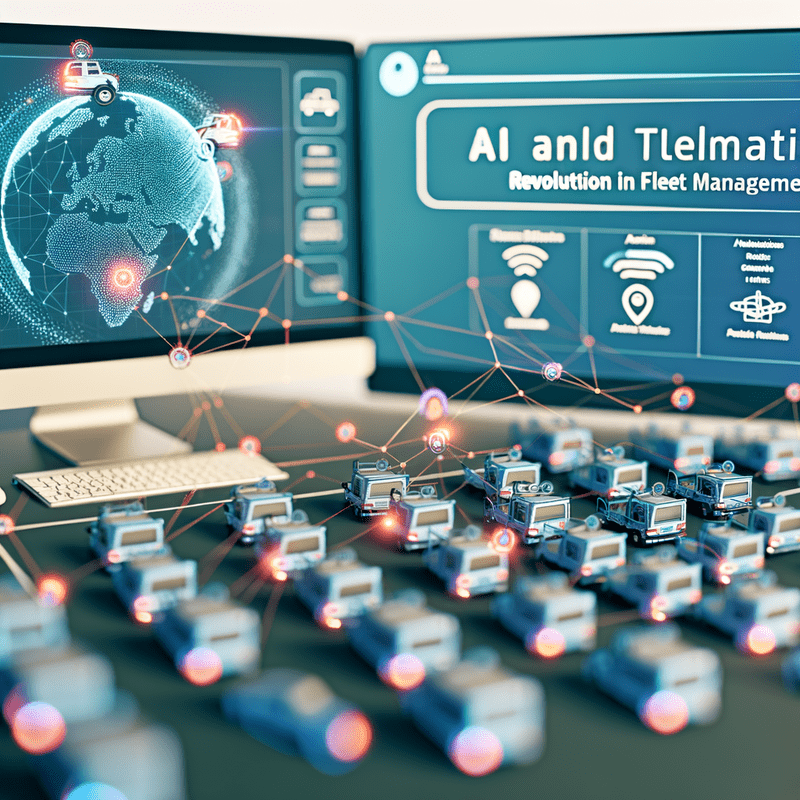
Some industry leaders, such as Geotab, are at the forefront of this transformation. By utilizing asset tracking and predictive analytics tools, they provide fleet managers with a holistic view. This includes not only vehicle location data but also wear patterns that can be predicted through advanced analytics, enabling more efficient predictive maintenance.
Driving Security and Compliance through AI
In addition to optimizing efficiency, the implementation of AI in fleet management plays a crucial role in enhancing driver safety and ensuring regulatory compliance. Video telematics technology can analyze driving patterns and alert operators to risky behaviors, such as harsh accelerations or braking, allowing for proactive intervention to improve safety.

By integrating API, telematics solutions provide a powerful platform for companies to customize and expand their capabilities. These interfaces enable integration with other management systems and data analytics, ensuring that sustainability and compliance strategies remain aligned with corporate objectives. A key marker is fraud detection, where artificial intelligence can identify anomalies in the data to safeguard operations.
With these technologies, companies can develop a sustainability strategy that is more robust, maximizing return on investment while minimizing environmental impact. Accurate maintenance predictions not only extend the lifespan of vehicles but also ensure efficient resource use, a primary goal in the strategy of any modern fleet management.
Through the strategic use of AI, telematics, and machine learning, fleet management becomes a more efficient, safe, and sustainable process. Advanced technologies like those offered by Geotab not only facilitate cost reduction and route optimization but also ensure regulatory compliance and driver safety, supporting corporate goals of sustainability and operational efficiency.