
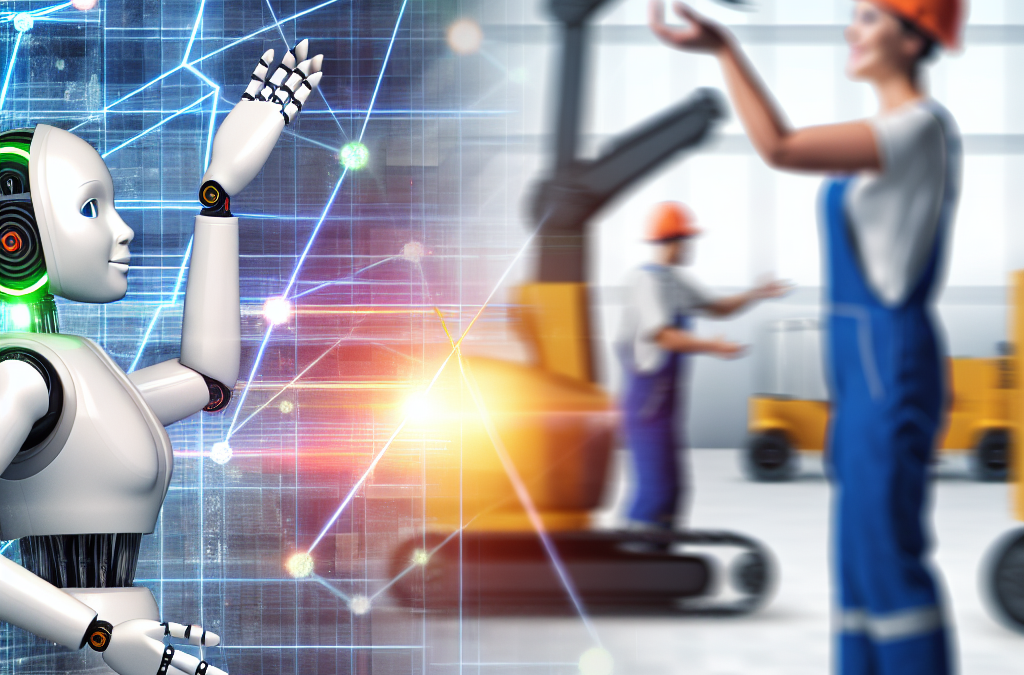
The integration of artificial intelligence in occupational health is dramatically transforming workplaces. By utilizing machine learning to enhance workplace safety and risk assessment, companies can provide a safer and more efficient work environment. This article explores how these technologies are innovating in the fields of safety and occupational health.
Artificial Intelligence: A Pillar in Occupational Safety
Artificial intelligence (AI) has revolutionized multiple sectors, and occupational safety is no exception. With the growing demand for safer work environments, AI provides innovative tools to identify and mitigate risks. One of the primary uses of AI in workplace safety is the detection and prediction of potential hazards. Through IoT sensors and surveillance cameras, machine learning algorithms can analyze the behavior of machines and employees, anticipating potentially dangerous situations before they occur. Additionally, these systems can be programmed to immediately alert supervisors when they detect risky behaviors, allowing for early intervention.
Risk assessment is another area where AI demonstrates its potential. Traditionally, workplace risk assessment has relied on observations and manual analysis, which can be time-consuming and prone to human error. Now, with the help of AI, companies can automate this process, using large volumes of data to identify patterns that may indicate a hidden risk. This not only saves time but also provides a more accurate and reliable analysis.
Machine Learning: Enhancing Occupational Health
Machine learning is a branch of AI that focuses on the development of algorithms that can learn and make predictions based on data. In the field of occupational health, this technology enables advanced data analysis to identify potential health issues before they become serious problems. For example, machine learning algorithms can analyze health data collected from wearable devices that measure heart rate, activity levels, and other indicators. With this information, organizations can gain a clearer insight into the overall health of their employees and take effective preventive measures.

Furthermore, machine learning can be integrated with employee training programs, customizing the training based on the specific health and safety needs of each worker. This is achieved through the analysis of previous performance and health data to identify areas for improvement. With this information, training programs can be designed to be more effective, taking less time and yielding better results.

The integration of AI with occupational health and safety represents a significant step towards creating safer and healthier work environments. With the power of machine learning, companies can not only predict and prevent risks but also foster a personalized and effective workplace health culture.
Artificial intelligence is shaping the future of occupational health by enhancing workplace safety and optimizing risk assessment. By integrating technologies such as machine learning, organizations can anticipate issues and efficiently tailor solutions, creating a safe and healthy work environment for all.