
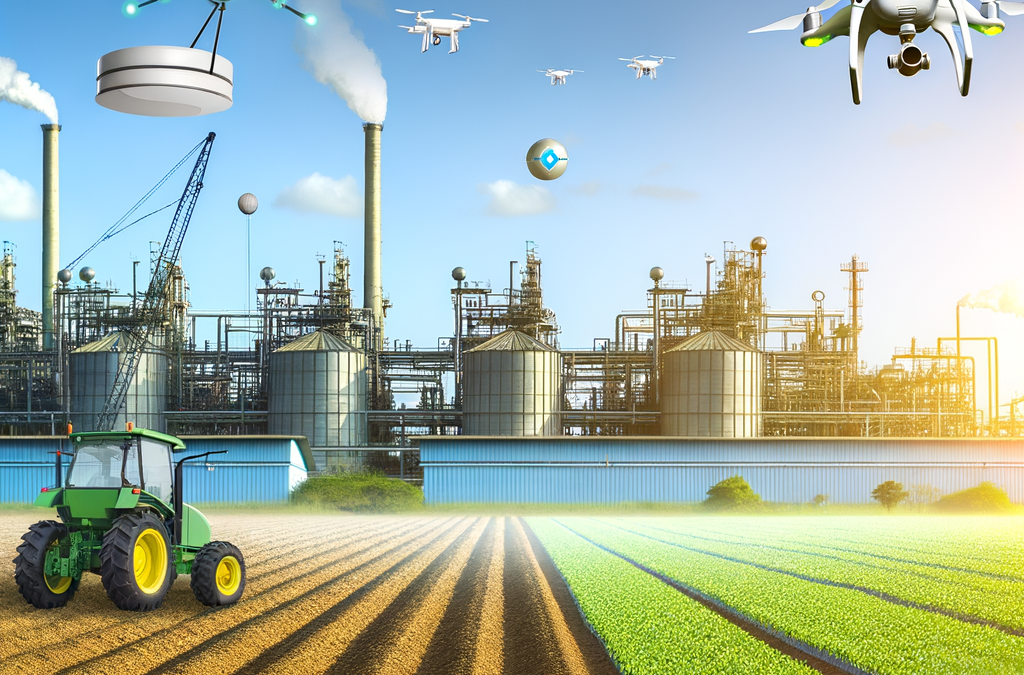
The artificial intelligence (AI) is revolutionizing multiple industries through the use of IoT, preventive maintenance, and anomaly detection to enhance efficiency. This article explores how process automation, security, and the improvement of user experience are transforming sectors such as agriculture, manufacturing, healthcare, logistics, and cybersecurity within the supply chain.
Artificial Intelligence and Its Impact on Agriculture and the Manufacturing Industry
Artificial intelligence (AI) has undeniably taken center stage in various economic sectors, emerging as an essential tool in agriculture and manufacturing. In agriculture, the use of IoT devices, combined with advanced AI algorithms, enables effective preventive maintenance of agricultural machinery, thereby optimizing crop yields. Through real-time anomaly detection, farmers can anticipate issues that could impact crop health, reducing waste and improving operational efficiency. Furthermore, AI facilitates the automation of processes such as irrigation control and nutrient monitoring, promoting a more sustainable and precise management of resources.
In the manufacturing industry, the integration of AI and IoT has radically transformed the way production plants operate. Anomaly detection on assembly lines, through smart sensors, allows for the identification and resolution of issues before they escalate into costly failures. This type of predictive maintenance not only enhances the efficiency and safety of operations but also extends the lifespan of machinery. The automation of processes using AI, such as the programming of industrial robots, optimizes production and reduces human errors. Furthermore, these technologies significantly enhance the user experience by ensuring high-quality, reliable products produced at an accelerated pace.
AI in Healthcare, Logistics, and Supply Chain Security
Healthcare is another area where artificial intelligence is making a crucial difference. Thanks to AI, it is possible to achieve more accurate diagnoses through the analysis of large volumes of medical data, while simultaneously improving user experience and clinical intervention. AI systems can predict adverse events, facilitating preventive maintenance of medical equipment and ensuring its availability during critical moments. Additionally, the automation of administrative processes reduces the workload of healthcare staff, allowing them to dedicate more time and attention to patients.

In the logistics sector, artificial intelligence plays a crucial role in the optimization of transportation routes, inventory management, and enhancing the efficiency of product delivery. AI systems continuously analyze data to detect anomalies that could delay the transportation of goods, thereby improving the overall efficiency of the supply chain. Furthermore, these technologies strengthen the cybersecurity of the sector by identifying and neutralizing potential threats that could compromise the security of information and products.

In terms of cybersecurity, artificial intelligence is essential for protecting the integrity of data throughout the supply chain. AI-based tools are capable of monitoring vast information networks in real-time, identifying suspicious patterns and minimizing the risks of security breaches. In this way, AI not only ensures data security but also enhances user trust in logistics and manufacturing systems.
Artificial intelligence, through IoT and process automation, serves as a catalyst for efficiency, security, and enhancement of user experience in critical sectors such as agriculture, manufacturing, healthcare, and logistics. These technologies are transforming the way industries operate and safeguard their supply chains, ensuring a more sustainable and secure future.