
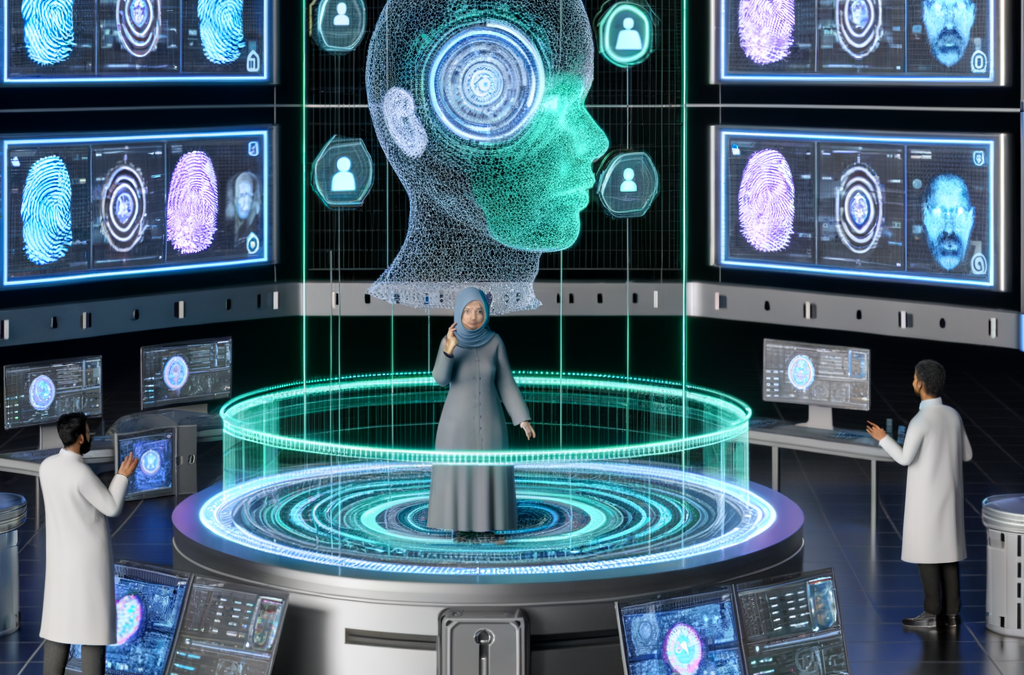
The convergence between artificial intelligence (AI) and biometric technology has triggered an unprecedented transformation in the way identity is managed and security is ensured. This article explores the role of AI and machine learning (ML) in the evolution of biometric solutions and their impact on key sectors such as health, security, and access control.
Innovation in Biometric Technology and Identity Verification
The biometric technology has captured global attention by offering a revolutionary way to perform identity verification. With a focus on security and accuracy, biometric solutions such as facial recognition, fingerprint sensors, and IRIS sensors are playing a crucial role in digital transformation. These applications are enhancing not only access to systems and physical locations but also to virtual environments.
At the intersection of advanced technology and product solutions, the integration of OEM modules into devices has enabled the creation of access control systems that are both robust and scalable. Media coverage of these technologies highlights their impact and potential. However, the real magic happens in the realm of research and development, where experts tirelessly work to refine these tools.
The case of the Aadhaar Biometric system in India is a vivid example of how biometric technology, backed by AI and ML, can be deployed on a large scale to manage the identity of over a billion people, significantly increasing efficiency and transparency in the distribution of public services.
Exploration of Advanced Biometric Solutions and Their Impact on Society
The integration of AI and ML in biometric solutions is driving a new era of security and workforce management. Access control systems are becoming standard elements in buildings and organizations that value the protection of sensitive information and physical assets. With the use of multimodal biometrics, which combines more than one authentication method such as fingerprints and facial recognition, enhanced accuracy is being achieved compared to conventional solutions.
In the fields of healthcare and law enforcement, these technologies enable more effective fraud detection through real-time processing, ensuring that resources are allocated appropriately and threats are measured with agility.
Security software solutions, including biometric sensors and AI modules, are redefining workplace security. For sectors like consumer electronics, such as smartphones and personal devices, the use of fingerprint sensors and facial recognition has significantly improved the user experience by providing secure yet hassle-free authentication.
The media coverage of these next-generation solutions highlights their importance and the shift towards a future where AI technology and biometrics are an integral part of our daily lives.
The advancement of AI and biometric technology is reshaping the future of security and identity management. With increased precision and diversified applications, a pathway is being forged towards a safer and more efficient world. Ongoing research and the strategic implementation of these technologies will ensure sustainable innovations for future generations.
