
The artificial intelligence and augmented reality are revolutionizing multiple economic sectors, providing personalized and immersive solutions that enhance the interaction between businesses and their customers. This article serves as a guide to explore how AI platforms, through the study of agents and autonomous engines, are transforming areas such as e-commerce, education, and finance.
The Synergy between Artificial Intelligence and Augmented Reality in Business Platforms
The convergent use of artificial intelligence (AI) and augmented reality (AR) is having a notable impact on business platforms. When used together, these technologies have the potential to create immersive and personalized experiences for users, enhancing their interaction and satisfaction. This synergistic approach is particularly evident in the e-commerce and education sectors, where AR allows for real-time product visualization, and AI enables precise recommendations.
In e-commerce, AR enhances the customer experience by allowing them to virtually try products before purchasing. Additionally, AI-powered chatbots provide instant assistance during the buying process, improving the user experience. Agencies and developers are leveraging these features to create applications that attract and retain customers, resulting in a significant increase in lead generation.
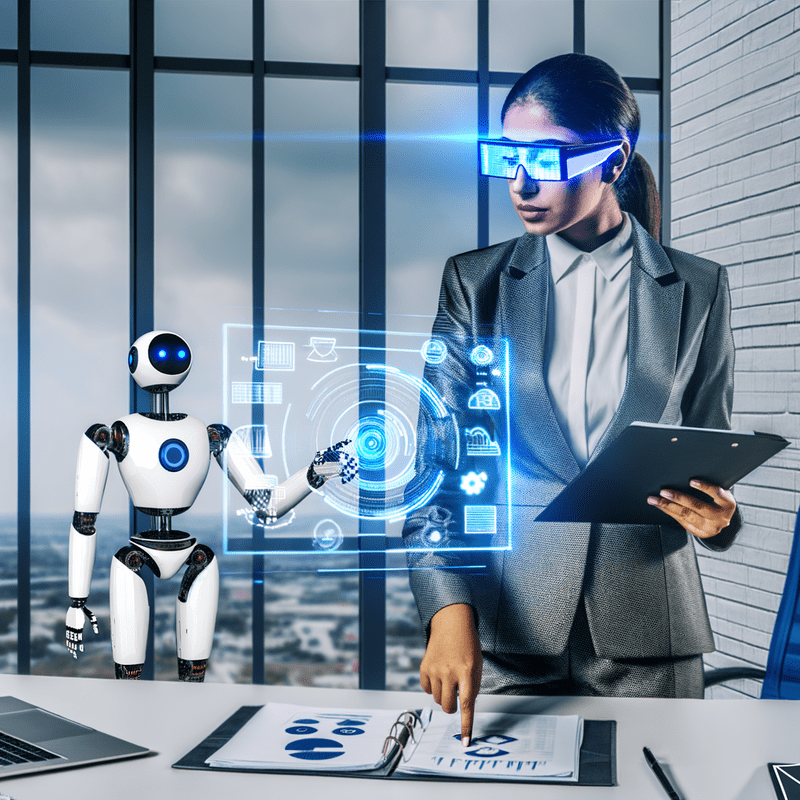
On the other hand, in the education sector, AI and AR platforms provide interactive and visual learning environments that motivate students and facilitate the understanding of complex concepts. Smart glasses like Google Glass are being used to offer real-time instructions during laboratory practices, while knowledge bases automate resource management, allowing educators to focus their efforts on teaching.
Driving the Future with Autonomous Engines and LLM Providers
Autonomous engines, supported by leading providers of large-scale language models such as OpenAI, Anthropic, Groq, and Hugging Face, are redefining how companies automate their processes. These engines enable the autonomous execution of tasks, from inventory management to customer experience personalization, enhancing operational efficiency and reducing costs.
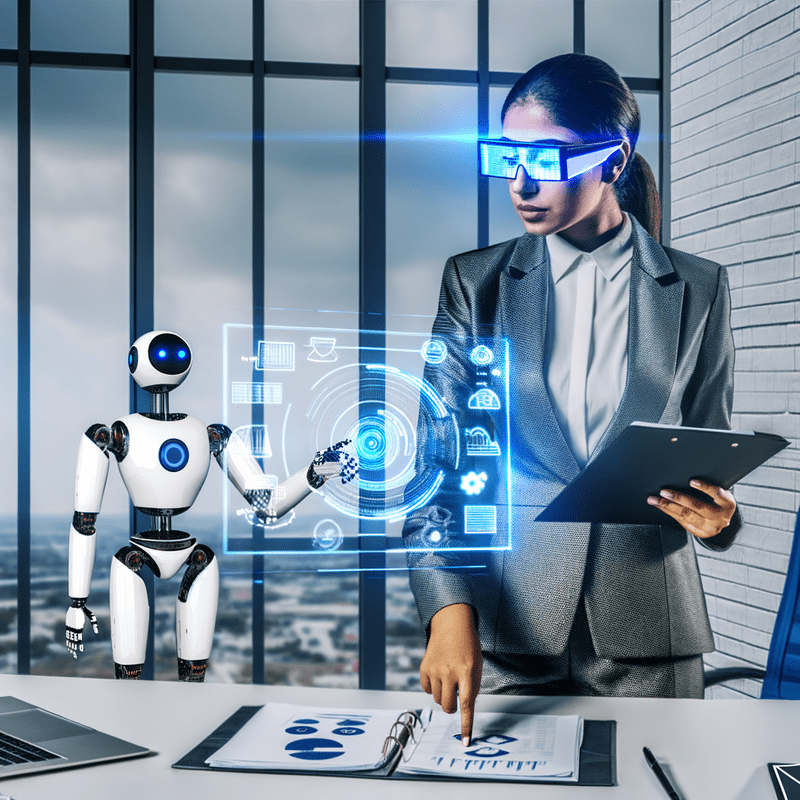
Integrations with autonomous engines enable companies to develop chatbots and virtual assistants that are deployed quickly and tailored to the specific needs of customers. These tools are designed not only to be efficient but also to be adaptable and scalable, allowing them to grow together as market demands evolve.
Moreover, the ability to create autonomous agents that interact and collaborate within AI-based systems is crucial for initiatives in remote maintenance, interior design, and gaming. Companies are enhancing productivity through collaboration between humans and autonomous agents, which not only optimizes workflows but also drives innovation through creative and unexpected solutions.
Platforms that combine these advanced engines with AR are setting a new standard for the personalized and immersive experience, enabling companies to respond more quickly to market demands and provide added value to their customers. This technological evolution is enhancing the employee experience by offering advanced training and automated ticket management tools, which optimize time and foster a more productive work environment.
The potential of artificial intelligence and augmented reality to transform business sectors is immense. With autonomous engines and LLM providers, companies can automate and personalize their value proposition, creating meaningful experiences and driving productivity and innovation. The integration of these technologies offers a clear path to the future, aligning technological solutions with the needs of the current market.