
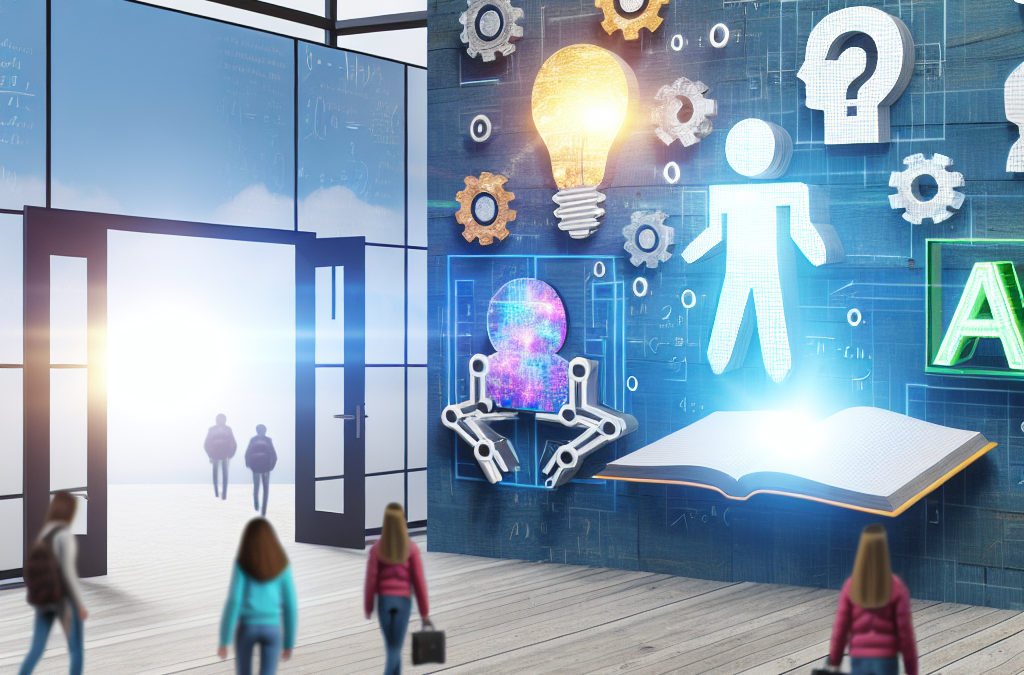
Artificial intelligence is transforming the field of education through learning personalization and automation. While these technologies are redefining teaching-learning processes, they also raise concerns regarding privacy, bias, and security. This article explores both the opportunities and challenges that this emerging technology presents in the educational sphere and its impact on society.
The educational transformation: Artificial intelligence and personalized learning
Artificial intelligence has made a strong entrance into the education sector, promising a true transformation in teaching methods. Thanks to the ability to process vast amounts of data, these technologies can tailor content and teaching strategies to meet the needs of each student, facilitating learning personalization. This allows for the creation of environments where students progress at their own pace, taking into account their individual learning styles and specific motivations.
For example, educational platforms based on artificial intelligence, such as intelligent tutoring systems, provide adaptive resources that enable students to interact in more effective ways. Instead of following a single educational path, learners can explore different routes, creating personalized experiences that promote deeper and enriched learning. This is particularly important for fostering inclusion, as it adapts to various abilities and learning styles.

As these technological solutions are implemented, educational institutions undergo a paradigm shift, adjusting their traditional models. This has a significant cultural and social impact that redefines the role of the educator, who now takes on a more facilitative and less central position in the process. However, this revolution is not without its challenges.

Challenges and ethical considerations: Security, privacy, and bias in education
Despite the promises that artificial intelligence offers in the educational field, it is crucial to address the risks related to the security and privacy of students’ data. The collection and analysis of personal data to personalize the educational experience can be a double-edged sword. The potential for surveillance and misuse of this data raises issues of integrity and transparency.
The risk of bias is another critical issue. Artificial intelligence tools are programmed by humans, which means that algorithmic decisions are prone to reflecting inherent prejudices. These biases could perpetuate or even amplify existing inequalities in the educational system. Therefore, it is essential to develop standards and regulations that promote equity and reduce algorithmic biases.
In terms of educational assessment, artificial intelligence provides new tools to accurately measure student progress. However, care must be taken not to rely solely on these technologies, as algorithms may overlook important contextual factors, potentially compromising a comprehensive evaluation of students’ skills.
The adoption of artificial intelligence in education presents significant opportunities for advancement but also challenges that require careful attention. The effective and ethical implementation of these technologies will depend on a robust framework that ensures respect for students’ privacy and security rights while promoting inclusive and personalized education.
How This Works in Practice
Implementing AI in education requires a systematic approach that involves several key steps, stakeholders, and resources. Initially, institutions must assess their current technological infrastructure to ensure it can support AI tools. This includes having reliable internet access, adequate hardware, and software platforms that can integrate AI functionalities.
Once the infrastructure is in place, the next step is to select appropriate AI tools tailored to the specific needs of the educational institution. This selection process typically involves collaboration among educators, IT professionals, and administrative staff to evaluate various options based on their features, ease of use, and alignment with educational goals.
Training is a critical component of successful AI implementation. Educators and staff must receive comprehensive training on how to effectively use AI tools in their teaching practices. This training should cover not only the technical aspects of the tools but also pedagogical strategies that leverage AI for personalized learning. Continuous professional development opportunities can further enhance educators’ skills in this area.
After training, pilot programs can be initiated to test AI applications in real classroom settings. This allows educators to gather feedback from students and refine the use of AI tools to better meet learners’ needs. During this phase, it is essential to monitor and evaluate the effectiveness of the AI-driven approaches, making adjustments based on observed outcomes.
Stakeholder involvement is crucial throughout this process. Engaging parents, students, and the community can foster a supportive environment for AI integration. Open communication about the benefits and challenges of AI in education can help alleviate concerns, particularly regarding data privacy and security.
What to Watch Out For
While the integration of AI in education offers numerous benefits, there are important limitations and trade-offs to be aware of. One common mistake is over-reliance on AI tools, which can lead to a diminished role for educators. It is vital to remember that AI should enhance, not replace, the human element in teaching. Educators play a crucial role in interpreting AI-generated data and providing the emotional support that students need.
Another concern is the potential for unequal access to AI technologies. Schools in affluent areas may have more resources to implement advanced AI tools, while underfunded institutions may struggle to keep up. This disparity can exacerbate existing educational inequities, leading to a widening gap in student achievement.
Furthermore, data privacy issues are paramount. Institutions must ensure they comply with legal regulations concerning data protection and that they communicate transparently with students and parents about how their data will be used. Failing to do so can result in mistrust and resistance to AI initiatives.
Lastly, educators should be cognizant of the limitations of AI in assessing student performance. While AI can provide valuable insights, it may not capture the full complexity of a student’s abilities and learning context. Using AI assessments in conjunction with traditional evaluation methods can provide a more holistic view of student progress.
Frequently Asked Questions
Q: What are the first steps for a school considering AI integration?
A: The first steps include assessing current technological infrastructure, selecting appropriate AI tools, and providing comprehensive training for educators on how to effectively utilize these tools in the classroom.
Q: How can schools ensure data privacy when using AI?
A: Schools can ensure data privacy by adhering to legal regulations regarding data protection, implementing strong security measures, and being transparent with students and parents about data usage and storage practices.
Q: What role do educators play in an AI-enhanced learning environment?
A: Educators act as facilitators who interpret AI-generated data, provide emotional support, and tailor learning experiences to meet the individual needs of students, ensuring that the human element remains central to education.
Q: What are potential downsides of relying heavily on AI in education?
A: Potential downsides include the risk of diminishing the educator’s role, exacerbating educational inequities, and overlooking the complexities of student performance that AI assessments may fail to capture.