

In today’s business world, artificial intelligence and cloud computing have become crucial tools for enhancing competitiveness and digital transformation. Many organizations are choosing to migrate to the cloud to improve their speed, agility, and innovation, thereby optimizing resources and enhancing their technological capabilities.
Cloud Migration: Inevitable Digital Transformation
The decision to migrate to the cloud is no longer just a trend, but a necessity within the framework of digital transformation. Companies of all types are seeking ways to enhance their performance through a more efficient use of their technological resources. By opting for the cloud, they are investing in flexible storage and an infrastructure that offers scalability and agility. Through cloud service providers like Google Cloud, companies can streamline their business processes, reduce time to market, and take advantage of service models such as IaaS, PaaS, and SaaS.
The IaaS (Infrastructure as a Service) model allows companies to assemble and modify their infrastructure according to their needs, while PaaS (Platform as a Service) enables developers to create applications more efficiently without worrying about the underlying hardware. Meanwhile, SaaS (Software as a Service) provides applications directly from the cloud, making it ideal for enhancing collaboration and productivity. This comprehensive approach to cloud services helps organizations improve their performance and enhance their business processes, revolutionizing the way they operate.

Advantages of Cloud Computing for Competitiveness
Migrating to the cloud brings a series of competitive advantages that enable companies to test new ideas and develop innovative products more quickly and with efficiency. One of the most apparent benefits is the cost savings. By reducing the need for physical hardware and minimizing the maintenance of on-premises infrastructures, companies can allocate more resources to strategic and innovative activities. Furthermore, by scaling services according to actual demand, resource utilization is optimized.
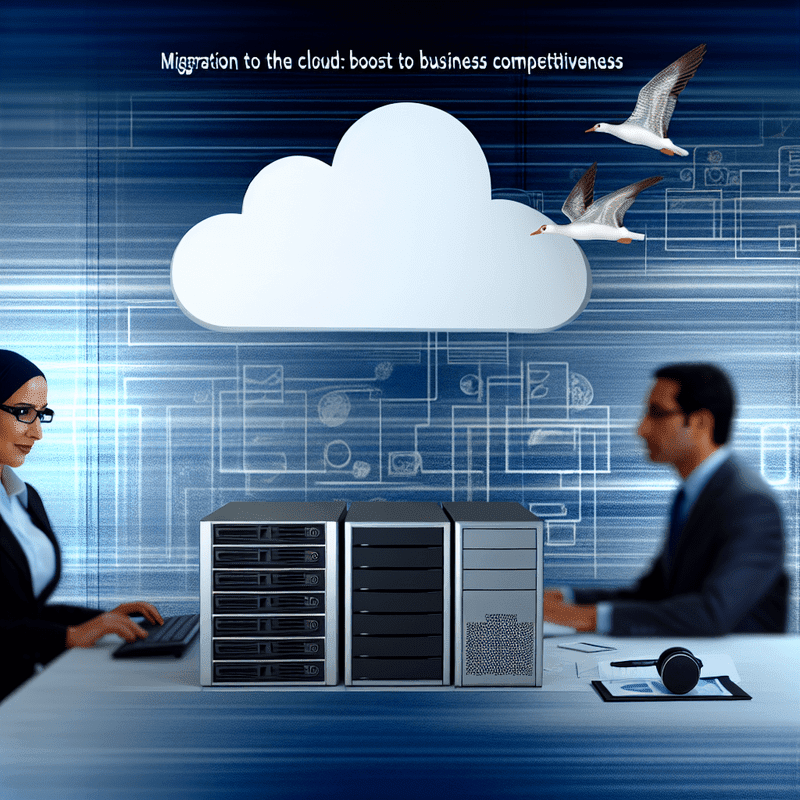
The integration of systems in a hybrid environment that combines on-premises infrastructure and cloud services can greatly enhance the user experience and management of resources. This is particularly valuable for remote workers, who can access their work tools from anywhere with an Internet connection. However, it is essential to ensure advanced security and prevent data loss through protection, backup, and disaster recovery techniques.
However, it is important to consider the limitations and risks associated with cloud migration, such as data privacy and unexpected costs. These risks can be mitigated by carefully selecting service providers and developing robust management and security strategies.
Adopting cloud platforms enables organizations to adapt swiftly and efficiently to technological and market changes, providing a work environment that fosters innovation and enhances competitiveness in an increasingly digital world.
Migrating to the cloud is an essential strategy for any organization looking to undergo digital transformation and remain competitive. By leveraging the flexibility and scalability of cloud computing, companies can optimize their processes, enhance security, and foster innovation, thereby becoming leaders in their industry.