

Artificial intelligence (AI) is emerging as a powerful tool in the fight against environmental issues. This article examines how AI can be employed to address environmental emergencies and mitigate the impact of greenhouse gases. Additionally, it analyzes its contribution to the development of sustainable strategies that promote planetary health and human well-being.
The Impact of Artificial Intelligence on Mitigating Environmental Issues
In an increasingly environmentally conscious world, artificial intelligence stands out as an essential tool for tackling complex challenges. AI has the potential to revolutionize the way we manage environmental emergencies, allowing us to anticipate and respond more effectively to critical situations. From sudden floods to wildfires, artificial intelligence algorithms can process vast amounts of data in real-time, providing valuable insights for quick and effective decision-making.
One area where AI is making a significant impact is in the reduction of greenhouse gas emissions. For instance, through the optimization of industrial processes and the monitoring of transportation systems, AI can identify ways to reduce the use of fossil fuels. Furthermore, artificial intelligence can be used to create climate change simulations, enabling researchers to predict and mitigate future impacts on the environment.
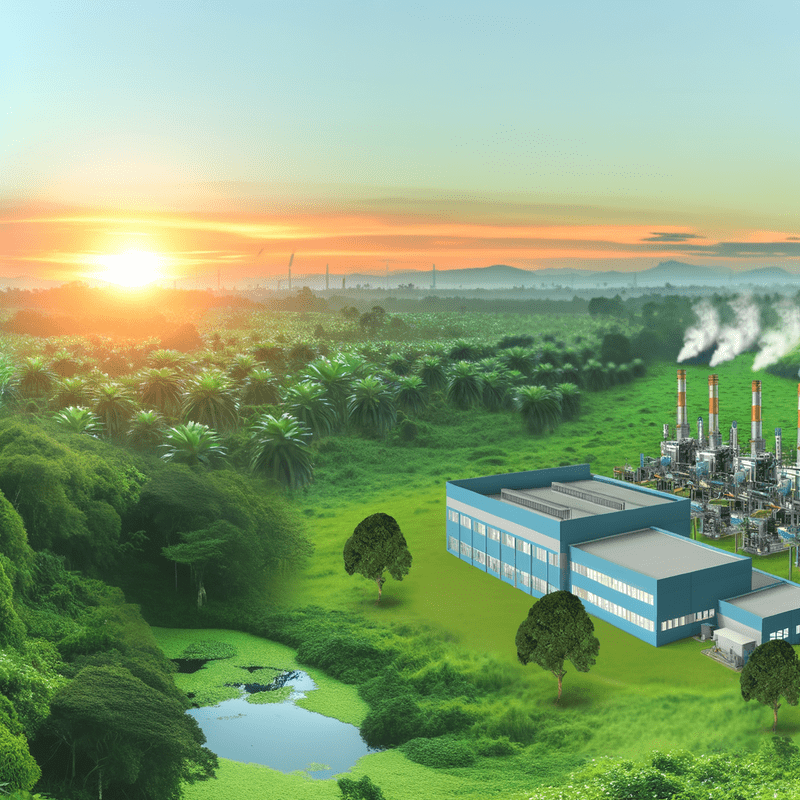
Data centers and information processing require a significant amount of electricity, which poses a sustainability challenge. However, AI also provides solutions in this area; intelligent systems are being developed to enhance the energy efficiency of these centers, promoting the use of renewable energy sources. This not only reduces emissions but also minimizes environmental impact by limiting the need for new infrastructure sites.
Promoting Sustainability and Well-Being through AI
Artificial intelligence not only aids in the immediate improvement of environmental situations but is also critical in the long-term development of sustainable strategies. The United Nations Environment Programme (UNEP) has been exploring the use of AI to assess biodiversity and develop more effective conservation policies. This is vital for the preservation of endangered species and ecosystems.
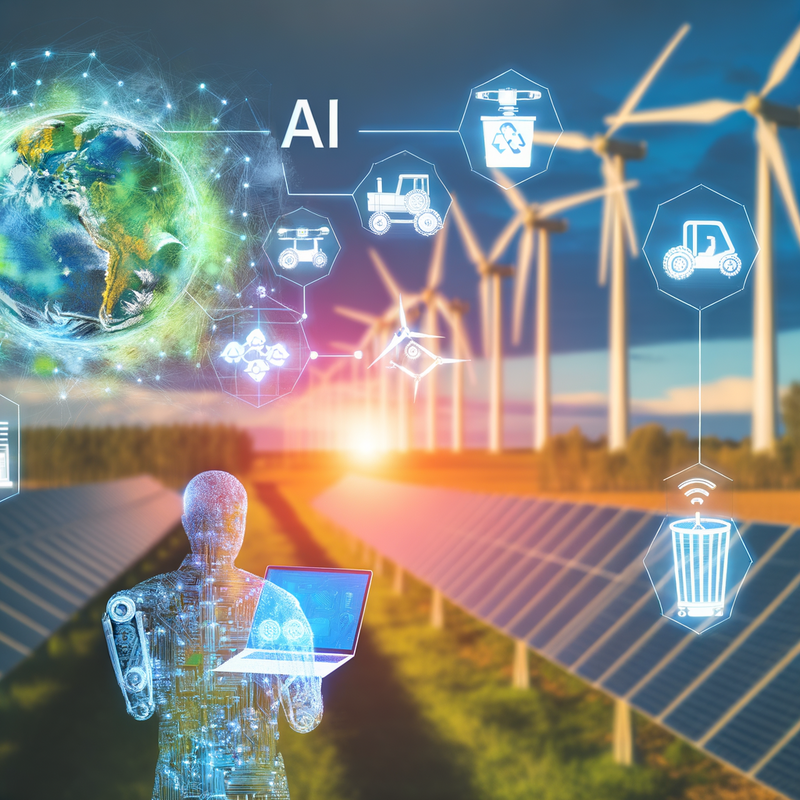
The impact of AI extends to waste management and pollution. Through machine learning algorithms, it is possible to optimize recycling procedures and manage electronic waste more efficiently. This, in turn, minimizes pollution and environmental damage. Furthermore, laws and regulations related to environmental impact are increasingly informed by the analysis provided by AI, enabling the development of more effective legislation.
In the energy sector, AI plays a crucial role in the transition to cleaner and renewable sources. By analyzing consumption patterns and optimizing resource distribution, artificial intelligence helps to promote a more efficient use of electricity and water. This efficiency not only contributes to sustainability but also supports human well-being and planetary health.
Artificial intelligence offers a promising pathway to address environmental issues and promote sustainability. By integrating with energy strategies and legislative measures, this technology can reduce environmental impact and foster a healthier coexistence between humanity and the planet, ensuring a sustainable future and enhanced human well-being.
How This Works in Practice
Implementing AI in environmental solutions involves several critical steps and requires collaboration among various stakeholders. The first step is to establish a clear understanding of the specific environmental issue at hand, whether it be climate change, pollution, or biodiversity loss. This involves gathering data from multiple sources, including satellite imagery, sensors, and historical records, which serves as the foundation for AI algorithms.
Once the data is collected, the next step is data preprocessing, which ensures that the information is clean, relevant, and formatted correctly for analysis. This stage may involve filtering out noise, handling missing values, and normalizing data sets. Following this, domain experts collaborate with data scientists to design AI models tailored to the specific environmental challenges. This collaboration is crucial, as it helps ensure that the AI system is both scientifically sound and practically applicable.
The deployment of AI systems typically involves several phases. Initially, pilot projects may be launched to test the AI’s effectiveness in real-world scenarios. These pilots help refine the algorithms based on feedback and performance metrics. Once the AI systems demonstrate reliability, they can be scaled up for broader application, integrating them into existing environmental management frameworks.
Stakeholders involved in this process include government agencies, non-profit organizations, academic institutions, and private sector companies. Collaboration among these entities is essential for pooling resources, sharing expertise, and ensuring that AI solutions are sustainable and equitable. Continuous monitoring and evaluation of AI systems are also necessary to adapt to changing environmental conditions and improve their accuracy over time.
What to Watch Out For
While the potential of AI in environmental solutions is significant, there are limitations and trade-offs to consider. One common mistake is over-reliance on AI without sufficient human oversight. AI systems can make errors, especially when trained on biased or incomplete data, leading to misguided policies or ineffective interventions.
Another limitation is the accessibility of data. High-quality, real-time data is essential for AI to function effectively, yet many regions lack the necessary infrastructure or resources to collect and analyze such data. This can create disparities in how effectively AI solutions are implemented across different geographic areas.
Moreover, the implementation of AI can be resource-intensive, requiring significant investment in technology and expertise. Organizations should weigh these costs against the potential benefits, ensuring that the investment aligns with their strategic goals. Additionally, ethical considerations surrounding data privacy and potential job displacement in certain sectors must be addressed to prevent backlash against AI initiatives.
Lastly, it’s important to recognize that AI is not a panacea for environmental issues. While it can enhance decision-making and operational efficiency, a holistic approach that includes policy changes, community engagement, and sustainable practices is necessary for long-term solutions.
Frequently Asked Questions
Q: How can AI improve disaster response in environmental emergencies?
A: AI can analyze real-time data from various sources to predict environmental disasters and optimize response strategies. By processing satellite imagery and sensor data, AI can identify vulnerable areas and recommend resource allocation, improving overall disaster preparedness and response.
Q: What role does AI play in monitoring climate change?
A: AI assists in monitoring climate change by analyzing vast datasets related to weather patterns, emissions, and ecological changes. Machine learning algorithms can identify trends and anomalies, enabling researchers to make more accurate predictions and inform policy decisions aimed at mitigating climate impacts.
Q: Are there any ethical concerns associated with using AI for environmental solutions?
A: Yes, ethical concerns include data privacy, potential biases in AI algorithms, and the risk of job displacement in sectors affected by automation. It is vital to address these concerns through transparent practices, inclusive stakeholder engagement, and adherence to ethical guidelines.
Q: How can organizations ensure the effectiveness of AI systems in environmental management?
A: Organizations can ensure effectiveness by investing in high-quality data collection, engaging domain experts in AI model development, conducting pilot tests, and continuously monitoring and refining AI systems based on feedback and changing environmental conditions.