
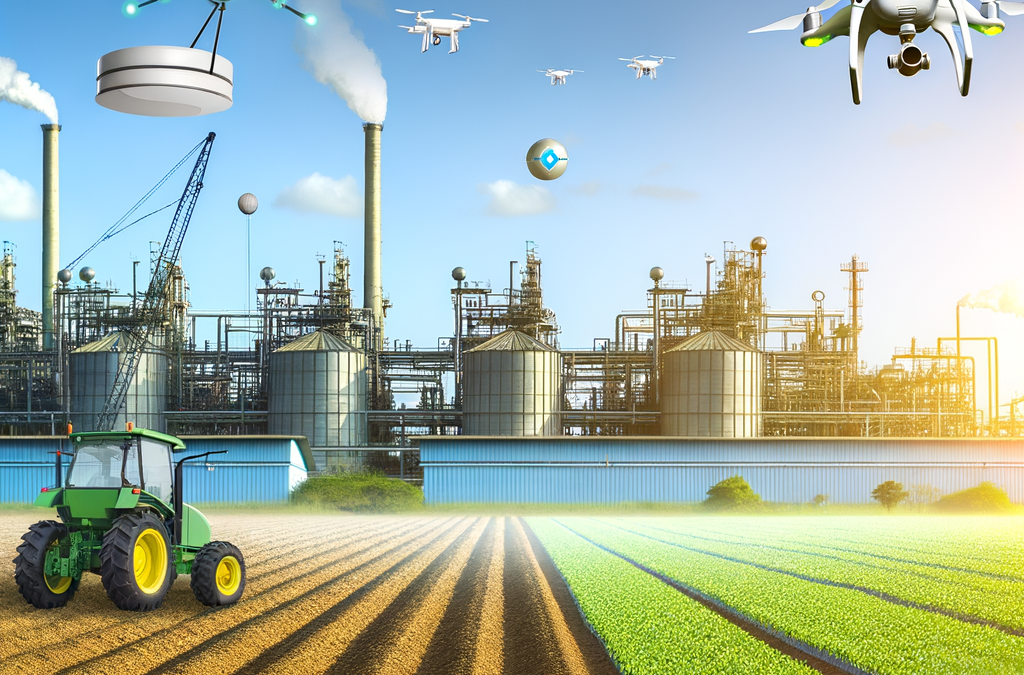
The artificial intelligence (AI) is revolutionizing multiple industries through the use of IoT, preventive maintenance, and anomaly detection to enhance efficiency. This article explores how process automation, security, and the improvement of user experience are transforming sectors such as agriculture, manufacturing, healthcare, logistics, and cybersecurity within the supply chain.
Artificial Intelligence and Its Impact on Agriculture and the Manufacturing Industry
Artificial intelligence (AI) has undeniably taken center stage in various economic sectors, emerging as an essential tool in agriculture and manufacturing. In agriculture, the use of IoT devices, combined with advanced AI algorithms, enables effective preventive maintenance of agricultural machinery, thereby optimizing crop yields. Through real-time anomaly detection, farmers can anticipate issues that could impact crop health, reducing waste and improving operational efficiency. Furthermore, AI facilitates the automation of processes such as irrigation control and nutrient monitoring, promoting a more sustainable and precise management of resources.
In the manufacturing industry, the integration of AI and IoT has radically transformed the way production plants operate. Anomaly detection on assembly lines, through smart sensors, allows for the identification and resolution of issues before they escalate into costly failures. This type of predictive maintenance not only enhances the efficiency and safety of operations but also extends the lifespan of machinery. The automation of processes using AI, such as the programming of industrial robots, optimizes production and reduces human errors. Furthermore, these technologies significantly enhance the user experience by ensuring high-quality, reliable products produced at an accelerated pace.
AI in Healthcare, Logistics, and Supply Chain Security
Healthcare is another area where artificial intelligence is making a crucial difference. Thanks to AI, it is possible to achieve more accurate diagnoses through the analysis of large volumes of medical data, while simultaneously improving user experience and clinical intervention. AI systems can predict adverse events, facilitating preventive maintenance of medical equipment and ensuring its availability during critical moments. Additionally, the automation of administrative processes reduces the workload of healthcare staff, allowing them to dedicate more time and attention to patients.

In the logistics sector, artificial intelligence plays a crucial role in the optimization of transportation routes, inventory management, and enhancing the efficiency of product delivery. AI systems continuously analyze data to detect anomalies that could delay the transportation of goods, thereby improving the overall efficiency of the supply chain. Furthermore, these technologies strengthen the cybersecurity of the sector by identifying and neutralizing potential threats that could compromise the security of information and products.

In terms of cybersecurity, artificial intelligence is essential for protecting the integrity of data throughout the supply chain. AI-based tools are capable of monitoring vast information networks in real-time, identifying suspicious patterns and minimizing the risks of security breaches. In this way, AI not only ensures data security but also enhances user trust in logistics and manufacturing systems.
Artificial intelligence, through IoT and process automation, serves as a catalyst for efficiency, security, and enhancement of user experience in critical sectors such as agriculture, manufacturing, healthcare, and logistics. These technologies are transforming the way industries operate and safeguard their supply chains, ensuring a more sustainable and secure future.
How This Works in Practice
Implementing AI and IoT in agriculture and manufacturing involves a series of structured steps that ensure the technology is effectively integrated into existing systems. First, it is essential to conduct a comprehensive assessment of current operations to identify areas where AI and IoT can provide the most value. This initial evaluation helps in pinpointing specific processes that can benefit from automation, predictive maintenance, or anomaly detection.
Once the assessment is complete, the next step is to establish a robust infrastructure that supports both AI and IoT technologies. This typically includes upgrading hardware, such as installing smart sensors on machinery or vehicles, and ensuring that there is a reliable internet connection for data transmission. Additionally, organizations must invest in software solutions that can analyze the data collected by these devices.
The involvement of cross-functional teams is crucial during implementation. This includes IT specialists who can manage the technology stack, data scientists who can develop AI algorithms, and field experts who understand the operational nuances of agriculture or manufacturing. Collaboration among these groups fosters a seamless integration of technology into daily operations.
Following the setup, a pilot phase is recommended. This allows organizations to test the AI and IoT systems in a controlled environment, monitoring performance and making necessary adjustments before full-scale deployment. Training staff to use these new systems is also vital, ensuring that all team members are comfortable with the technology and understand its benefits.
Finally, once the systems are fully operational, continuous monitoring and evaluation are necessary. Organizations should regularly review the performance data to refine their AI algorithms and IoT applications, ensuring sustained improvements in efficiency and reliability.
What to Watch Out For
While the integration of AI and IoT in agriculture and manufacturing presents numerous advantages, several limitations and trade-offs must be considered. One common mistake is underestimating the complexity of the technology. Organizations may rush into implementation without fully understanding the requirements, leading to ineffective systems that fail to deliver expected results.
Another potential pitfall is data privacy and security concerns. As more devices become interconnected, the risk of data breaches increases. Organizations must implement robust cybersecurity measures to protect sensitive information and maintain user trust.
Moreover, reliance on AI for critical decision-making can lead to vulnerabilities, particularly if the underlying algorithms are flawed or biased. It is essential to ensure that AI systems are regularly audited and updated to mitigate these risks. Organizations must also strike a balance between automation and human oversight, as complete reliance on technology can overlook nuances that human judgment can provide.
Finally, the initial investment in AI and IoT technologies can be substantial. Organizations should carefully evaluate their return on investment and ensure that the long-term benefits outweigh the upfront costs. In some cases, particularly for smaller operations, a gradual approach may be more feasible, starting with pilot projects before scaling up.
Frequently Asked Questions
Q: What initial steps should we take before implementing AI and IoT?
A: Begin with a comprehensive assessment of your current operations to identify potential areas for improvement. Establish a robust infrastructure that includes necessary hardware and software, and involve cross-functional teams to facilitate integration.
Q: How can we ensure data security when using AI and IoT?
A: Implement robust cybersecurity measures, including encryption and secure access controls. Regularly audit your systems to identify and address vulnerabilities, and educate staff on data handling best practices.
Q: What are the risks of relying too heavily on AI?
A: Over-reliance on AI can lead to vulnerabilities, particularly if algorithms are flawed or biased. It is essential to maintain human oversight and regularly audit AI systems to ensure they are functioning as intended.
Q: Is the investment in AI and IoT technologies worth it for smaller operations?
A: While the initial investment can be significant, the long-term benefits often outweigh the costs. Smaller operations may consider starting with pilot projects to evaluate effectiveness before scaling up their investments.