
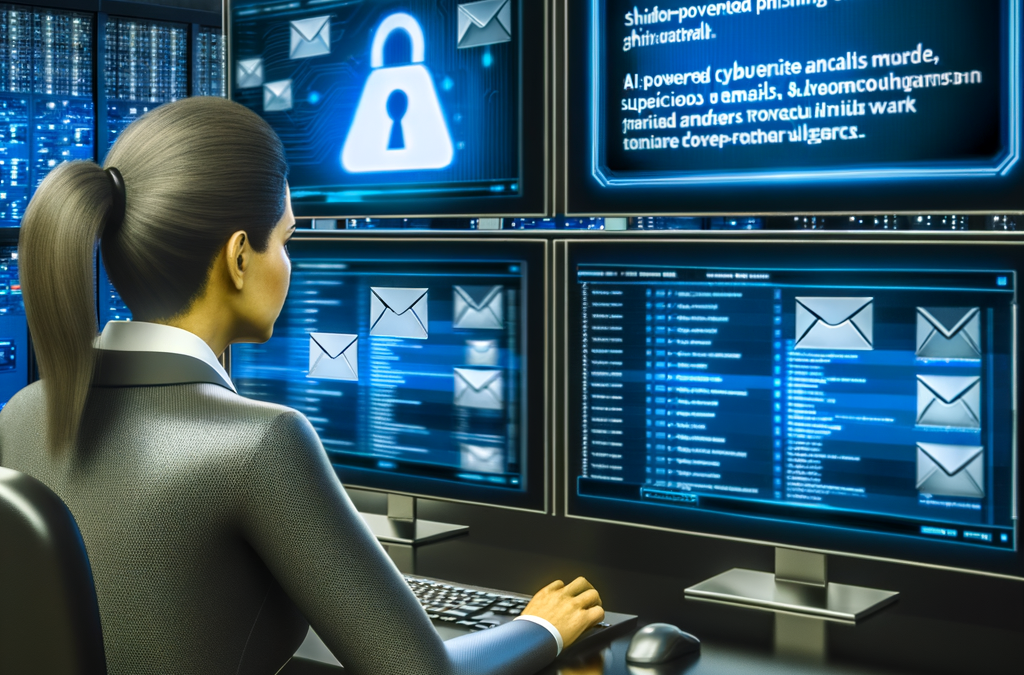
Artificial intelligence (AI) has become a powerful tool, but unfortunately, it is also in the hands of cybercriminals. This article explores how AI Phishing Attacks are transforming the threat landscape, emphasizing the importance of security awareness, emerging trends in phishing attacks, and potential cybersecurity strategies and benefits for data protection and compliance, as well as advanced cybersecurity measures to counteract these technological advancements.
The evolution of AI-driven phishing attacks
In the past, phishing attacks were easy to identify; however, the introduction of AI has complicated this scenario. AI-driven Phishing Attacks can now create personalized and well-structured emails that are nearly indistinguishable from legitimate ones. This sophistication is achieved through the use of machine learning algorithms that analyze large volumes of personal and professional data to create convincing messages.
According to a recent Phishing Trends Report, there has been a significant increase in the use of advanced social engineering techniques. These techniques are combined with deepfakes and other forms of content manipulation. This new type of malicious email makes traditional phishing identification methods less effective, thereby increasing Cyber Risk.
With this evolution in the tactics of cybercriminals, the threat of phishing attacks is expanding across all organizational levels. The security culture within companies must adapt to confront this diverse and ever-changing threat. Developing a strong security awareness becomes crucial to mitigate these risks. Organizations need to implement advanced Security Solutions that detect not only traditional phishing messages but also those driven by AI.
Fostering a culture of safety and personalized training
The human element remains one of the weakest points in the defense against phishing attacks. Therefore, training employees through personalized Phishing Training programs becomes a necessity, not a luxury. By utilizing infographics, simulations, and workshops, companies can raise awareness levels among workers, empowering them to recognize the signs of phishing attempts.
Furthermore, this training must be aligned with a Security Culture that integrates security into the daily operations of the workplace. An effective security culture adapts to the rapid changes in the Cyber Threat Landscape, ensuring that staff not only understands but also practices robust security protocols.
To further strengthen this security culture, it is vital for the company’s management to support and actively participate in these security plans. Providing relevant and up-to-date Phishing Training is one of the most effective steps an organization can take to enhance its resilience against phishing campaigns. With the rise of AI-based phishing threats, a well-developed security awareness and ongoing training are not just advisable strategies, but essential for digital survival.
AI-driven attacks are changing the phishing landscape by increasing their sophistication and effectiveness. To combat these threats, companies must invest in advanced cybersecurity solutions and foster a strong security culture. Training employees with personalized phishing education is crucial to protect against these ever-evolving threats.
How This Works in Practice
Implementing a robust defense against AI-driven phishing threats involves a series of well-defined steps that require collaboration among various stakeholders within an organization. The following outlines the key components involved in establishing an effective strategy:
- Assessment of Current Security Posture: Begin by conducting a thorough assessment of the existing security measures, identifying vulnerabilities in the current system. This includes evaluating existing phishing detection systems and employee awareness levels.
- Stakeholder Involvement: Engage key stakeholders, including IT, HR, and management, to ensure a comprehensive approach. Their input is crucial in tailoring training and security measures to the specific needs of the organization.
- Development of Training Programs: Create personalized phishing training programs that cater to different employee roles. This could involve simulations of phishing attacks, interactive workshops, and the use of infographics to illustrate potential threats. Frequent updates to the training content are necessary to keep pace with evolving phishing tactics.
- Implementation of Advanced Security Solutions: Invest in advanced cybersecurity solutions that utilize AI to detect and respond to phishing attempts. These might include email filtering systems equipped with machine learning algorithms that can recognize patterns indicative of phishing.
- Continuous Monitoring and Adaptation: Establish a process for continuous monitoring of phishing threats and the effectiveness of training programs. This includes collecting feedback from employees about their experiences and regularly updating the training materials to reflect new threats.
- Regular Communication and Awareness Campaigns: Utilize internal communication channels to keep security at the forefront of employees’ minds. Regular newsletters, updates, and reminders can reinforce the importance of vigilance against phishing attacks.
By following these steps, organizations can create a proactive environment that not only recognizes the threat of AI-driven phishing but actively works to mitigate it through a combination of technology and human awareness.
What to Watch Out For
While implementing strategies to combat AI-driven phishing attacks, organizations must remain aware of various limitations and potential pitfalls. Here are some key considerations:
- Overreliance on Technology: While advanced cybersecurity solutions are essential, they should not be viewed as a complete solution. Relying solely on technology can lead to complacency among employees, who may neglect their role in identifying phishing attempts.
- Inadequate Training: A common mistake is to provide generic training that does not cater to the specific needs of different departments or job roles. Tailoring training content is crucial to ensure that employees understand the unique phishing risks they may encounter.
- Neglecting Follow-Up: Organizations often fail to conduct follow-up assessments to gauge the effectiveness of training programs. Without regular evaluations, it is challenging to determine whether employees are adequately prepared to respond to phishing threats.
- Ignoring Emerging Threats: The phishing landscape is constantly evolving. Organizations must stay informed about new tactics and techniques employed by cybercriminals. Failing to adapt training and security measures accordingly can leave gaps in defenses.
- Employee Burnout: Continuous training can lead to information fatigue among employees. It’s important to strike a balance between providing necessary information and overwhelming staff with excessive training sessions.
By being mindful of these limitations, organizations can better prepare themselves to face the challenges posed by AI-driven phishing attacks and develop more effective responses.
Frequently Asked Questions
Q: How can we measure the effectiveness of our phishing training programs?
A: The effectiveness can be measured through simulated phishing tests, employee feedback, and tracking the reduction in successful phishing attempts over time. Regular assessments and adjustments to training content based on these metrics are essential.
Q: What should we do if an employee falls for a phishing attack?
A: Immediate action should include isolating the affected system to prevent further damage, informing the IT department, and assessing the scope of the breach. Additionally, it is crucial to follow up with the employee to provide support and reinforce training.
Q: Are there specific signs of AI-driven phishing emails we should look for?
A: Look for anomalies such as unusual sender addresses, requests for sensitive information that seem out of the ordinary, and emails containing personalized details that may seem too good to be true. AI-generated content can also lack the nuanced language typical of human communication.
Q: How often should we update our phishing training materials?
A: Training materials should be updated regularly, ideally quarterly or whenever significant new phishing tactics are identified. This ensures that employees remain informed about the latest threats and best practices for recognizing them.