
Artificial intelligence (AI) is radically transforming multiple sectors of society. Its ability to learn, interact, and adapt has ushered in a new era of technological progress. This article explores the impact of AI in education and the labor market, as well as the ethical and social challenges it poses in our pursuit of a more equitable and sustainable future.
Artificial Intelligence in Education: Promises and Challenges
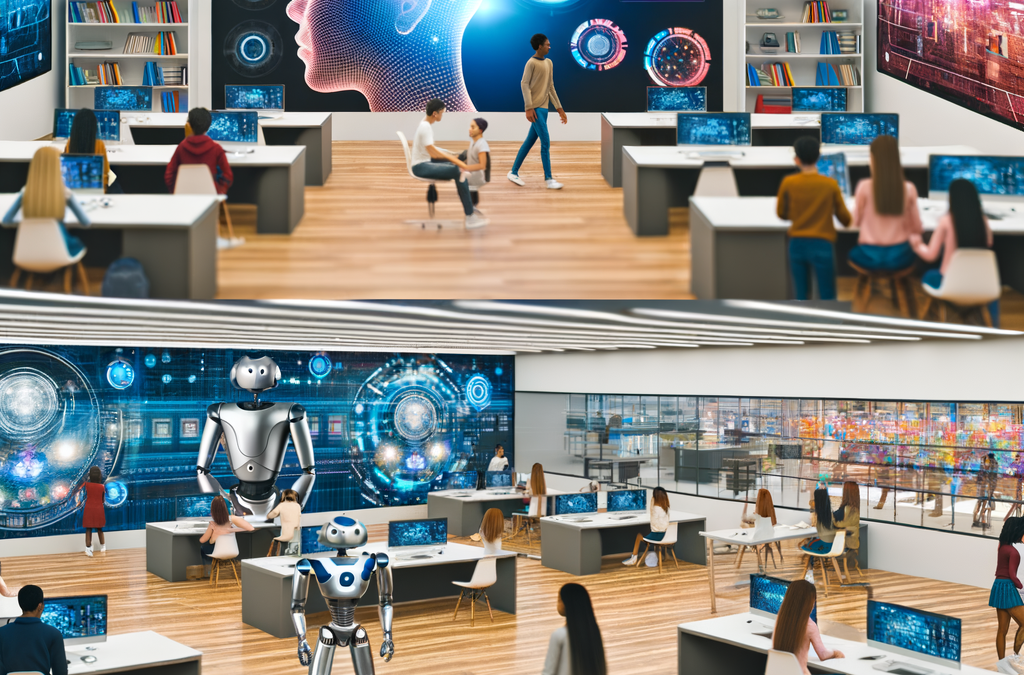
The integration of artificial intelligence in education is redefining teaching and learning approaches. With its ability to analyze vast amounts of data and develop complex models, AI is personalizing education like never before. Educational systems can now tailor teaching materials to the individual needs of each student, promoting a more efficient and effective educational progress. These “smart” systems facilitate a more interactive learning experience, stimulating student interest and participation.
The natural language processing (NLP) enables educational systems to understand and respond intelligently to student inquiries, making educational support more accessible and timely. However, despite these advancements, significant challenges arise. Educational automation could potentially polarize access to education if not addressed inclusively. Economic and technological inequalities may be amplified if advanced learning tools are concentrated in the hands of a few. Furthermore, excessive reliance on AI could erode essential skills such as critical thinking and leadership, which are vital for human development.
With AI making its way into education, the issue of ethics and transparency in the use of student data also arises. Educational institutions must ensure the privacy of personal information while being transparent about how this data is used to enhance teaching. The responsibility lies with developers and educators to use AI fairly, ensuring that its implementation promotes social justice and the overall well-being of students.
Impact of Artificial Intelligence on the Labor Market
The labor market is undergoing unprecedented disruption with the integration of artificial intelligence. Automation is transforming routine and repetitive tasks, enabling companies to optimize their operations more efficiently. However, this progress also brings uncertainties regarding employment and the skills required for future jobs. Skills that once guaranteed job stability are now seeing their relevance decline.
To mitigate the effect, there is an urgent need to democratize knowledge and promote continuous learning. Institutions must equip individuals with skills in data analysis, neural networks, and critical thinking, ensuring they are prepared for the opportunities arising in an AI-driven job market. Flexibility and adaptability are now qualities valued by employers, underscoring the importance of fostering a lifelong learning mindset among workers.
Furthermore, the displacement of workers due to automation raises significant ethical questions regarding corporate responsibility and leadership. Companies must take a proactive role in the creation of a sustainable and fair work environment by providing training and professional retraining for those whose roles are affected by AI. Beyond labor rights, there is the challenge of ensuring that the adoption of technology does not lead to greater social inequality. It is imperative that technological progress aligns with the principles of equity and transparency, minimizing errors and injustices that may arise from the misuse of AI.
The application of artificial intelligence in the workplace and educational settings presents a landscape of vast opportunities and inherent challenges. While it promises significant advancements in learning and work, it is crucial to address ethical issues and inequities to ensure that these benefits are distributed fairly and equitably. Well-being and social justice must guide the integration of AI into our society.