
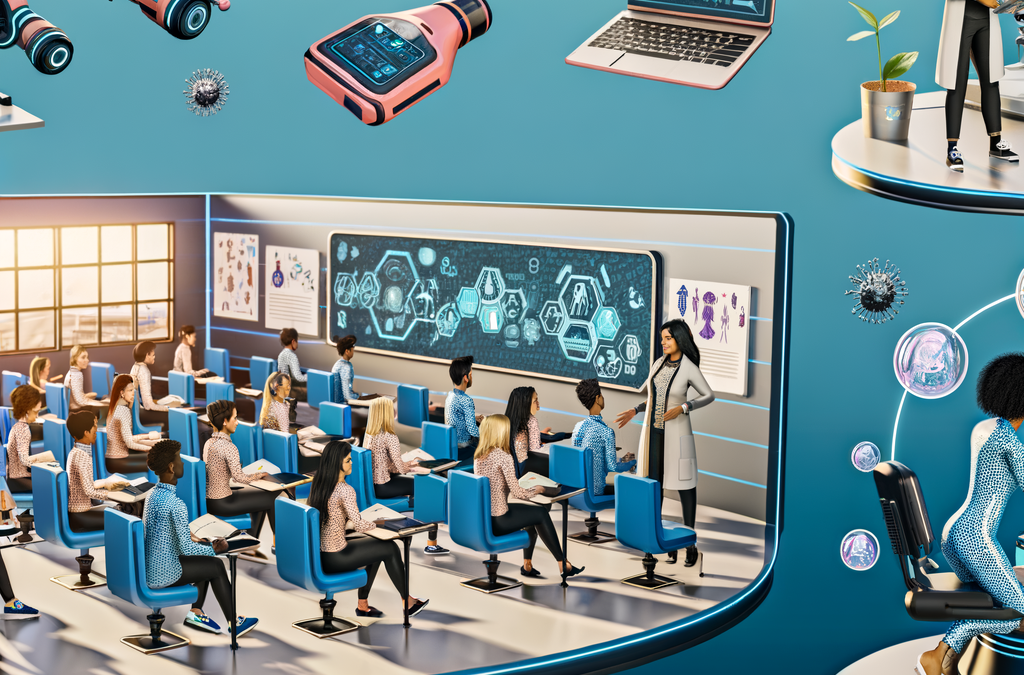
The artificial intelligence (AI) is revolutionizing scientific research and education, influencing pedagogical strategies and teaching methods. Tools based on technologies such as machine learning and natural language processing promise a more personalized teaching experience. In this article, we will explore how these technologies are transforming access to knowledge, fostering skills such as critical thinking and creativity.
Transformation of Education through Artificial Intelligence
Artificial intelligence has emerged as a key player in the transformation of modern education. As educators and institutions increasingly adopt advanced technologies, traditional teaching methods are undergoing a significant shift. Pedagogical strategies are being redesigned to integrate machine learning systems that enable educators to tailor educational content to the individual needs of students. This personalization not only makes learning more relevant but also promotes more equitable access to knowledge, aligning with UNESCO’s principles for inclusive education.
One of the most notable advancements is the application of neural networks and deep learning algorithms in the creation of adaptive learning environments. These systems are capable of analyzing large volumes of data using data mining techniques to identify patterns in student behavior and performance. This enables the implementation of personalized learning environments, offering resources and advice tailored to each individual, which enhances both efficiency and productivity in the educational process.
Impact on Scientific Production and Critical Thinking
Artificial intelligence is also significantly influencing scientific production and the development of critical skills. Natural language processing tools are facilitating the automatic written and review of scientific articles, enhancing spelling, grammar, and accuracy. This not only increases the quality of documents but also frees up valuable time for scientists to focus on innovation and creative thinking.

Furthermore, the use of fuzzy logic and data analysis enables the development of more precise and effective knowledge acquisition strategies. The scientific community is increasingly adopting AI to tackle interdisciplinary problem-solving, thereby enhancing collaboration. This interdisciplinarity is essential for addressing complex challenges that require a holistic approach. On the other hand, learning analytics provides valuable insights into how different learning modalities impact the development of critical thinking.

The growth of Big Data and its integration into educational systems fosters the development of more advanced predictive models that facilitate data-driven decision-making. Deep learning has played a crucial role in enhancing understanding and boosting creative processes. All of this contributes to an efficient advancement of research, supporting the creation of more robust and accessible knowledge.
Artificial intelligence technologies are revolutionizing education and scientific research, providing unprecedented opportunities to foster creativity and interdisciplinary collaboration. By empowering students and educators with adaptive and personalized tools, we are laying the groundwork for a more inclusive and efficient educational future.
How This Works in Practice
Implementing AI in education and scientific research involves a series of structured steps that require careful planning and collaboration among various stakeholders. The process typically begins with an assessment of existing educational frameworks and technological infrastructure to identify areas for improvement. This initial evaluation is crucial, as it helps determine what resources and systems need to be in place to effectively integrate AI technologies.
Once the assessment is complete, the next step involves selecting appropriate AI tools and platforms. Educational institutions may collaborate with technology providers to choose software that aligns with their specific needs, whether that be adaptive learning platforms, data analytics systems, or natural language processing tools. In this stage, it is vital to involve educators, IT staff, and administrators to ensure that the selected tools will enhance teaching and learning outcomes.
After selecting the tools, training sessions are organized for educators and staff. This training is essential, as it empowers teachers to effectively utilize AI technologies in their teaching practices. Educators need to understand how to interpret data insights provided by AI systems and how to adjust their pedagogical strategies accordingly.
Following training, pilot programs are often implemented to test the AI tools in real classroom settings. These pilots help gather feedback from students and educators, allowing institutions to refine their approach before a broader rollout. During this phase, it’s important to monitor the impact of AI on student engagement and learning outcomes, adjusting practices as necessary based on empirical evidence.
Finally, once the tools are fully integrated and feedback has been analyzed, institutions can scale the AI implementation across all relevant departments. Continuous evaluation and adaptation are crucial, as technology and educational needs evolve. Regular updates and professional development sessions can ensure that educators remain equipped to leverage AI effectively over time.
What to Watch Out For
While the integration of AI in education and science presents numerous benefits, there are several limitations and trade-offs that institutions must consider. One major concern is the dependency on technology. Over-reliance on AI tools can lead to diminished critical thinking skills in students, as they may become accustomed to receiving answers without engaging in deep analysis or problem-solving.
Additionally, the implementation of AI can be resource-intensive. Institutions may face challenges related to funding and the allocation of necessary technological infrastructure. Smaller or underfunded programs may struggle to access the required tools or maintain them, potentially widening the gap between well-resourced and under-resourced educational environments.
Another common mistake is neglecting data privacy and security. As AI systems collect and analyze vast amounts of student data, institutions must ensure that they comply with regulations regarding data protection. Failure to prioritize data security can lead to breaches that compromise sensitive information and erode trust among students and parents.
Moreover, the effectiveness of AI tools can vary significantly based on the context in which they are implemented. What works well in one educational setting may not yield the same results in another. It is crucial for decision-makers to understand the unique challenges and cultural contexts of their institutions before adopting AI solutions.
Lastly, the rapid pace of technological advancement means that institutions must remain vigilant and adaptable. AI tools can quickly become outdated, and continuous training and updates will be necessary to ensure that educators are using the most effective and relevant technologies.
Frequently Asked Questions
Q: How can we ensure that AI tools meet the needs of our students?
A: It is essential to involve educators and students in the selection and evaluation process of AI tools. Conducting surveys, focus groups, or pilot programs can help gather input on the effectiveness and relevance of the tools in addressing specific educational needs.
Q: What are the key factors to consider when integrating AI into our existing curriculum?
A: Key factors include alignment with educational goals, the training needs of educators, the technological infrastructure available, and the potential impact on student engagement and learning outcomes. A phased approach that includes pilot testing can also aid in a smoother integration process.
Q: How do we address concerns about data privacy when using AI in education?
A: Institutions should establish clear data privacy policies that comply with regulations. It’s important to ensure that AI tools are secure and that data is anonymized when possible. Educating stakeholders about data handling practices can also promote transparency and trust.
Q: What steps can we take to prevent over-reliance on AI technologies?
A: To prevent over-reliance, it is crucial to balance AI usage with traditional teaching methods that encourage critical thinking and problem-solving. Educators should create assignments that require students to analyze and synthesize information independently, using AI tools as supportive resources rather than crutches.