
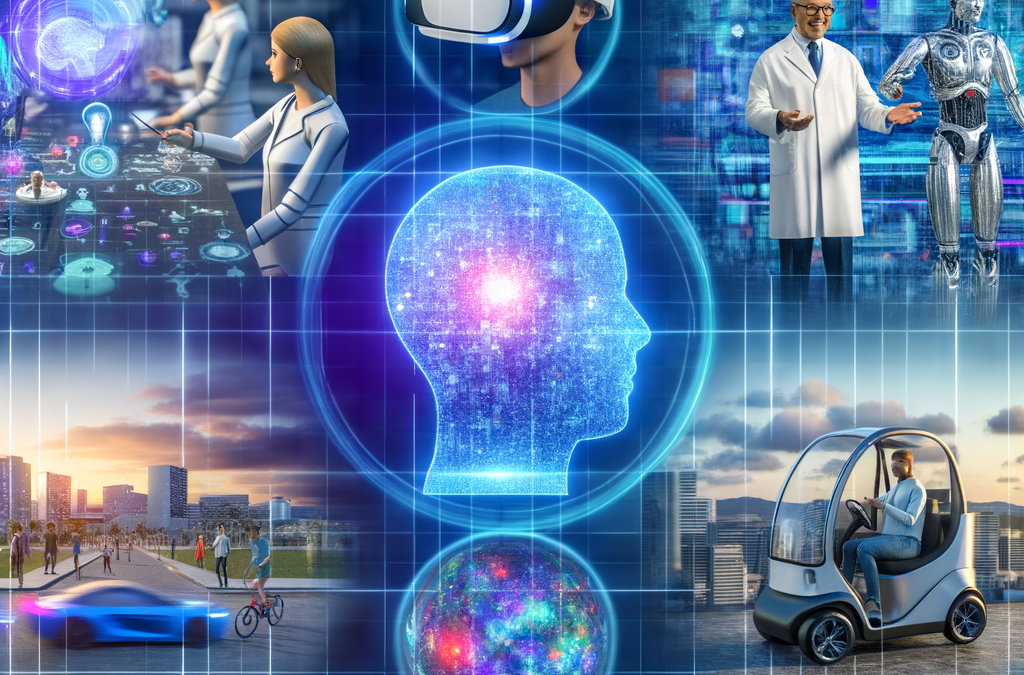
The artificial intelligence and robots are revolutionizing how we experience the world by combining immersive technologies such as Virtual Reality (VR) and Augmented Reality (AR). These technologies are transforming the way we interact, learn, and work, paving the way for a future where entertainment, education, and healthcare fully leverage technological innovations.
The Future of Immersive Technologies in Education and Entertainment
The advancement of immersive technologies is creating a significant shift across various sectors, with education and entertainment being the most benefited. In the educational realm, virtual and augmented reality have led to more interactive and engaging learning experiences. Students can immerse themselves in virtual environments that simulate real-life scenarios, allowing for a deep and practical understanding of the subjects studied. The applications of AR/VR in education can range from virtual laboratories for scientific experiments to virtual tours of historical sites, providing an unprecedented level of interaction and engagement.
In terms of entertainment, metaverses are emerging as platforms where users can socialize, play, and experience unique adventures. Video game companies are at the forefront of adopting these technologies, allowing players to explore virtual worlds with an increasingly high level of realism. The rise of extended reality has also been driven by the proliferation of smartphones, which, with technologies like LiDAR and 5G connectivity, are facilitating the penetration of these immersive experiences into the mass market. Through mobile devices, users can easily and quickly access AR/VR content, democratizing access to this new digital world.
Challenges and Innovations in Digital Transformation
Despite the enthusiasm for the adoption of immersive technologies, there are significant challenges that must be addressed. One of the main issues is the compatibility and accessibility of hardware. For many individuals and businesses, the cost of these devices remains prohibitive. Additionally, creating high-quality content requires a substantial investment in terms of time and resources. However, innovation continues to be an essential driver in the digital transformation, with companies tirelessly working to develop more affordable and accessible solutions.

Another pending issue is interoperability between platforms; it is essential for users to have seamless and uninterrupted experiences across different systems and devices. The emergence of technologies such as WebVR and the push for 5G are making significant strides in this area, enabling increasingly immersive and rapid online experiences. Additionally, the implementation of artificial intelligence is facilitating the personalization of these experiences, tailoring them to individual user preferences.

Immersive technologies are transforming education, entertainment, and more, thanks to AR/VR. Despite the challenges, innovation and digital transformation are overcoming them, promising a bright future. Artificial intelligence and advancements such as 5G are key to unifying experiences and promoting the accessibility of these extended realities.
How This Works in Practice
Implementing immersive technologies in educational and entertainment settings requires a systematic approach that involves several key steps and stakeholders. The first step is to assess the specific needs of the institution or organization. This involves identifying the goals for using AR/VR, such as enhancing student engagement in classrooms or creating immersive experiences in gaming.
Next, it is essential to ensure that the necessary infrastructure is in place. This includes not only the hardware, like VR headsets and AR-enabled devices, but also robust internet connectivity to support the data-intensive nature of these technologies. For educational institutions, this might involve upgrading classroom technology and ensuring that all students have access to compatible devices.
Once the infrastructure is established, the next phase involves content development. Collaboration between educators, content creators, and technology developers is crucial to create engaging and educationally relevant VR/AR experiences. This process often includes designing interactive lessons that align with curriculum standards or producing game environments that captivate players while maintaining gameplay balance.
The implementation phase also requires training for teachers and facilitators to effectively integrate these technologies into their teaching methods or gaming strategies. Training sessions might focus on how to navigate AR/VR platforms, troubleshoot common issues, and maximize the educational or entertainment value of the experience.
Finally, ongoing evaluation and feedback collection are vital. Users should be encouraged to provide input on their experiences, which can inform future content updates and technological improvements. This cyclical process ensures that immersive technologies continue to evolve and meet the needs of their users effectively.
What to Watch Out For
While the benefits of immersive technologies are considerable, there are several limitations and potential pitfalls to consider. One common mistake is underestimating the importance of user experience design. If the AR/VR content is not intuitive or user-friendly, it can lead to frustration and disengagement. It is crucial to prioritize usability in the development process.
Another concern is the risk of over-reliance on technology. In educational contexts, while AR/VR can enhance learning experiences, it should not replace traditional teaching methods entirely. A balanced approach that incorporates various instructional strategies is often more effective.
Additionally, funding can be a significant barrier. Organizations may find the initial investment for hardware, software, and content creation to be daunting. It is essential to have a clear budget and explore potential funding sources, such as grants or partnerships, to mitigate these costs.
Furthermore, data privacy and security issues are critical considerations when implementing these technologies. Ensuring that user data is protected and that compliance with regulations is maintained is imperative, especially in educational settings where minors may be involved.
Finally, it is important to recognize the evolving nature of AR/VR technologies. Organizations should be prepared for rapid changes and advancements, which may require ongoing training and adaptation to stay current with best practices and emerging trends.
Frequently Asked Questions
Q: What types of devices are required for AR/VR experiences?
A: AR/VR experiences typically require specific hardware, such as VR headsets for immersive environments or AR-capable smartphones and tablets. The choice of device depends on the complexity of the content and the intended user experience.
Q: How can we ensure that the content developed is engaging and effective?
A: Engaging content can be achieved through collaboration between educators and content creators, ensuring that the material aligns with learning objectives while incorporating interactive elements that capture user interest.
Q: What are the long-term implications of adopting AR/VR in education?
A: Long-term implications include potentially increased student engagement and retention of information, as immersive experiences can lead to deeper understanding. However, it is essential to balance technology with traditional learning methods to maintain diverse educational approaches.
Q: How can organizations address the costs associated with AR/VR implementation?
A: Organizations can explore various funding options, including grants, sponsorships, and partnerships with technology companies. Additionally, developing a phased implementation plan can help spread costs over time and allow for gradual investment in technology and content creation.